
Table of Contents
You see them on construction sites. You see them on farms. You see them in warehouses. These machines lift. They move. They place materials in places nothing else can reach. But what exactly are they.
This guide answers that question. I will explain how it works. I will give you 7 reasons why every job site needs one.
By the end, you will definitively know what is a telehandler and why it matters for your work.
The Basics of the Machine
Let us start with the basics to answer: what is a telehandler. The word comes from “telescopic handler.” That is a fancy way of saying it has a boom that extends in and out like a telescope.
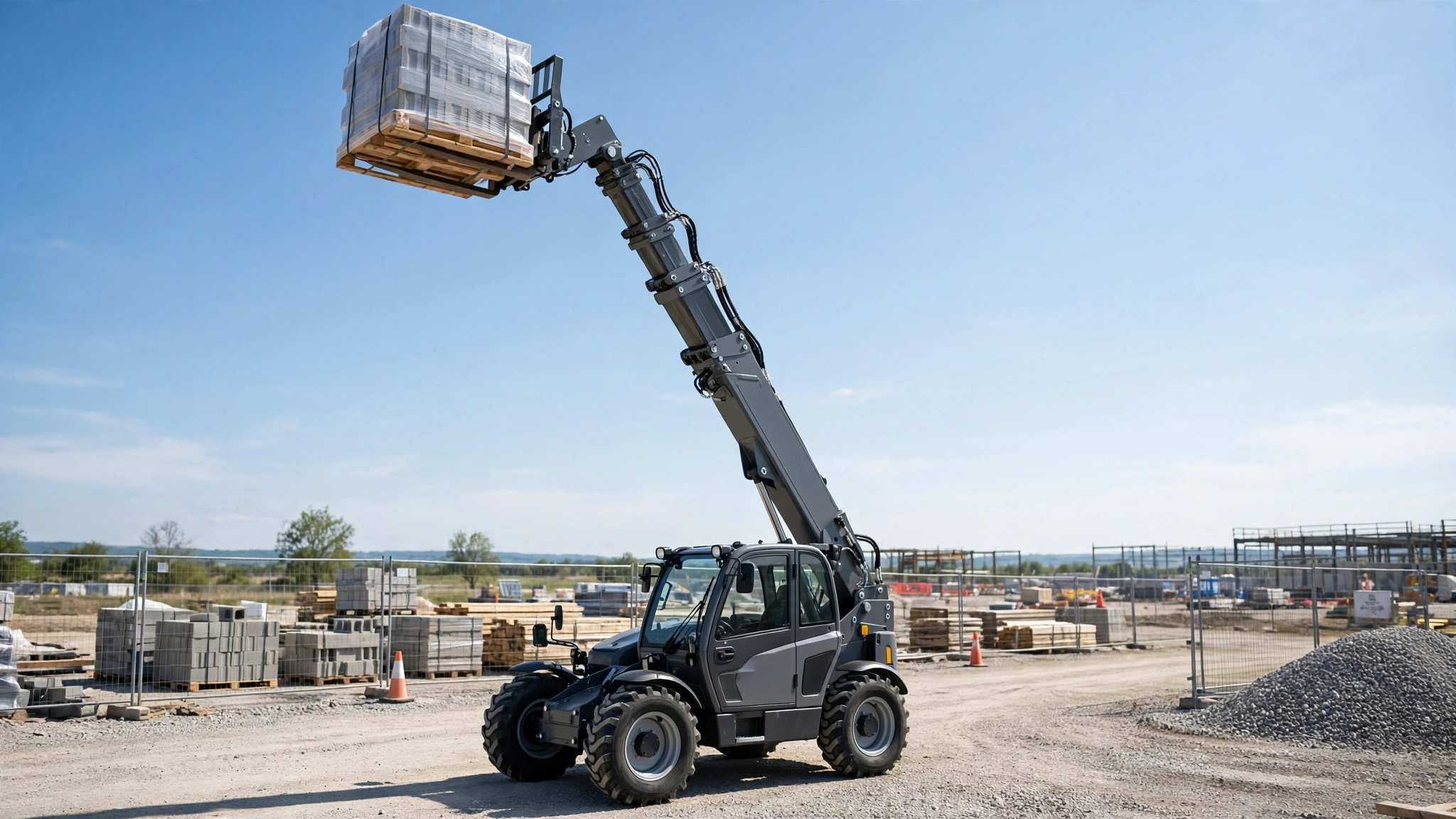
It is a lifting machine with a long arm. That arm pushes forward and up. It gives you reach that other machines cannot match. Think of a forklift. A forklift only lifts straight up. This machine lifts up and outward. You can place loads on roofs, loading docks, and over obstacles.
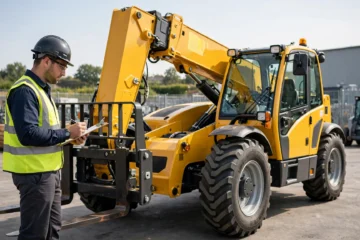
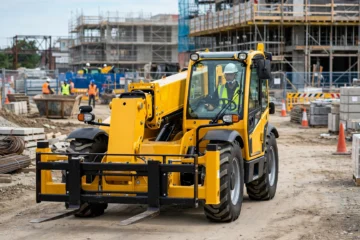
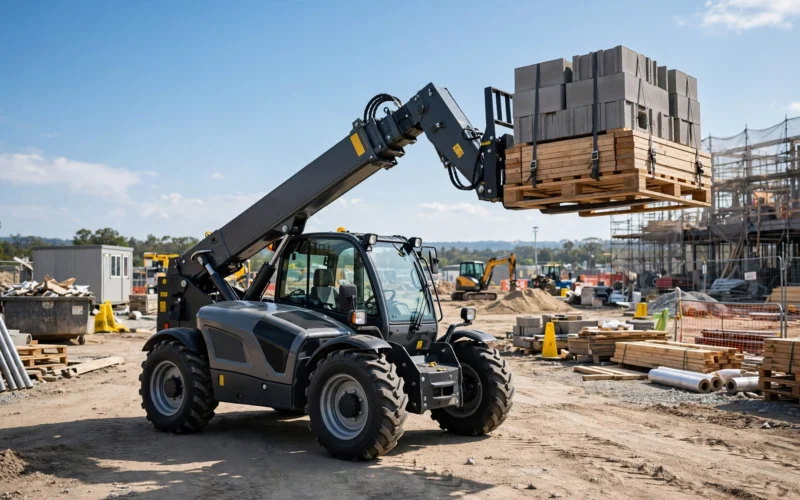
The boom is the key feature. It extends and retracts. It raises and lowers. You control all this from the cab. The carriage at the end holds attachments. Forks are standard. Buckets, jibs, and platforms are optional.
Now you know what is a telehandler. It is a versatile lifting machine with a telescopic boom and multiple attachments.
How the Machine Works
Understanding what is a telehandler includes knowing how it works. The machine has several key components.
The boom is the long arm. It has multiple sections that slide inside each other. Hydraulic cylinders push these sections out and pull them back in. The carriage sits at the end of the boom where attachments connect.
The engine provides power. Most use diesel engines. Some use electric power for indoor work. The hydraulic system does the work by moving the boom and powering attachments. You sit in the cab and control everything with joysticks, pedals, and switches.
Now you understand what is a telehandler at its core. It is a boom, a carriage, an engine, hydraulics, a cab, and a chassis working together.
7 Reasons Every Job Site Needs One
Why does every job site need this machine? Here are 7 solid reasons.
Reason 1: Reach Where Others Cannot
When exploring what is a telehandler, reach is the number one reason it exists. Forklifts only lift straight up. You must drive right under the load. A telescopic boom extends far. Some machines reach 40 feet, 55 feet, or even 100 feet.
Reason 2: Versatility
Part of answering what is a telehandler is seeing its extreme versatility. One machine does many jobs. Change the attachment and change the job. Forks move pallets. Buckets move gravel. Jibs extend reach further.
Reason 3: Rough Terrain Capability
If you wonder what is a telehandler doing in mud, rough terrain capability is the answer. Forklifts work on smooth floors, but these machines work anywhere. Large tires provide traction and high ground clearance prevents bottoming out.
Reason 4: Precision Placement
Another aspect of what is a telehandler is precision placement. They place loads exactly where you want them. The boom moves smoothly. You control the angle, extension, and height to prevent damage.
Reason 5: Safety
Safety explains what is a telehandler doing better than older machines. Modern units include load charts, overload sensors, and stability systems. This reduces accidents and dropped loads.
Reason 6: Cost Savings
Cost savings prove what is a telehandler worth to your budget. One unit replaces a forklift, a crane, and a loader. Attachments cost less than separate machines. The savings add up quickly.
Reason 7: Productivity
When people ask what is a telehandler, they really want to know about productivity. Reach means fewer moves. You set up in one spot and reach many locations. This means faster projects and more profit.
Difference from a Forklift
Now that you know what is a telehandler, let me explain the difference from a standard forklift. People often confuse these two.
A forklift lifts straight up. The mast is vertical. A telescopic boom lifts up and forward. You reach over obstacles. Forklifts work on smooth floors. If you strictly need an indoor lift for smooth concrete floors, you might look into a new 2025 Typhon Vigor 2.5 Electric Forklift. But telescopic boom machines are meant for rough construction and farms.
Difference from a Crane
To further clarify what is a telehandler, let’s compare it to a crane. Cranes lift straight up for very heavy loads on tall buildings and need a crew to operate.
A telescopic boom machine is mobile, operated by one person, and is more versatile. You do not need a crane for everyday lifting on most job sites.
Understanding Attachments
Knowing what is a telehandler means knowing its attachments. These tools expand what the machine can do.
- Forks: Move pallets, lumber, and blocks.
- Buckets: Handle loose materials like gravel and dirt.
- Jibs: Reach over walls and through openings.
- Work Platforms: Lift workers safely for maintenance.
- Winches: Pull heavy objects and drag equipment.
- Grapples: Grab irregular loads like trees and scrap.
- Sweepers: Clean job sites.
Industries That Use Them
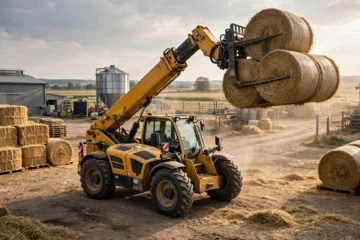
Now you know what is a telehandler and where it works. The list is long. Construction is the biggest user. Agriculture uses them to move hay and clean barns. Warehouses use them for high racks.
Emergency response uses them to clear debris. Landscaping uses them to move soil, and event setup uses them to build stages and hang lights.
How to Choose One
Now you know what is a telehandler and how to pick one. Follow these steps:
First, know your lift height. Second, know your lift capacity. Third, understand your terrain to pick the right tires. Fourth, decide which attachments you need. Fifth, choose a brand with excellent local dealer support.
Machine and Attachment Costs
Now that you understand what is a telehandler, let us talk about cost. Prices vary widely based on size and condition.
| Machine Type | Estimated Cost |
|---|---|
| Small Machines | $50,000 to $70,000 |
| Mid-Size Machines | $80,000 to $120,000 |
| Large Machines | $130,000 to $200,000 |
| Used Machines | $30,000 to $80,000 |
| Attachment | Estimated Cost |
|---|---|
| Forks | Standard (Included) |
| Buckets | $1,000 to $3,000 |
| Jibs | $1,500 to $4,000 |
| Work Platforms | $2,500 to $5,000 |
Maintenance costs about $2,000 to $5,000 per year. This includes oil changes, filters, and minor repairs.
Maintenance Tips
Maintaining what is a telehandler requires regular checks. Check fluids and tires daily. Grease the boom daily. Change filters on schedule. If you ever face sudden mechanical failures, refer to our guide on telehandler common problems: 5 issues and how to fix them.
Our Business Partner
Final Thoughts
Now you truly know what is a telehandler. It is a lifting machine with a telescopic boom. It reaches forward and upward. It handles multiple attachments. It works on rough terrain.
It is not a forklift. It is not a crane. It is something better. A versatile machine that does the work of many.
If you are on a job site without one, you are missing out. Rent one. Buy one. See the difference. The right machine transforms your work, saves time, saves money, and makes your job easier.