
Table of Contents
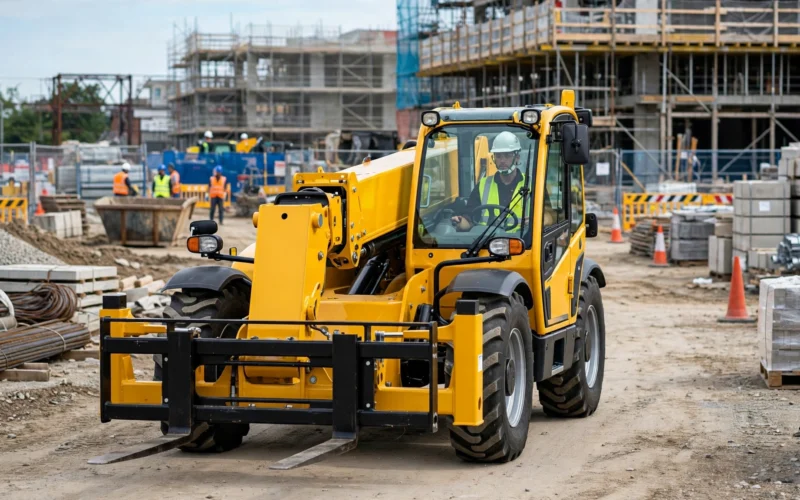
You see them on every building site. They lift materials to upper floors. They move pallets across mud. They place roofing materials on top of structures. These machines are everywhere.
But operating one is not as simple as it looks. I have trained dozens of construction telehandler operators over the years. Some pick it up fast. Others struggle. The difference is knowing what matters.
This guide covers 7 things every construction telehandler operator should know. I have learned these through years of working on job sites. They will save you time. They will save you money. They will keep you safe.
Let us get started.
1. Understand the Load Chart
The load chart is the most important document on your machine. It tells you how much you can lift at different angles and extensions.
Most operators ignore it. Big mistake. The load chart prevents tipping accidents. It also prevents boom damage. Your construction telehandler has limits. Know them.
The chart shows lift capacity at specific boom angles. The capacity drops as the boom extends. A construction telehandler that lifts 10,000 lbs at short length may only lift 3,500 lbs at full extension.
The chart is usually on the cab door or window. Read it before every lift. Different loads require different settings. Do not guess.
Here is a simple rule. The further the boom extends, the less you can lift. The lower the boom angle, the more you can lift. Keep this in mind on every job.
2. Master Boom Control
The boom is your primary tool. You must control it smoothly. Jerky movements are dangerous. They cause loads to swing. They stress hydraulic components. They waste time.
Practice lifting and lowering slowly. Move the joystick gently. Smooth is fast. Smooth is safe. Extend and retract the boom without sudden stops. A sudden stop at full extension stresses the cylinder. It also causes the load to swing forward.
Combine movements when possible on your construction telehandler. Lift and extend at the same time. This reduces cycle time. You get more work done.
A good construction telehandler operator makes the boom look effortless. That takes practice. Spend time training before you tackle difficult jobs.
3. Know Your Terrain
Construction sites are not flat. Mud, gravel, dirt, and debris are everywhere. Your construction telehandler must handle all of it.
Four-wheel drive is essential on most sites. Engage it before you enter rough ground. Do not wait until you are stuck. Check the ground before you lift. Soft ground reduces stability. If the ground is uneven, find a level spot. Set up on solid ground.
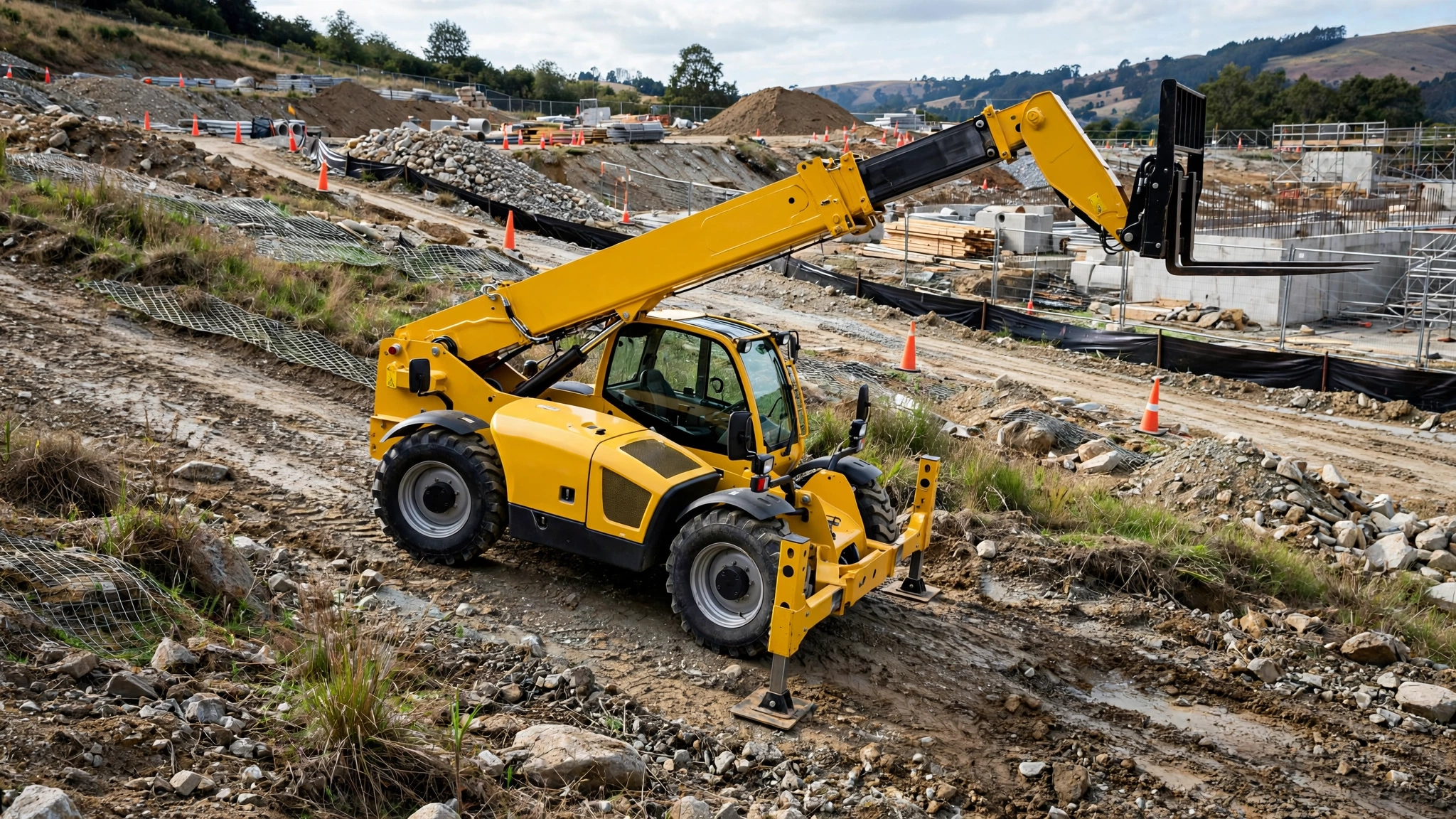
Avoid slopes when lifting. Lifting on a slope changes the load center. It increases the risk of tipping. If you must lift on a slope, reduce your load.
Keep the boom low when traveling your construction telehandler over rough ground. A high boom makes the machine unstable. Lower it to just above the ground. This improves stability and protects the machine.
4. Use Attachments Correctly
Attachments expand what your construction telehandler can do. But each attachment has specific uses. Using the wrong one damages the machine and the load.
Forks are for pallets and materials. Use them for their intended purpose. Do not use forks as a pry bar. Do not use them to push objects.
Buckets handle loose materials. Gravel, sand, dirt. Do not overload the bucket. A full bucket of wet material is heavy. Check the load chart.
Winches pull heavy objects. Do not exceed the pulling capacity. Use proper rigging. Stand clear of the cable. Work platforms lift workers. Use only approved platforms. Follow all safety rules. Workers must wear fall protection.
A construction telehandler with multiple attachments is versatile. But each attachment has limits. Respect them.
5. Perform Daily Inspections
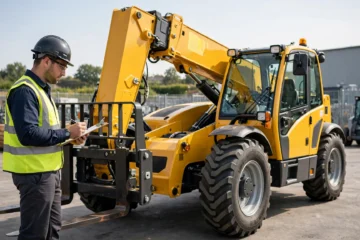
Skipping the daily inspection is a bad habit. I see it all the time. Operators jump in the construction telehandler cab and start working. They do not check the machine. Then something breaks.
Do not be that person. The daily inspection takes ten minutes. It prevents breakdowns. It prevents accidents. It saves money.
Walk around the construction telehandler. Look for leaks under the machine. Oil, coolant, fuel. Any leak is a problem. Check the tires. Look for cuts and damage. Check the pressure.
Check the boom. Look for cracks and wear. Grease the pins daily. Check the fluids. Engine oil, hydraulic fluid, coolant, brake fluid. Top them up. Check the lights and horn. Make sure everything works.
Keep a log of your inspections. Record any problems you find. This helps with maintenance planning.
6. Practice Safe Lifting
Safe lifting with a construction telehandler is not just about capacity. It is about how you handle the load. Good habits prevent accidents.
Approach the load slowly. Align the forks properly. Center the load on both forks. Lift the load a few inches. Check the stability. If the load tilts, lower it and adjust.
Keep the construction telehandler load as low as possible when traveling. This improves stability.
Use a spotter when visibility is limited. The spotter guides you. They see what you cannot. Never carry riders. Only the operator rides in the cab. No riders on the forks or boom.
Avoid sudden stops. Sudden stops shift the load. The load can fall. Check your surroundings before you move. Look for overhead lines. Look for workers. Look for obstacles.
7. Know When to Stop
This is a rule I see broken often. Operators keep working when they should stop. The construction telehandler makes a noise. Something feels wrong. They ignore it.
Do not do this. If something feels off, stop. Check the construction telehandler. Call a mechanic. Better to lose ten minutes than to cause a major breakdown.
The same applies to weather. High winds make lifting dangerous. The load catches the wind. It swings. It becomes unstable. Stop lifting in high winds.
Rain reduces visibility. It also makes ground soft. Soft ground reduces stability. Stop if conditions become unsafe.
Operator fatigue is another reason to stop. Tired operators make mistakes. They move the boom too fast. They forget safety steps. They cause accidents. Take breaks. Stay alert. Your safety depends on it.
Load Chart Quick Reference
| Boom Angle | Extension Length | Max Lift (Example) |
|---|---|---|
| 45° | Fully retracted | 10,000 lbs |
| 45° | 50% extended | 6,500 lbs |
| 45° | Fully extended | 3,500 lbs |
| 60° | Fully retracted | 9,000 lbs |
| 60° | 50% extended | 5,800 lbs |
| 60° | Fully extended | 3,200 lbs |
These numbers are for a typical 10,000 lb construction telehandler. Your exact numbers vary. Check your own load chart.
Daily Inspection Checklist & Operator Safety Rules
Daily Inspection Checklist
- Walk around inspection
- Check tires
- Check boom and pins
- Check engine oil
- Check hydraulic fluid
- Check coolant
- Check brake fluid
- Check fuel level
- Check lights and horn
- Test controls
- Test brakes
- Log inspection
Operator Safety Rules
- Always use seat belt
- Never exceed load chart
- Keep boom low when traveling
- Avoid slopes when lifting
- Use spotter in tight spaces
- No riders
- Stop in bad weather
- Take breaks when tired
- Report all damage
Common Mistakes to Avoid
Ignoring the Load Chart: Operators guess. They lift loads without checking the chart. The machine tips. Loads fall. Good operators never guess.
Driving with Raised Boom: A raised boom is unstable. The machine can tip. Always lower the boom before driving.
Overloading Attachments: Attachments have limits. Forks bend. Buckets break. Stay within the limits.
Skipping Inspections: Ten minutes saves thousands. Inspections find problems early. Skipping them is false economy.
Not Training Operators: New operators need training. Do not let them learn on the job. Training prevents accidents.
Our Business Partner
Final Thoughts
A construction telehandler is a powerful machine. It makes your work easier. It saves time and money.
But power comes with responsibility. Follow these 7 rules. Understand the load chart. Master boom control. Know your terrain. Use attachments correctly. Perform daily inspections. Practice safe lifting. Know when to stop.
Your construction telehandler will last longer. Your work will be safer. Your business will be more profitable.
Take the time to learn. Train your operators. Build good habits with your construction telehandler. The payoff is worth it.