
Table of Contents
You bought a telehandler. It lifts and moves materials. That is what it does. But you are only using a fraction of its capability.
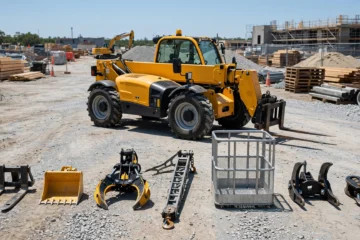
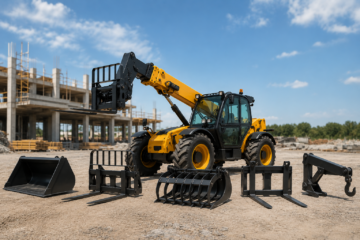
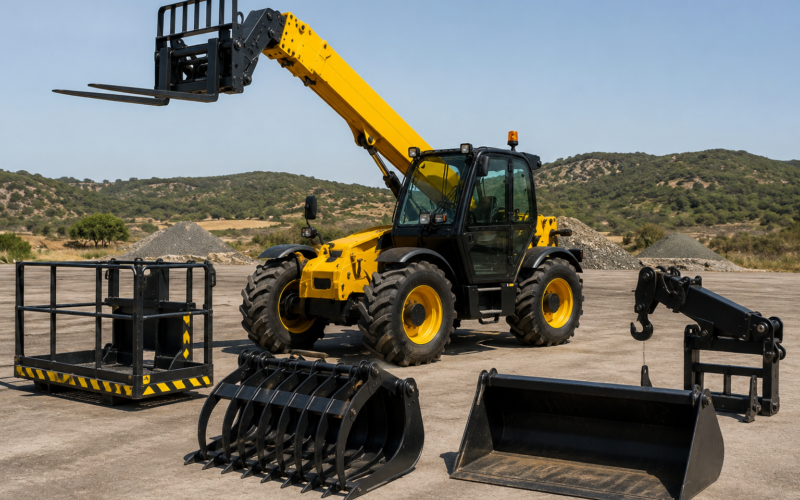
The machine itself is just the starting point. Telehandler attachments turn your telehandler into a multi-tool. One machine does the work of five. You save money on equipment, space in your yard, and time switching between jobs.
This guide covers 5 ways telehandler attachments transform your machine. You will learn which tools to use for each job, see how they pay for themselves, and get more value from your machine.
Why Telehandler Attachments Make Your Machine a Multi-Tool
A telehandler without telehandler attachments is limited. You lift pallets. You move materials. That is it. You cannot handle loose materials, pull heavy objects, or lift workers.
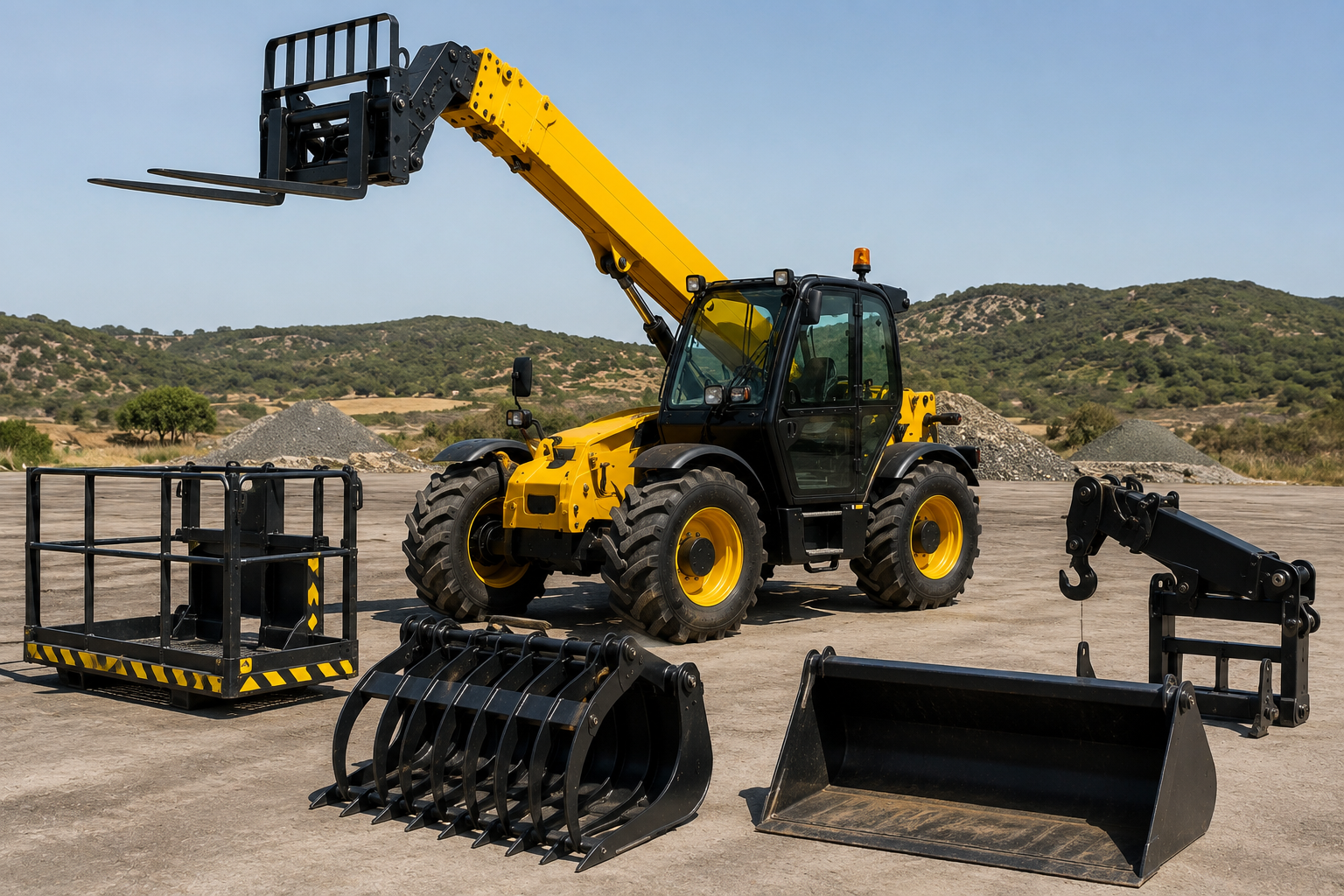
Add telehandler attachments and everything changes. Your telehandler becomes a loader, a crane, a sweeper, and a work platform. One machine does many jobs. Your investment goes further.
These telehandler attachments cost between $500 and $5,000. Compare that to buying separate machines. A skid steer costs $30,000. A crane costs $50,000. Attachments are cheaper by far, and you also save on maintenance since one machine needs only one service.
High-quality telehandler attachments pay for themselves quickly. Use a bucket for one week instead of hiring a loader, and that week saves you $1,000 in rental fees. The bucket pays for itself in one month.
Way 1: Use a Bucket for Loose Materials
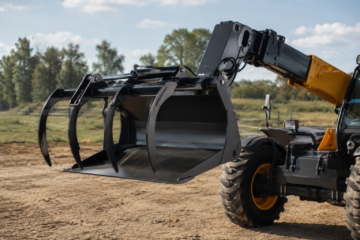
When discussing telehandler attachments, a bucket turns your telehandler into a loader. You scoop, lift, and dump loose materials like sand, gravel, dirt, and grain. No more shoveling by hand. No more renting a skid steer.
Jobs You Can Do with a Bucket
Construction sites use buckets for spreading gravel on driveways. Farms use buckets for grain and silage. Landscaping uses them for soil and mulch, while demolition sites scoop broken concrete.
How a Bucket Saves You Money
Renting a skid steer costs $1,000 per day. Buying a bucket costs $2,000. After two days of use, the bucket pays for itself. Keep the bucket low when driving, check daily to make sure it locks securely, and never overload it.
Way 2: Use a Winch for Pulling Heavy Objects
A winch is one of the strongest telehandler attachments for pulling heavy objects. You move objects that do not fit on forks and pull things that you cannot lift.
What a Winch Does & Jobs You Can Do
A cable spools out from the winch drum. You attach it to an object and pull it toward your machine using hydraulic power. Construction sites drag concrete forms. Demolition sites pull steel beams. Farms drag broken tractors. Emergency response clears vehicles from roads.
How a Winch Saves You Money
Hiring a recovery truck costs $400 per trip. A winch costs $4,000. After ten trips, the winch pays for itself. Stand clear of the cable during pulling and use a dampener blanket to reduce injury risks.
Way 3: Use a Crane Jib for Extended Reach
Among telehandler attachments, a crane jib extends your reach further. You place loads through openings, reach over walls, and access areas the boom cannot reach alone.
Jobs You Can Do & Savings
Construction sites use jibs for roofing materials. Steel erection uses them to place beams. Renting a crane costs $2,000 per day. A jib costs $3,000. After two days, the jib pays for itself. Always check your load chart, as the jib reduces your lifting capacity.
Way 4: Use a Work Platform for Elevated Workers
A work platform is one of the most vital telehandler attachments for elevating workers safely. You use it for maintenance and installation at height. If you only need vertical lifting on rough terrain, renting a Typhon electric rubber track scissor lift is an option, but a platform attachment saves you from renting an extra machine.
Jobs You Can Do & Savings
Facility maintenance uses work platforms to change high bay lights. Construction uses them to install drywall on ceilings. Renting a boom lift costs $500 per day. A work platform costs $3,000 and pays for itself in one week. Always use OSHA-approved platforms and proper fall protection.
Way 5: Use a Sweeper for Site Cleanup
A sweeper is unique among telehandler attachments as it turns your machine into a cleaning tool. You remove debris from work areas, keeping the site tidy and safe.
Jobs You Can Do & Savings
Construction sites remove gravel and dirt. Warehouses remove dust from aisles. Hiring a street sweeper costs $500 per day. Buying a sweeper costs $4,000. After eight days, the sweeper pays for itself.
Cost Comparison: Machine with Telehandler Attachments vs Multiple Machines
Take a look at the massive price difference between buying standalone equipment versus using attachments for your machine.
Cost of Separate Machines
| Equipment | Estimated Cost |
|---|---|
| Telehandler with forks | $75,000 |
| Skid steer | $30,000 |
| Crane | $50,000 |
| Boom lift | $20,000 |
| Sweeper truck | $30,000 |
| Total Separate Machines | $205,000 |
Cost of Attachments
| Attachment Type | Estimated Cost |
|---|---|
| Bucket | $2,000 |
| Winch | $4,000 |
| Crane jib | $3,000 |
| Work platform | $3,000 |
| Sweeper | $4,000 |
| Total Attachments | $16,000 |
Your machine with telehandler attachments costs $91,000 ($75,000 + $16,000). Separate machines cost $205,000. You save an incredible $114,000!
How to Choose Your First Telehandler Attachments
You cannot buy every tool at once. Start with the ones you need most. Add others as your work requires. Evaluate your jobs and note which tools you rent or borrow.
- Start with a Bucket: The most useful second tool after standard forks.
- Add a Winch: For tough pulling jobs.
- Add a Jib: If you place loads through openings.
- Add a Platform: For height work to keep workers safe.
- Add a Sweeper: For regular site cleanup and labor savings.
Telehandler Attachments Maintenance
Your telehandler attachments need care too. Maintain them properly for long life. Inspect tools before each use for cracks, bends, and wear. If you are updating your site’s attachment guides or maintaining logs, remember to record these checks.
Check the locking mechanism. Grease moving parts regularly like winch spools and jib pivot points. Clean material off buckets and forks after use, and store them indoors to protect from weather damage.
Our Business Partner
Bottom Line
To summarize, telehandler attachments turn your machine into a multi-tool. A bucket handles loose materials, a winch pulls heavy objects, a crane jib extends your reach, a work platform lifts workers, and a sweeper cleans sites.
Invest in telehandler attachments. Your telehandler becomes more productive. Your job gets done faster. Your business makes more money. Choose your first tool today, start saving money tomorrow, and let your machine do more than you ever expected.