
Table of Contents
Buying a telehandler is not a small expense. You want the right machine for your work. Pick the wrong one and you lose both time and money. This telehandler buying guide covers what you actually need to know before you buy.
What Is a Telehandler
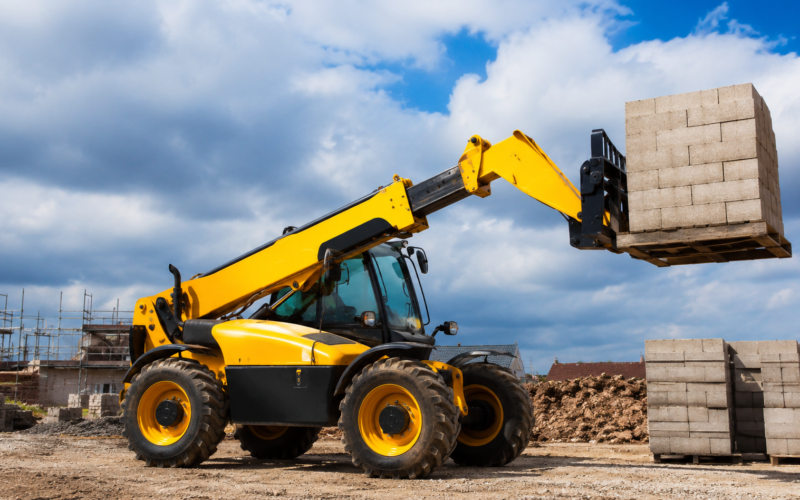
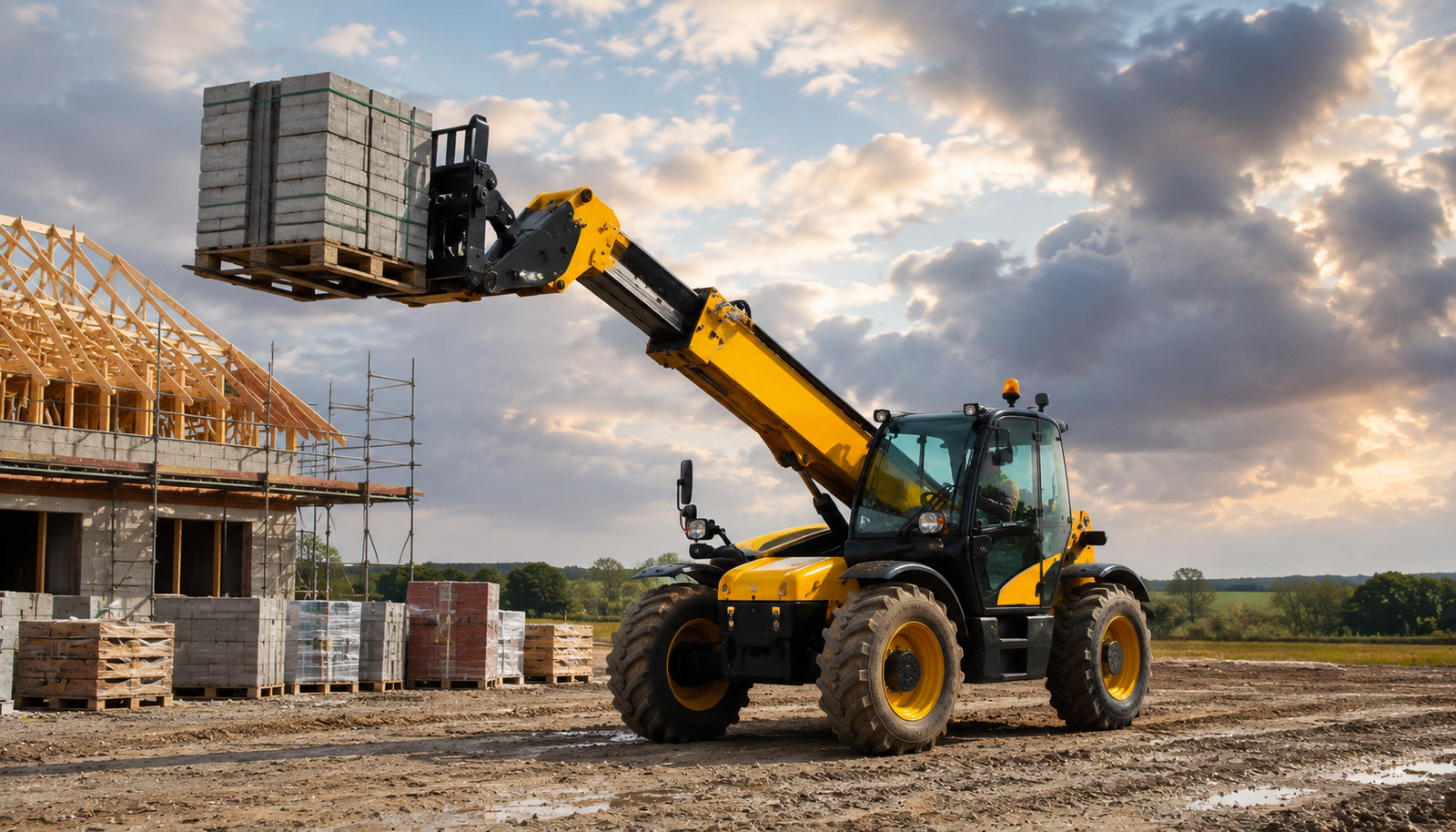
So what exactly is a telehandler? In this telehandler buying guide, we explain that it is a lifting machine with a long arm that extends forward and upward. That arm telescopes in and out. It gives you reach that a regular forklift cannot give you.
You can place loads on rooftops, loading docks, and tall storage racks. Forklifts only lift straight up. Every good telehandler buying guide points out that telehandlers lift up and out. This makes them better for rough ground. You can also swap attachments. Buckets, forks, and winches all fit on the same machine.
Why You Might Want One
One telehandler does the work of several machines. You replace a forklift, a crane, and a loader with one unit. As a key point in our telehandler buying guide, that saves you money on buying and maintaining separate equipment.
These machines shine on rough terrain. Big tires and high ground clearance let you work on mud, gravel, and dirt. You keep going when other machines get stuck. According to this telehandler buying guide, your project stays on track because you also get precise placement.
Telehandlers have smooth boom control. You put loads exactly where you need them. This cuts down on damaged materials and wasted product. This telehandler buying guide notes that modern telehandlers include load charts and stability systems. You know your limits at all times. This helps you avoid tipping accidents that hurt workers and break equipment.
Types of Telehandlers
Telehandlers come in different sizes and configurations. Each type fits a specific kind of work. A comprehensive telehandler buying guide must cover these different sizes so you can match the type to your typical jobs.
Compact Telehandlers
These are small and easy to move around. They fit in tight spaces. You use them indoors and on crowded job sites. As noted in this telehandler buying guide, lift capacity runs from 3,000 to 6,000 pounds. Lift height goes up to about 20 feet.
Our telehandler buying guide highlights that you see these in warehouses and small construction jobs. They move pallets, drywall, and roofing materials. For compact spaces, you might also consider a walk-behind scissor lift which perfectly complements indoor work. Their small size makes them simple to transport. You save money over the life of the machine.
Standard Telehandlers
Continuing with our telehandler buying guide, standard telehandlers are the ones you see most often. They offer a good balance of capacity and reach. Lift capacity ranges from 6,000 to 12,000 pounds. Lift height reaches about 40 feet.
This telehandler buying guide shows you use these on most construction sites. They handle bricks, concrete blocks, and steel beams. They also move pallets and equipment. These run on diesel and have four-wheel drive for rough ground.
Heavy-Duty Telehandlers
A complete telehandler buying guide includes heavy-duty models for the really tough jobs. Lift capacity goes over 12,000 pounds. Lift height reaches 55 feet or more. You use these on big infrastructure projects and in mining.
They have bigger frames and stronger booms. They carry heavy precast concrete and structural steel. As advised by this telehandler buying guide, they cost a lot more and use more fuel. You only need these if your loads are unusually heavy.
Rotating Telehandlers
Any modern telehandler buying guide will mention rotating telehandlers. These have a top section that rotates. The boom spins 360 degrees. You work around the machine without moving it. This saves time on busy sites.
What People Use Telehandlers For
Telehandlers show up in many industries. This section of the telehandler buying guide shows where you will find the most common uses.
As this telehandler buying guide explains, construction is where you find the most telehandlers. You lift materials to upper floors and roofs. You set trusses, beams, and panels in place. If your site requires high vertical access for workers, you can also explore a powerful electric scissor lift as an excellent alternative. They work with scaffolding and move heavy tools.
Moving further in our telehandler buying guide, farmers use telehandlers for all kinds of chores. You move hay bales and feed. You clean barns and stalls. Big tires keep you from sinking in muddy fields.
Another key point in this telehandler buying guide is that warehouses use telehandlers for bulk storage. You put items on high racks and pull materials from upper levels. You move through narrow aisles without hitting racks.
Key Features You Need to Look At
Telehandlers have many features. The most crucial part of this telehandler buying guide is thinking about each feature based on your work. Look at Lift Capacity, Lift Height, Boom Type, and Transmission. Always check the load chart and ensure your tires match your terrain.
Attachments Make a Telehandler Versatile
This telehandler buying guide also explains how attachments let you do many jobs with one machine. From Fork Carriages and Buckets for loose materials to Winches, Crane Jibs, and Work Platforms, you can switch attachments in minutes.
New or Used & Financing
A major decision in any telehandler buying guide is between new and used equipment. Both have pros and cons. Think about your budget, warranty, and how much you will use it. You can purchase with cash, get an equipment loan, or lease it based on your cash flow.
Our Business Partner
How to Make Your Choice
To conclude this telehandler buying guide, picking the right telehandler takes some work. Assess your needs, research models, request demos, and compare costs. Negotiate the price and plan for delivery.
The right telehandler makes your work easier. You finish jobs faster with less effort. Take your time and choose carefully. Your investment will pay off for years to come.