
To prevent costly downtime, a proper telehandler inspection is the most important step you can take. A telehandler breaks down at the worst time. Always. It happens in the middle of a pour. It happens with a load in the air. It happens when the deadline is close and the crew is waiting.
Table of Contents
- 1. Walkaround Visual Inspection
- 2. Fluid Level Check
- 3. Hydraulic Hose and Fitting
- 4. Tire and Wheel Inspection
- 5. Boom and Pin Inspection
- 6. Brake and Steering Inspection
- 7. Electrical and Control Inspection
- Why It Matters
- Inspection Schedule Summary
- Signs That Immediate Service Is Needed
- Common Mistakes
- Our Business Partner (Video)
- Final Thoughts
Downtime costs money. Rental machines cost money while sitting idle. Owned machines cost money in lost productivity. Repair bills add to the pain. Emergency service calls cost more than scheduled service.
Most breakdowns do not happen without warning. The machine gives signs. Small noises. Small leaks. Small vibrations. These signs appear days or weeks before failure. A proper telehandler inspection catches them early.
This guide covers 7 checks that prevent costly downtime. These checks take 20 to 30 minutes. They save thousands in repairs. They keep the machine working when it is needed most.
1. Walkaround Visual Inspection
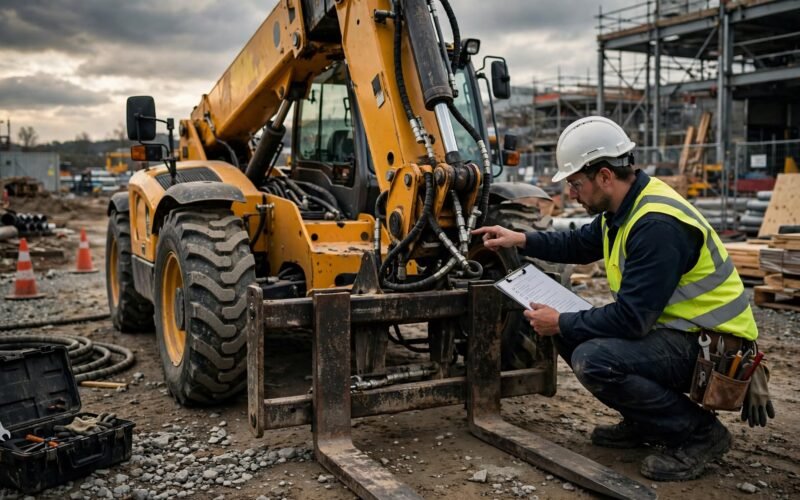
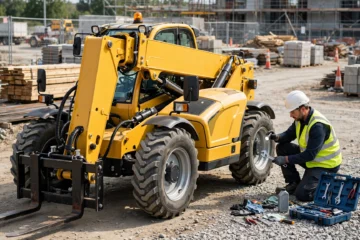
Start every shift with a walkaround. Look at the machine from all angles. This is the foundation of telehandler inspection.
Look for leaks under the machine. Oil spots mean a hydraulic leak. Coolant spots mean a cooling system problem. Fuel spots mean a fuel system issue. Any leak needs attention. A small leak becomes a big leak under pressure.
Check the boom for cracks. Look at the welds. Look at the pivot points. Look at the cylinder mounts. Cracks grow fast under load. A cracked boom is dangerous.
Check the carriage and attachment mount. Look for bent plates. Look for worn pins. Look for loose bolts. A loose attachment falls off. Check the tires. Look for cuts. Look for bulges. Look for embedded objects. Check the pressure with a gauge. Underinflated tires wear faster. They also reduce stability.
Check the lights and mirrors. Broken lights reduce visibility. Broken mirrors create blind spots. Replace them before the shift starts. Check the seat belt. Pull it out fully. Look for fraying. Test the buckle. A failed seat belt causes injury in a tip-over.
A thorough walkaround takes five minutes. It catches problems before they become failures. Telehandler inspection starts here.
2. Fluid Level Check
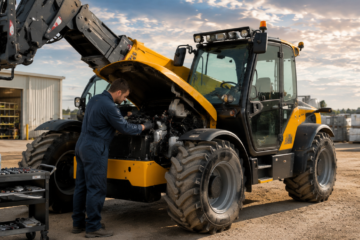
Fluids keep the machine running. Low fluid levels cause damage. Damage leads to downtime. This check is critical for telehandler inspection.
Check the engine oil. Use the dipstick. Oil should be between the marks. Low oil ruins the engine. Overfilled oil causes foaming. Foaming reduces lubrication. Check the hydraulic fluid. Look at the sight glass. Fluid should be at the correct level. Hydraulic fluid powers the boom. Low fluid means slow operation. It also damages the pump. Pumps are expensive.
Check the coolant level. Look at the overflow tank. Coolant should be between the marks. Low coolant overheats the engine. Overheating causes head gasket failure. That repair costs thousands.
Check the transmission fluid. Follow the manufacturer procedure. Some transmissions need the engine running. Low fluid causes shifting problems. Shifting problems damage the transmission. Check the brake fluid. Low fluid means air in the system. Air makes the brakes spongy. Spongy brakes are dangerous. They also fail inspection.
Check the fuel level. Do not run out of fuel. Diesels are hard to restart after running dry. Fill the tank before the shift. Check all fluid caps. Make sure they are tight. Loose caps allow dirt to enter. Dirt damages components.
Fluid checks take five minutes. They prevent the most common breakdowns. Telehandler inspection includes this step every day.
3. Hydraulic Hose and Fitting Inspection
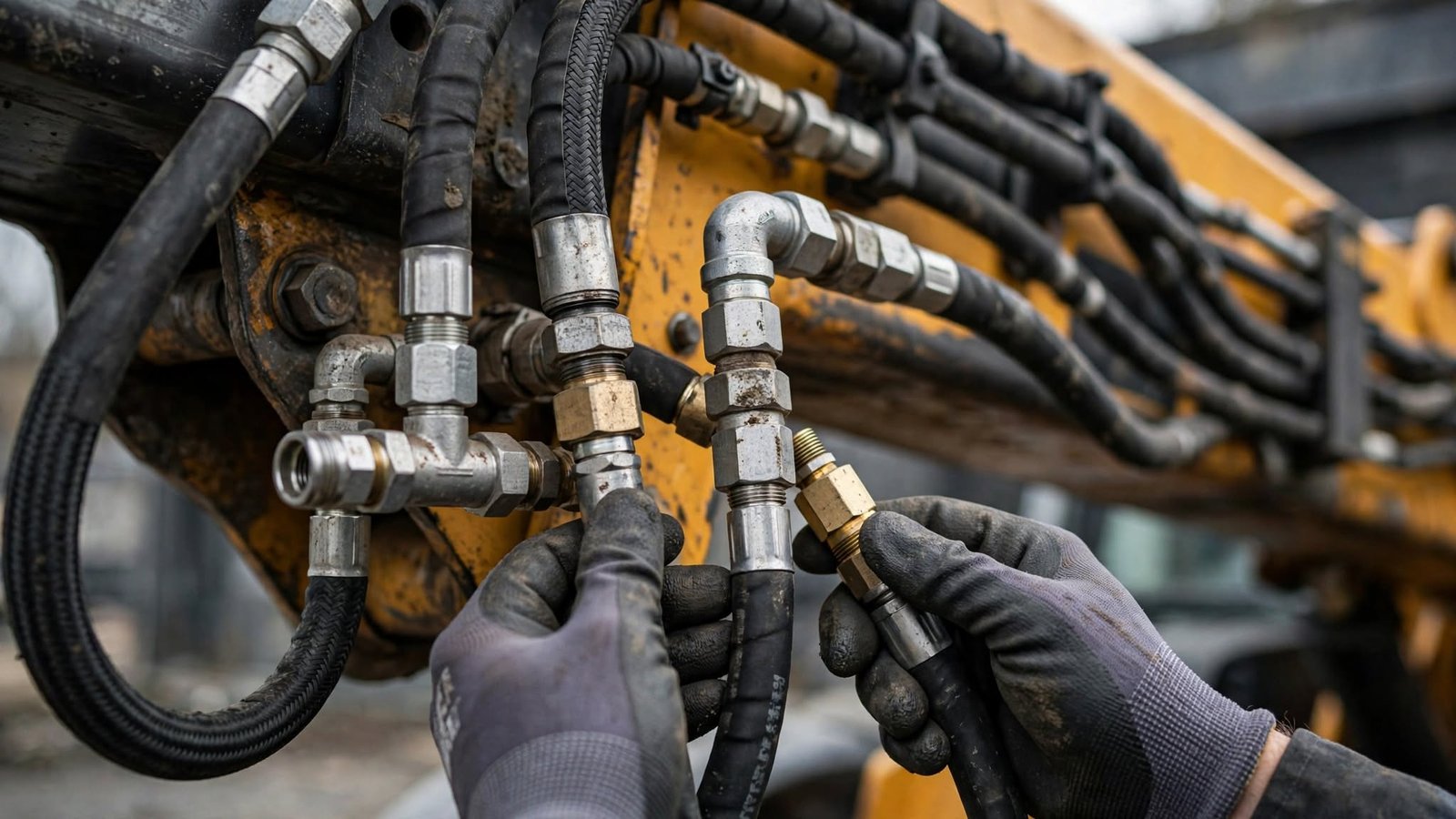
Hydraulic hoses carry pressurized fluid. They flex with boom movement. They rub against metal surfaces. They wear out over time. This check is a key part of telehandler inspection.
Check every hose. Look for cracks in the rubber. Look for bulges. Look for chafing marks. A damaged hose bursts. A burst hose drops the boom. That is dangerous and expensive.
Check fittings and connections. Look for leaks at each connection. Tighten loose fittings. Replace damaged fittings. A small drip becomes a spray under pressure. Fix it early. Check hose routing. Make sure hoses do not rub against sharp edges. Add protective sleeves where needed. Rubbing causes wear. Wear causes failure.
Check the hose date codes. Hoses have a shelf life. Old hoses fail without warning. Replace hoses older than five years.
Inspect hoses weekly. Telehandler inspection includes this step. It prevents sudden failures. A burst hose on a job site stops work. It also risks injury.
Look for weeping at the crimp fittings. A slight moisture film means the fitting is failing. Replace the hose before it bursts. Check the hydraulic tank breather. A clogged breather causes pressure buildup. Pressure blows seals. Clean or replace the breather.
4. Tire and Wheel Inspection
Tires support the machine. They provide traction. They affect stability. Damaged tires cause accidents. This check is essential for telehandler inspection.
Check tire pressure. Use a quality gauge. Follow the manufacturer specification. Low pressure causes poor traction. High pressure causes a rough ride. Both cause uneven wear.
Check tread depth. Look for wear bars in the tread. Replace tires before the bars show. Low tread means poor traction on mud and gravel. Check for cuts and punctures. Look at the sidewalls. Look at the tread. Any cut can become a blowout. Replace damaged tires.
Check for uneven wear. This indicates alignment or inflation problems. Fix the root cause. Do not just replace the tire. Check the wheel lug nuts. Make sure they are tight. Loose lug nuts cause wheel separation. That is dangerous. Use a torque wrench.
Check the wheel rims. Look for bends. Look for cracks. Look for rust. Damaged rims cause tire failure. Check the valve stems. Look for cracks. Look for leaks. Replace damaged stems.
Tire checks take five minutes. They prevent blowouts and tip-overs. Telehandler inspection includes this step every day.
5. Boom and Pin Inspection
The boom is the heart of the telehandler. Pins and bushings hold the boom sections together. They wear out over time. This check is critical for telehandler inspection.
Check the boom sections. Look for cracks. Look for dents. Look for rust. Any damage weakens the boom. Check the pins. Look for wear. Look for movement. Worn pins cause boom play. Replace worn pins immediately.
Check the bushings. Look for wear. Look for looseness. Worn bushings cause boom movement. This affects precision and safety. Check the wear pads. Look for thickness. Look for damage. Worn pads cause metal on metal contact. This damages the boom.
Check the boom extension and retraction. Move the boom slowly. Listen for unusual sounds. Feel for jerky movement. Any problem needs attention. Grease all pins daily. Grease reduces wear. It extends pin life. It prevents noise.
Boom checks take five minutes. They prevent catastrophic failures. Telehandler inspection includes this step every day.
6. Brake and Steering Inspection
Brakes stop the machine. Steering controls direction. Both are critical for safety. This check is part of telehandler inspection.
Test the service brakes. Move forward a few feet. Apply the brakes firmly. The machine should stop smoothly. Pulling to one side indicates a problem. Test the parking brake. Park on a slight slope. Apply the parking brake. The machine should not roll. Adjust the parking brake if needed.
Check the brake pedal feel. A spongy pedal means air in the system. Bleed the brakes. A hard pedal means a problem with the booster. Check the brake fluid level. Low fluid means a leak. Find and fix the leak before driving.
Test the steering. Turn the wheel from lock to lock. Listen for unusual noises. Feel for excessive play. Steering problems are dangerous. Check the steering cylinders. Look for leaks. Look for damage. Replace damaged cylinders. Check the tie rod ends. Look for wear. Look for looseness. Worn tie rod ends cause steering play.
Brake and steering checks take five minutes. They prevent accidents. Telehandler inspection includes this step every day.
7. Electrical and Control Inspection
Modern telehandlers have electronic systems. These systems control the engine, boom, and safety features. Problems cause downtime. This check completes telehandler inspection.
Check the battery. Clean the terminals. Check the voltage. A fully charged battery reads 12.6 volts. Below 12 volts means weak. Replace weak batteries. Check the alternator. Start the engine. Check voltage at the battery. It should read 13.5 to 14.5 volts. Lower means the alternator is not charging.
Check all fuses. A blown fuse cuts power to a component. Replace blown fuses with the same rating. Check the wiring harness. Look for chafed wires. Look for broken wires. Look for corroded connectors. Repair or replace damaged wires.
Check the warning lights. Start the engine. Watch the dashboard. All lights should come on briefly. Then they should turn off. Any light staying on indicates a problem. Check the controls. Move each lever. Press each pedal. Everything should respond smoothly. Sticky controls cause jerky movements.
Check the horn. Test it. Horns warn workers. A broken horn is a safety issue. Check the backup alarm. Put the machine in reverse. Listen for the alarm. Broken alarms cause backing accidents.
Electrical checks take five minutes. They prevent mysterious breakdowns. Telehandler inspection includes this step every day.
Why Telehandler Inspection Matters
Inspection prevents downtime. Downtime costs money. Rental machines cost money while sitting idle. Owned machines cost money in lost productivity. Inspection prevents accidents. A failed boom drops loads. Failed brakes cause collisions. Failed steering causes loss of control. Inspection catches these problems early.
Inspection extends machine life. Well-maintained machines last longer. They hold their value better. They sell for more. Inspection reduces repair costs. Small problems are cheap to fix. Large problems are expensive. Inspection catches problems while they are small.
Telehandler inspection is an investment. It takes 20 to 30 minutes per day. It saves thousands in repairs. It prevents accidents. It keeps the machine working.
Inspection Schedule Summary
| Check | Frequency | Time |
|---|---|---|
| Walkaround visual | Daily | 5 min |
| Fluid levels | Daily | 5 min |
| Hydraulic hoses | Weekly | 5 min |
| Tires and wheels | Daily | 5 min |
| Boom and pins | Daily | 5 min |
| Brakes and steering | Daily | 5 min |
| Electrical and controls | Daily | 5 min |
Total time is 20 to 30 minutes per day. This routine fits into any schedule. The time invested saves hours of downtime later.
Signs That Immediate Service Is Needed
The machine tells when something is wrong. Watch for these signs:
- Hard starting means fuel or air problems. Check filters first.
- Unusual noises mean wear or damage. A squeal means a belt. A grind means a bearing.
- Slow operation means low hydraulic pressure. Check fluid and filters.
- Leaks mean seal or hose failure. Fix them immediately.
- Warning lights mean a problem. Do not ignore them.
- Vibration means a problem. Check tires. Check pins. Check the boom.
Address these signs quickly. Telehandler inspection prevents them from becoming major issues.
Common Inspection Mistakes
Skipping the Walkaround: The walkaround catches obvious problems. Skipping it means missing leaks, cracks, and damage.
Ignoring Small Leaks: A small leak becomes a big leak. Fix it early.
Forgetting the Grease Gun: Grease prevents wear. Skipping grease causes pin failure.
Not Checking the Load Chart: The load chart changes with attachments. Check it before every lift.
Rushing the Inspection: Rushing causes missed problems. Take time. Do it right.
Our Business Partner
Final Thoughts
Telehandler inspection prevents costly downtime. Seven checks cover the basics. Walkaround visual. Fluid levels. Hydraulic hoses. Tires and wheels. Boom and pins. Brakes and steering. Electrical and controls.
Each check takes minutes. Each check prevents problems. Each check saves money.
Do not skip these checks. They are not optional. They are essential. A telehandler is too expensive to neglect. Treat it well. It will serve for years.
Start today. Walk around the machine. Check the fluids. Inspect the hoses. Test the brakes. Check the electrical system. These habits make a difference. The machine will run better. It will last longer. The job will get done.

[…] With KONSTRUCTZ, TYPHON Machinery is building a broader equipment lineup. This gives customers more choices across the machines they use to build, move, prepare, process, and maintain their jobsites. […]