
Table of Contents
- Why Transport Requires Care
- Step 1: Choose the Right Trailer
- Step 2: Prepare Your Machine
- Step 3: Find a Safe Loading Area
- Step 4: Use Proper Ramps
- Step 5: Load the Machine
- Step 6: Secure the Machine
- Step 7: Check Height and Width
- Step 8: Plan Your Route
- Step 9: Drive Carefully
- Step 10: Unload Safely
- Common Mistakes to Avoid
- Cost of Poor Transport
- Our Business Partner (Video)
- Bottom Line
You finish a job. You need to move your machine to the next site. You load it on a trailer. You drive down the highway. You hope everything stays secure.
Telehandler transport is dangerous if done incorrectly. Machines fall off trailers. Machines tip over. Machines cause accidents. You cannot afford mistakes. This guide covers how to safely load and move your machine. Protect your equipment, other drivers, and yourself.
Why Telehandler Transport Requires Care
A telehandler weighs 20,000 to 40,000 pounds. It sits high off the ground. It has a long boom. It is not stable during transit. Improper loading causes accidents. The machine shifts on the trailer, falls off, or damages the trailer.
Improper securing causes accidents. Straps break. Chains fail. The machine moves during transit and hits other vehicles. Transport regulations apply. DOT rules govern weight and securing. Violations cost money and stop your work.
Step 1: Choose the Right Trailer for Telehandler Transport
Your machine needs a proper trailer. The wrong trailer is dangerous. Step deck trailers work well. Lowboy trailers are best because they sit close to the ground, making the center of gravity lower.
Check your trailer capacity. The trailer must handle the machine weight, attachment weight, and fuel weight. Do not exceed capacity. Overloading causes tire and axle failure. Ensure the machine fits completely on the trailer with no overhang.
Step 2: Prepare Your Machine
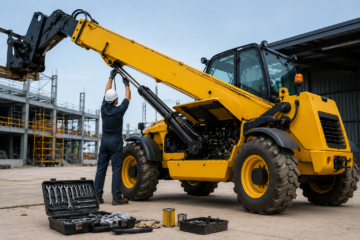
Prepare your machine before loading. Lower the boom completely. The forks should touch the ground. A raised boom is unstable and catches wind.
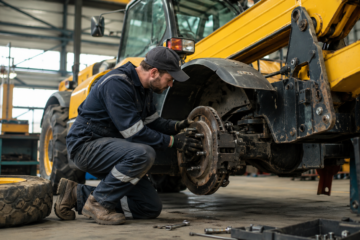
Retract the boom fully. Extended booms affect telehandler transport balance. Remove heavy attachments when possible and secure remaining items. Check all fluid levels.
Top off fluids if needed. As you prepare the machine, this is also a great time to review your fuel practices; read our guide on telehandler fuel efficiency to save money. Low fluids cause issues because the machine shifts during telehandler transport.
Step 3: Find a Safe Loading Area
Loading requires space, level ground, and clear access. Park the trailer on level ground. Uneven ground causes loading problems. If you are paving the area beforehand, equipment like the Typhon Fury 1.5 Mini Road Roller ensures a perfectly packed surface. Use blocking under trailer tires if needed.
Step 4: Use Proper Ramps
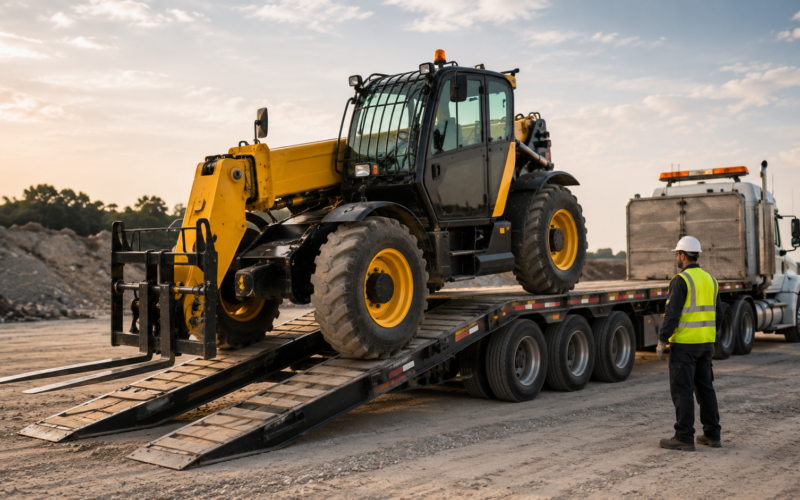
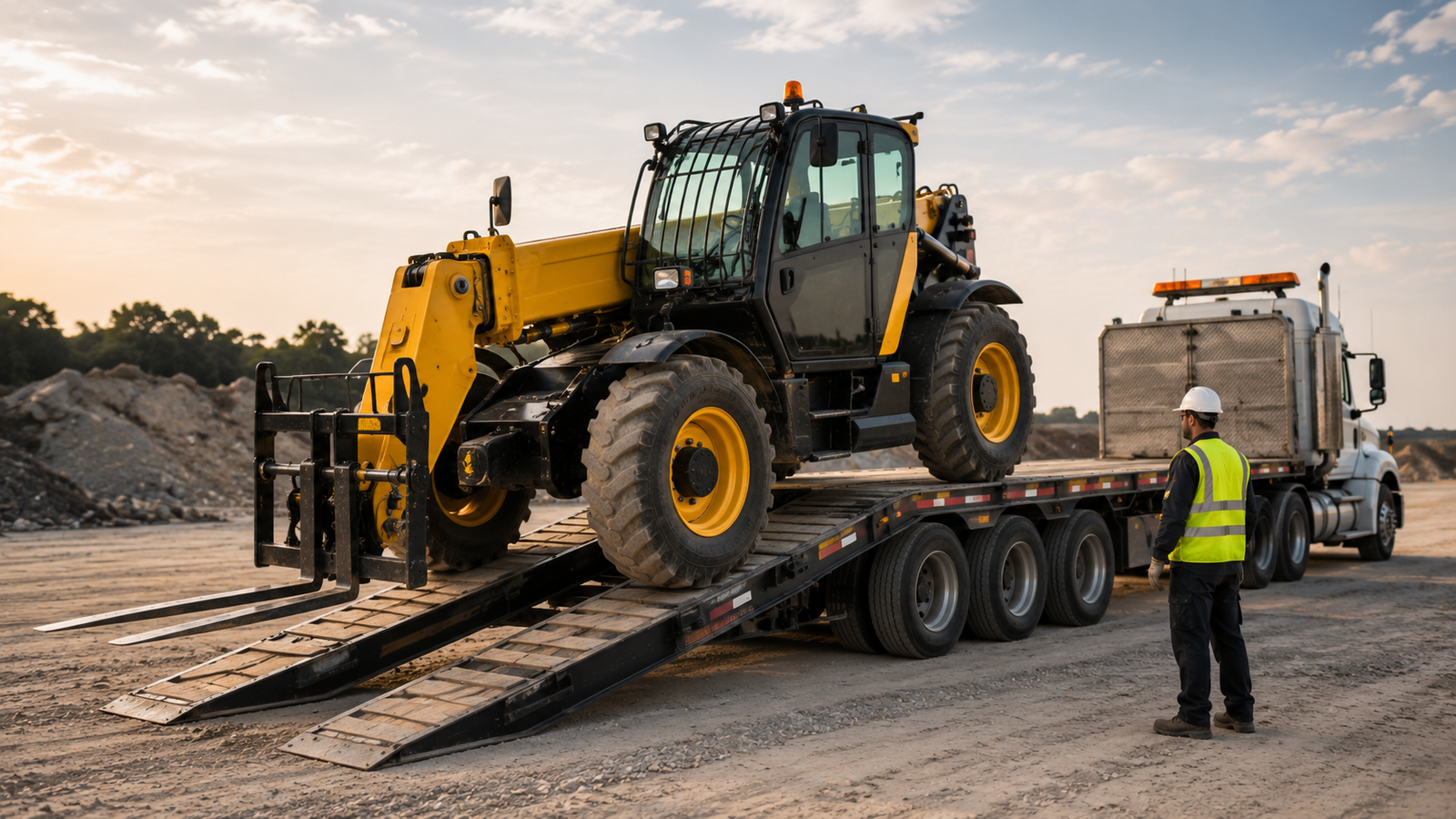
Ramps connect the ground to the trailer. They must handle the machine weight. Do not exceed ramp capacity. Overloaded ramps break. Use the shallowest angle possible for stability. Secure ramps to the trailer using pins or straps.
Step 5: Load the Machine
Loading requires skill. Take your time. Position the trailer in line with your approach. Chock the trailer tires. Align your machine with the ramps and use a spotter. Drive onto the ramps slowly. Keep the boom low. Center the machine on the trailer front to back and side to side.
Step 6: Secure the Machine for Telehandler Transport
Securing is the most important step. The machine must not move during telehandler transport. Use proper tie-downs and manufacturer points. Do not tie to weak points like hydraulic hoses.
Chains are the most secure method. Use grade 70 transport chains and load binders. Attach chains to tie-down points and tighten the binders.
Use at least four tie-downs (two on the front, two on the rear). DOT regulations for telehandler transport require specific numbers. Cross tie when possible by attaching chains diagonally to prevent side movement.
Check all tie-down tension. Recheck after driving a few miles. Tie-downs loosen during telehandler transport. Recheck at the first stop.
Step 7: Check Load Height and Width
Your load must meet legal limits. Maximum height is usually 13 feet 6 inches. Maximum width is 8 feet 6 inches. Wider loads require permits and escorts. Contact your local DOT office if you exceed limits.
Step 8: Plan Your Route
Route planning prevents problems. Check bridge heights on your route. Use a GPS designed for trucks. Check road weight limits, road conditions, and weather. Detours add time, and snow makes roads dangerous.
Step 9: Drive Carefully During Telehandler Transport
Performing telehandler transport changes how your vehicle handles. You must adjust your driving. Leave extra following distance because your stopping distance is longer. Do not tailgate.
Drive slower than usual. Reduce speed on curves and hills. Do not brake suddenly or turn sharply. Wind affects tall loads. Slow down in high wind and pull over if conditions are severe.
Step 10: Unload Safely
Unloading is as dangerous as loading. Position the trailer on level ground and chock the tires. Secure the ramps. Start the engine, lower the boom, and drive off slowly. Stop on level ground and engage the parking brake.
Common Mistakes to Avoid
Overloading the trailer is illegal and dangerous. Improper tie-downs lead to shifting loads. Forgetting to lower the boom creates instability. Driving too fast causes accidents. Finally, bad weather drastically affects telehandler transport.
Cost of Poor Telehandler Transport
Poor telehandler transport costs money. Accidents damage the machine. Accidents damage the trailer. Accidents injure workers.
| Problem | Estimated Cost |
|---|---|
| Machine falls off trailer | $10,000 – $50,000 |
| Accident with other vehicle | $5,000 – $100,000 |
| DOT violation fine | $1,000 – $10,000 |
| Injury claim | $10,000 – $500,000 |
| Machine damage from improper loading | $2,000 – $20,000 |
Proper telehandler transport saves money. Proper telehandler transport saves lives.
Our Business Partner
Bottom Line
Telehandler transport requires care. Choose the right trailer. Prepare your machine. Find a safe loading area. Use proper ramps. Load carefully. Secure the machine properly. Check height and width. Plan your route. Drive carefully. Unload safely.
Follow these steps every time you move your machine. Safe telehandler transport protects your investment, your workers, and other drivers.
Transporting is not a race. Take your time. Check everything twice. Ask for help when needed. Master telehandler transport and your business will run safely and efficiently.