
Table of Contents
- Why Telehandler Fuel Efficiency Matters
- Way 1: Match the Machine to the Job
- Way 2: Reduce Idle Time
- Way 3: Maintain Proper Tire Pressure
- Way 4: Use the Right Travel Speed
- Way 5: Plan Your Routes
- Way 6: Maintain Your Telehandler
- Way 7: Improve Operator Habits
- Savings Summary Table
- Quick Start Guide
- Real Example of Savings
- Our Business Partner (Video)
- Bottom Line
Diesel prices keep going up. Your telehandler burns fuel every shift. The cost adds up quickly. You feel it in your operating budget. Fuel is one of your biggest expenses. You cannot stop using fuel. But you can use less. Small changes add up to big savings.
This guide covers 7 ways to master telehandler fuel efficiency and cut your diesel costs by 20 percent. These are practical steps. You can start today. No expensive modifications required.
Why Telehandler Fuel Efficiency Matters
Your telehandler uses 3 to 6 gallons of diesel per hour. At $4 per gallon, that is $12 to $24 per hour. Over a 2,000 hour year, you spend $24,000 to $48,000 on fuel. Cutting fuel use by 20 percent saves $4,800 to $9,600 per year. That money goes to your bottom line. You buy less fuel. You pollute less.
Better telehandler fuel efficiency also reduces engine wear. Less fuel means less work for the engine. Your telehandler lasts longer. Repair costs go down.
Way 1: Match the Machine to the Job
Your telehandler has different power modes. Standard mode gives you full power and speed. Use this for lifting heavy loads or traveling on slopes. Economy mode reduces engine speed. It delivers enough power for light work like moving empty or traveling on flat ground.
Switch to economy mode when you do not need full power. Economy mode saves 10 to 15 percent fuel. Over a year, this adds up to excellent telehandler fuel efficiency. You save thousands of dollars.
Way 2: Reduce Idle Time
Telehandlers idle a lot. Operators leave the engine running while waiting for loads. Idling burns fuel without doing work. Your machine goes nowhere and wastes diesel.
Track your idle time and set an idle policy. Create a rule to shut down the engine after three minutes of idle. Train operators on this policy and use auto-idle features if available.
Reducing idle time is a massive step for telehandler fuel efficiency, saving 5 to 10 percent fuel. Reducing idle by one hour per day saves $1,000 per year.
Way 3: Maintain Proper Tire Pressure for Telehandler Fuel Efficiency
Tire pressure affects fuel efficiency. Underinflated tires create rolling resistance. Your engine works harder to move the machine. It burns more fuel. Check tire pressure daily using a quality gauge.
Set the correct pressure based on your load and terrain. Higher pressure reduces rolling resistance. This is free to implement, extends tire life, and boosts telehandler fuel efficiency.
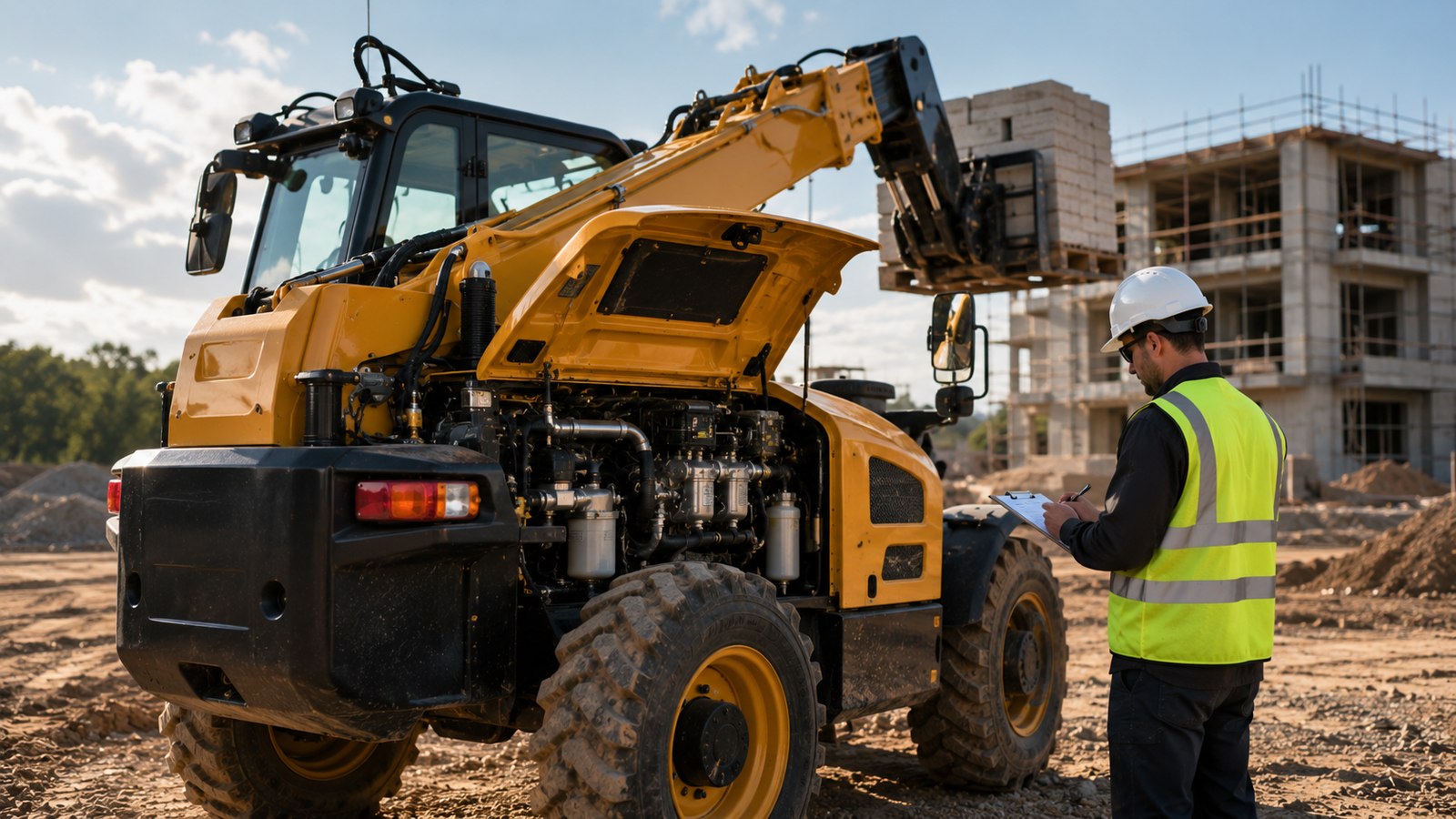
Way 4: Use the Right Travel Speed
Speed directly affects telehandler fuel efficiency. Higher speed burns more fuel. Lower speed saves fuel. Find the balance. Reducing travel speed saves fuel because the engine turns slower.
Avoid rapid acceleration. Accelerate gradually to let the engine work less. Use engine braking to slow down instead of service brakes on long descents.
Reducing speed saves 5 to 10 percent fuel and masters telehandler fuel efficiency. Slower driving is safer and reduces accidents.
Way 5: Plan Your Routes
Inefficient routes waste fuel and ruin your telehandler fuel efficiency. You drive extra distance. You make extra trips. You burn extra diesel. Plan your work sequence before you start.
Reduce repositioning by setting up your telehandler in one position to reach multiple work areas. Use GPS or site maps to identify inefficient routes.
Route planning saves 3 to 5 percent fuel, boosting your telehandler fuel efficiency. It also saves time. You get more work done in the same shift.
Way 6: Maintain Your Telehandler
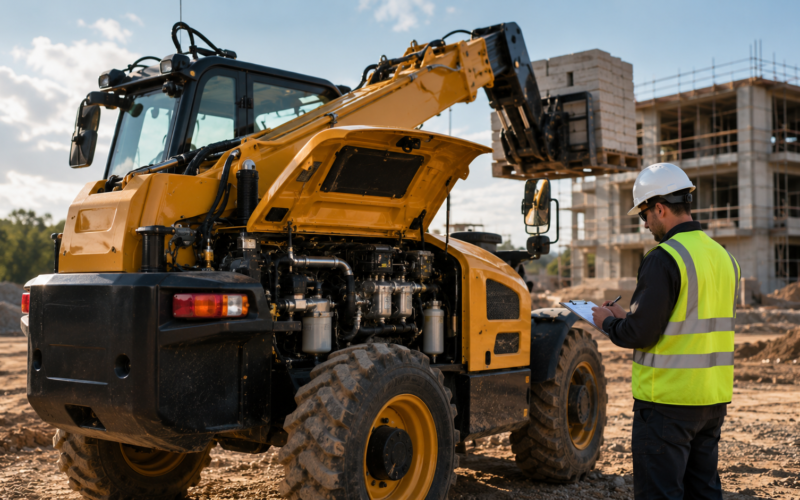
Well-maintained machines burn less fuel. Change air filters to keep dirt out of the engine. Change fuel filters to keep fuel flowing smoothly. While doing these filters, it is a great time to review our guide on telehandler brake maintenance: 5 signs your brakes need immediate service to keep the machine safe.
Use the right engine oil viscosity. Clean the cooling system and check fuel injectors annually to ensure complete fuel burning.
Maintenance guarantees long-term telehandler fuel efficiency. It prevents breakdowns and extends machine life while saving 5 to 10 percent fuel.
Way 7: Improve Operator Habits
Operator behavior affects telehandler fuel efficiency. Good habits save fuel. Bad habits waste fuel. Train your operators to avoid excessive boom movements.
Lower the boom when driving to reduce drag and improve stability. Use the right attachment for the job. Carry full loads to maximize each trip without overloading the machine.
Operator training is the fastest route to better telehandler fuel efficiency. Good habits reduce wear and tear, and save 5 to 10 percent fuel.
Telehandler Fuel Efficiency Summary
You do not need to achieve all savings at once. Start with the easiest changes for maximum impact.
| Fuel Saving Method | Estimated Savings |
|---|---|
| Match the machine to the job | 10-15% |
| Reduce idle time | 5-10% |
| Maintain proper tire pressure | 3-5% |
| Use the right travel speed | 5-10% |
| Plan your routes | 3-5% |
| Maintain your telehandler | 5-10% |
| Improve operator habits | 5-10% |
| Total potential savings | 36-65% |
Quick Start Guide
Start with these three steps today to master telehandler fuel efficiency. If your site relies on heavy road equipment like a Typhon Fury 1-Ton Vibratory Compactor Asphalt Roller, you know that optimizing machine run-time across the board saves massive amounts of money.
- Step 1: Reduce Idle Time: Set a three-minute idle rule. This gives you 5 to 10 percent savings immediately.
- Step 2: Check Tire Pressure: Inflate to specification today. This gives you 3 to 5 percent savings.
- Step 3: Train Operators: Hold a 15-minute meeting today to teach these ways.
Real Example of Savings
A contractor runs five telehandlers. Each works 2,000 hours per year, using 4 gallons per hour. Total fuel use is 40,000 gallons per year. At $4 per gallon, fuel cost is $160,000 per year.
The contractor reduces idle time. Savings are 5 percent or $8,000. Operators are trained to drive slower. Savings are 5 percent or $8,000. Tire pressure is checked weekly, saving 3 percent or $4,800.
Total savings are $20,800 per year. The contractor invests nothing, proving that telehandler fuel efficiency goes straight to the bottom line.
Our Business Partner
Bottom Line
Mastering telehandler fuel efficiency saves money. Seven ways cut diesel costs by 20 percent or more. Match the machine to the job. Reduce idle time. Maintain proper tire pressure. Use the right travel speed. Plan your routes. Maintain your telehandler. Improve operator habits.
Start with the easiest changes. Reduce idle time. Check tire pressure. Train operators. Fuel costs are a major expense. Every gallon you save goes to your profit.
Your engine lasts longer. Your workers stay productive. Cut your diesel costs starting today. Your business will see the difference and your bottom line will improve drastically.