
Table of Contents
- Why Brake Care Matters
- Sign 1: Spongy or Soft Brake Pedal
- Sign 2: Pulling to One Side
- Sign 3: Grinding or Squealing Noise
- Sign 4: Brake Fluid Leak
- Sign 5: Parking Brake Failure
- Additional Maintenance Tips
- Cost of Brake Repairs
- When to Call a Professional
- Safety Rules for Brakes
- Our Business Partner (Video)
- Bottom Line
Your telehandler weighs 20,000 pounds. It moves at 20 miles per hour. It carries heavy loads. Stopping this machine requires working brakes.
Brake failure is dangerous. It causes collisions. It injures workers. It damages equipment. You cannot afford brake problems.
This guide covers 5 signs your brakes need immediate service. Catch these signs early as part of your routine telehandler brake maintenance. Fix problems before they become failures and keep your machine safe.
Why Telehandler Brake Maintenance Matters
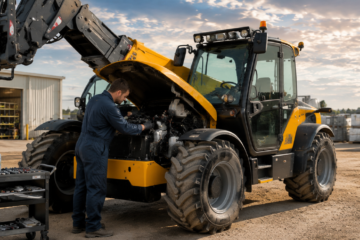
Telehandlers are heavy machines. They carry loads that shift. They work on slopes. They stop and start constantly. Brakes do more than stop the machine. They hold it on slopes. They control speed on declines. They prevent rollaway accidents.
Proper telehandler brake maintenance is required by law. OSHA standards apply. Your insurance company requires it. Your workers depend on it. Neglecting brakes costs lives. It also costs money. Brake repair costs $1,000 to $5,000. Accident costs are much higher.
Sign 1: Spongy or Soft Brake Pedal in Telehandler Brake Maintenance
The brake pedal should feel firm. You press it and the machine stops. A spongy pedal indicates a problem. Do not ignore it. A spongy pedal moves too far. You press down and the pedal sinks. The machine does not stop immediately.
This means air is in the brake lines. Air enters the brake system through leaks. Low brake fluid also causes spongy pedals. Worn brake pads cause soft pedals too. The pads are thin, so the piston travels further.
What to Do: Bleed the brake system immediately as a basic step in telehandler brake maintenance. This removes air from the lines. Fluid replaces the air. The pedal firms up. Inspect brake pads and replace thin pads.
Sign 2: Pulling to One Side During Telehandler Brake Maintenance
Your telehandler should stop straight. You press the brakes and it stays straight. Pulling to one side indicates a problem. The machine veers left or right when you brake. You fight the steering wheel.
Uneven brake pad wear causes pulling. Sticking brake calipers cause pulling too. One caliper does not release. Contaminated brake fluid causes pulling because dirt blocks the lines.
What to Do: Inspect all brake pads. Replace them in pairs. Check caliper operation. Flush the brake system. Replace old fluid, remove contamination, and refill with clean fluid to ensure good telehandler brake maintenance.
Sign 3: Grinding or Squealing Noise Alerts in Telehandler Brake Maintenance
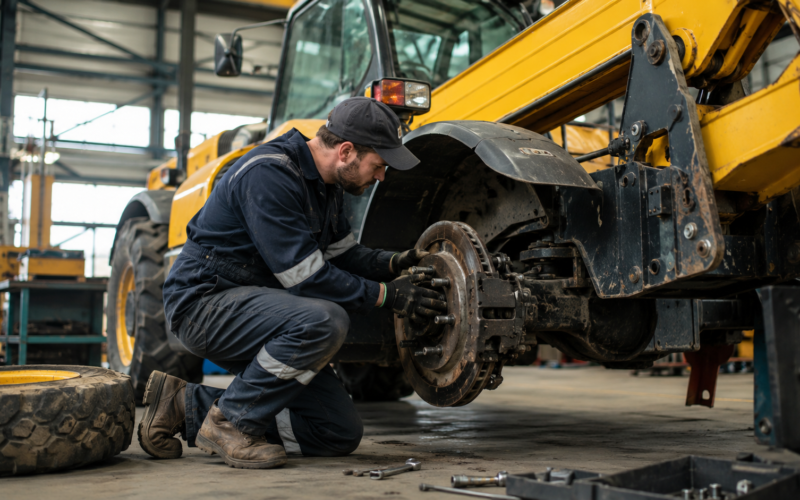
Brakes should operate quietly. You press the pedal and hear nothing. Noise means wear or damage. A grinding sound is metal on metal. The brake pad material is gone. The metal backing plate contacts the rotor. This damages both parts.
A squealing sound is a wear indicator. Brake pads have built-in indicators. They squeal when pads get thin. Squealing can also mean glazed pads. The pads get hot and harden.
What to Do: Replace pads immediately if you hear grinding. Do not drive the machine. Inspect pads if you hear squealing. Measure pad thickness and replace pads that are below specification as part of your telehandler brake maintenance schedule.
Sign 4: Brake Fluid Leaks and Telehandler Brake Maintenance
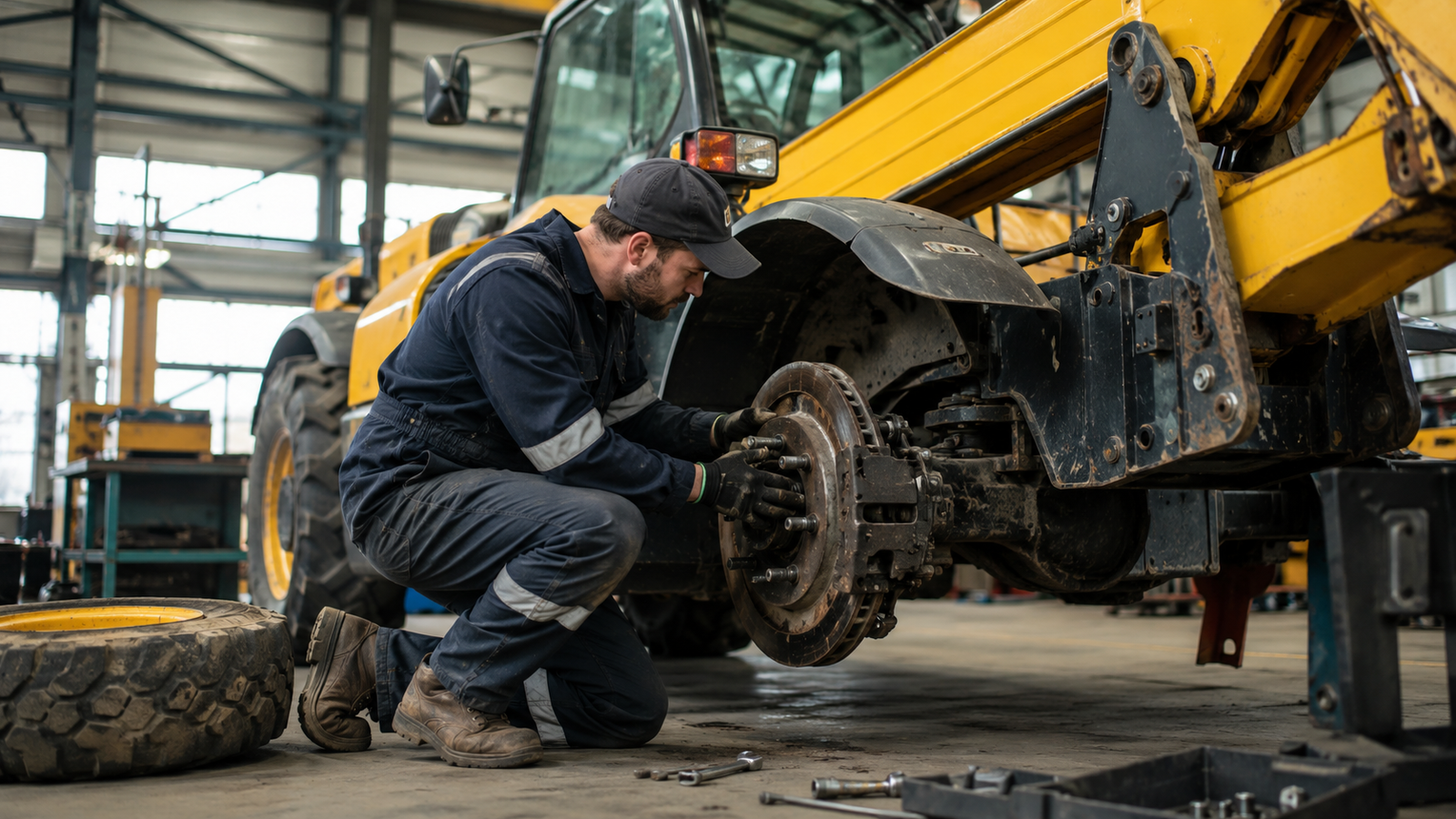
Brake fluid leaks are visible. You see fluid on the ground. You see fluid on brake components. Any leak is a problem. Brake fluid escapes from the system, pressure drops, and brakes lose power.
Worn brake hoses cause leaks. Loose brake fittings cause leaks. Damaged brake calipers or master cylinders cause leaks.
What to Do: Find the source of the leak. Tighten loose fittings using the correct torque. Replace damaged hoses. Strict telehandler brake maintenance means you use manufacturer approved hoses. Do not patch or repair hoses.
Sign 5: Parking Brake Failure Demands Telehandler Brake Maintenance
The parking brake holds the machine still. It prevents rollaway accidents. It must work every time. If you set the parking brake and the machine rolls anyway, it is dangerous on slopes and near workers.
Worn parking brake pads, stretched parking brake cables, contaminated pads, or misadjusted parking brakes cause this failure.
What to Do: Inspect parking brake pads. Replace worn pads. Adjust the parking brake cable. Follow the manufacturer procedure and set the correct tension to master your telehandler brake maintenance.
Additional Telehandler Brake Maintenance Tips
These tips keep your brakes working longer. Test your brakes before you start work. Check brake fluid level every week. Bleed brake lines monthly. Use the correct, manufacturer-recommended brake fluid.
Add these steps to your telehandler brake maintenance routine every day. While focusing on machine care, if your jobs require a compact powerhouse instead, check out the brand new Typhon Stomp 1760lbs Mini Skid Steer. Alternatively, if you want to expand what your current machine can do, read our guide on telehandler attachments: 7 tools that save you from buying extra machines. Do not overload your machine, as excess weight wears brakes faster.
Cost of Brake Repairs
Brake repairs vary in cost. Fix problems early to save money. Here are typical repair costs.
| Repair Type | Estimated Cost |
|---|---|
| Brake pad replacement | $200 – $500 per axle |
| Brake rotor replacement | $500 – $1,000 per axle |
| Brake fluid flush | $100 – $200 |
| Brake hose replacement | $150 – $300 per hose |
| Caliper rebuild | $200 – $500 per caliper |
| Master cylinder replacement | $300 – $800 |
| Complete brake overhaul | $2,000 – $5,000 |
Early fixes cost less. A pad replacement costs $500. A complete overhaul costs $5,000. Save money by catching problems early through consistent telehandler brake maintenance.
When to Call a Professional
Some brake work requires a professional. Master cylinder replacement requires special tools. Brake lines and calipers need professional attention. Improper repairs cause failures. If you cannot diagnose the problem, call a professional. Guessing costs more and is dangerous.
Safety Rules for Telehandler Brakes
Test brakes before each shift in a clear area. Use the parking brake always, even on level ground. Lower the boom before you set the parking brake because high booms affect stability. Do not rely on engine braking; use your service brakes. Slow down on slopes.
Our Business Partner
Bottom Line
Brake failure is dangerous. Five signs tell you your brakes need service: spongy pedal, pulling to one side, grinding or squealing noise, fluid leak, and parking brake failure. Keep your telehandler brakes working with strict telehandler brake maintenance. Your safety depends on them.
Catch these signs early. Bleed the system. Replace worn pads. Fix leaks. Adjust the parking brake. Test your brakes daily and service them monthly. Brake repair costs less than accidents.
Your workers depend on them. Your business depends on excellent telehandler brake maintenance. Fix problems before they become failures and keep your machine working safely for years to come.