
Table of Contents
- 1. Walk Around Inspection
- 2. Fluid Levels
- 3. Tire Condition
- 4. Boom and Hydraulic Hoses
- 5. Forks and Attachments
- 6. Cab and Controls
- 7. Brakes and Parking Brake
- 8. Hydraulic System Operation
- 9. Warning Lights and Indicators
- 10. Overall Function Test
- Keep a Log & Fix Problems
- The Cost of Skipping Checks
- Our Business Partner (Video)
- Bottom Line
You walk up to your telehandler. You start the engine. You get to work. This is what most operators do. It is also a mistake. Before jumping in, if you’re still evaluating machinery, check out our guide on telehandler vs forklift: which machine is right for your site.
Skipping pre-shift checks costs you money. It costs you time. It can cost you safety. A simple 10-minute inspection prevents breakdowns. It prevents accidents. It extends machine life. This telehandler maintenance checklist covers the 10 things you must check before every shift. Print it. Post it in the cab. Follow it every day.
1. Walk Around Inspection
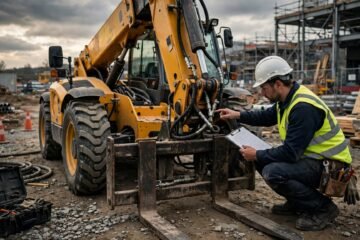
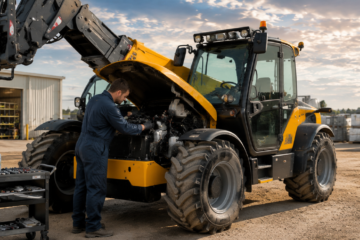
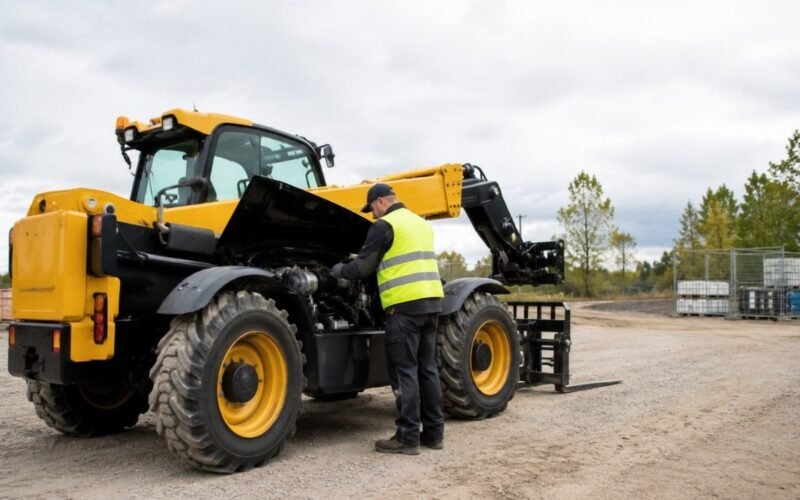
Start with a full walk around the machine. Look at everything. Do not rush. Your eyes catch problems before they become failures. Make this walk around your first step on your telehandler maintenance checklist every day.
Check for leaks under the machine. Look for oil spots. Look for coolant spots. Look for fuel spots. Any leak means a problem. Fix it before you start. Check for damage on the frame. Look for dents. Look for cracks. Look for bent parts. Damage affects machine strength and safety.
Check for loose parts. Look at bolts. Look at pins. Look at hoses. Loose parts fall off. They also cause sudden failures. Do this before you enter the cab. Do it with the machine off.
2. Fluid Levels
Telehandlers use several fluids. Each fluid serves a critical function. Low fluid levels cause damage. Damage leads to expensive repairs. A vital part of any telehandler maintenance checklist is checking the engine oil using the dipstick.
Check the hydraulic fluid. Look at the sight glass. Hydraulic fluid powers the boom. Low fluid means slow operation and damages pumps. Check the coolant level. Low coolant overheats the engine. Adding fluid checks to your telehandler maintenance checklist prevents head gasket failure.
Check the transmission fluid and the fuel level. Diesels are hard to restart after running dry. Check all fluid caps. Make sure they are tight so dirt cannot enter.
3. Tire Condition
Tires support the entire machine. They also provide traction. Worn or damaged tires cause problems. They affect stability, braking, and handling. Your telehandler maintenance checklist must include tire pressure.
Check tire pressure using a gauge. Low pressure causes poor traction. High pressure causes a rough ride. Check tread depth. Replace tires before the wear bars show. Check for cuts and punctures, as any cut can become a blowout.
Check for uneven wear. This indicates alignment or inflation problems. Check wheel lug nuts and make sure they are tight. Loose lug nuts cause wheel separation, which is dangerous.
4. Boom and Hydraulic Hoses
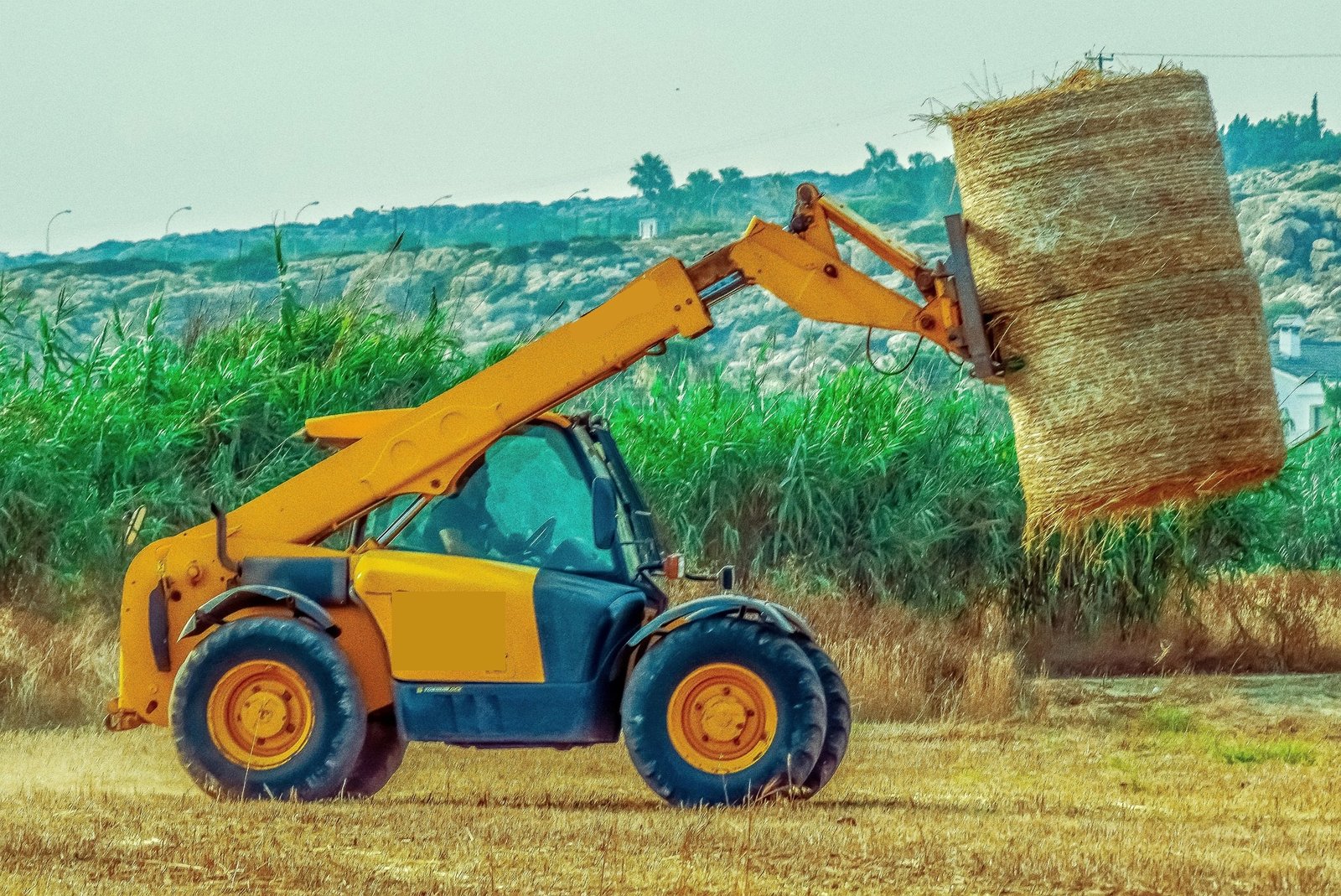
The boom is the heart of the telehandler. According to this telehandler maintenance checklist, checking hydraulic hoses is a priority. Hoses carry pressurized fluid. Any failure here causes sudden boom drop.
Check all hydraulic hoses for cracks, bulges, and wear marks. Check hose connections for leaks. Tighten loose fittings. Check the boom itself for cracks in the steel, bent sections, and rust. Boom failure is catastrophic.
Check boom pins and bushings for wear and play. Include greasing the boom pins in your daily telehandler maintenance checklist. Dry pins wear out faster, but grease extends pin life.
5. Forks and Attachments
Forks and attachments carry your loads. Damaged forks drop loads, injuring workers and damaging materials. A complete telehandler maintenance checklist requires inspecting forks for cracks, especially at the heel.
Check fork tips for wear. Check fork tine alignment. Forks should be parallel. Following your telehandler maintenance checklist ensures the attachment locking mechanism is secure. If your site uses diverse equipment, like a Typhon 1.8 Ton Mini Excavator with 12 Attachments, you know how crucial securing attachments is.
6. Cab and Controls
You spend your shift in the cab. Do not skip the cab inside your telehandler maintenance checklist. Everything must work properly. Check the seat and ensure it locks in position.
Check the seat belt for fraying. Check all controls, steering, and horn. Sticky controls cause jerky movements. Checking the backup alarm is a crucial step in this telehandler maintenance checklist. Also, test lights, flashers, and mirrors.
7. Brakes and Parking Brake
Brakes stop your telehandler. Parking brakes hold it still. Testing the service brakes belongs on every telehandler maintenance checklist. Move forward a few feet and apply brakes firmly.
Test the parking brake on a slope. Your telehandler maintenance checklist reminds you to check brake fluid and brake lines for leaks or damage.
8. Hydraulic System Operation
The hydraulic system does the lifting. Testing boom lift is part of the telehandler maintenance checklist. Raise the boom empty. Listen for unusual sounds and watch for jerky movement.
Test boom extension and retract it fully. Test boom lower and tilt functions. Make sure auxiliary functions work smoothly before you start loading.
9. Warning Lights and Indicators
Modern telehandlers have electronic systems. A smart telehandler maintenance checklist includes watching dashboard lights when you start the engine. Any light staying on indicates a problem.
Check the hour meter and load chart. Checking the overload warning system is a mandatory telehandler maintenance checklist item. Test it to ensure it warns you correctly.
10. Overall Function Test
The final step of the telehandler maintenance checklist is a full function test. Drive the machine forward and backward. Test steering and brakes.
Lift and extend the boom, complete a full cycle. Do this test in a clear area away from workers.
Keep a Log & Fix Problems
Every time you complete this telehandler maintenance checklist, write down every check. Record any problems you find. A log tracks machine health and provides proof of maintenance.
When you find problems during your telehandler maintenance checklist, some are minor like a loose bolt. Some are serious like a cracked boom. Do not operate a machine with serious problems.
The Cost of Skipping Checks
One missed step on your telehandler maintenance checklist costs you. A low fluid level ruins a pump. A missed tire check causes a blowout. A missed hose check causes a burst.
Pre-shift checks using a telehandler maintenance checklist are cheap. Repairs are expensive. Accidents are devastating. The choice is clear.
Our Business Partner
Bottom Line
Make this telehandler maintenance checklist part of your routine. Post it in the break room. Train every operator on each step. Ten checks take ten minutes and save thousands.
Start each shift with this telehandler maintenance checklist. End each shift with a clean machine. Your telehandler will reward you with years of reliable service.