
Table of Contents
- Why Buying Telehandler Attachments Beats Buying Machines
- Attachment 1: Bucket
- Attachment 2: Winch
- Attachment 3: Crane Jib
- Attachment 4: Work Platform
- Attachment 5: Sweeper
- Attachment 6: Grapple
- Attachment 7: Auger
- Cost Comparison Summary
- How to Choose Your First Tool
- Maintenance and Care
- Our Business Partner (Video)
- Bottom Line
You own a telehandler. You use it daily. It lifts pallets. It moves materials. You think it does enough. You are wrong.
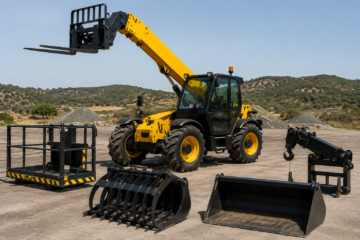
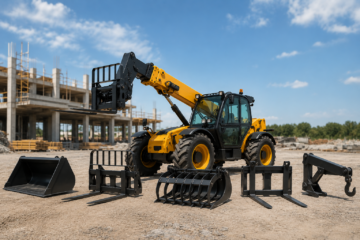
Your telehandler can do much more. Attachments make it a multi-purpose machine. You do not need to buy separate equipment. One machine with seven tools replaces seven machines.
This guide covers 7 telehandler attachments that save you from buying extra machines. Each tool pays for itself quickly. Each one expands what your telehandler can do.
Why Buying Telehandler Attachments Beats Buying Machines
Buying separate machines costs a fortune. A skid steer costs $30,000. A crane costs $50,000. A boom lift costs $20,000. A sweeper truck costs $30,000. Add these up and you spend over $100,000.
Telehandler attachments cost much less. A bucket costs $2,000. A winch costs $4,000. A jib costs $3,000. A platform costs $3,000. A sweeper costs $4,000. Your total attachment investment is around $16,000.
You also save on maintenance. One machine needs one set of tires. One machine needs one engine service. One machine needs one storage space. Multiple machines multiply your costs.
Telehandler attachments save you from buying extra machines. Your telehandler becomes the only machine you need.
Attachment 1: Bucket
As one of the most common telehandler attachments, a bucket saves you from buying a skid steer or wheel loader. It turns your telehandler into a loading machine.
What a Bucket Does & Jobs You Can Do
A bucket attaches to your carriage. It scoops loose materials, lifts them, and dumps them where you need them. Construction sites use buckets for gravel and to backfill trenches. Farms use buckets for grain and silage, while landscaping uses them for soil and mulch.
Cost Savings & Safety Tips
A skid steer costs $30,000. A bucket costs $2,000. You save $28,000, and it pays for itself in two days of use. Keep the bucket low when driving, as a loaded bucket affects stability. Check the attachment daily to make sure it locks securely.
Attachment 2: Winch
Among heavy-duty telehandler attachments, a winch saves you from buying a recovery truck or tow vehicle. It adds pulling power to your telehandler.
What a Winch Does & Jobs You Can Do
A cable spools out from the winch drum. You attach the cable to an object and pull it using hydraulic power. Construction sites drag concrete forms into position. Demolition sites pull broken concrete. Farms use winches for dragging broken tractors.
Cost Savings & Safety Tips
A recovery truck costs $400 per trip or $40,000 to buy. A winch costs $4,000. You save $36,000. Stand clear of the cable during pulling, and use a dampener blanket to absorb energy if the cable breaks.
Attachment 3: Crane Jib
A crane jib is unique among telehandler attachments. It saves you from buying a mobile crane. It extends your reach for precise placement.
Jobs You Can Do & Savings
Construction sites use jibs for placing roofing materials on roof peaks. Steel erection uses jibs for beams. A mobile crane costs $50,000. A jib costs $3,000. You save $47,000. Check your load chart with the jib attached, as it reduces capacity.
Attachment 4: Work Platform
A work platform is one of the most vital telehandler attachments. It saves you from buying a boom lift or scissor lift and lifts workers safely to height.
Jobs You Can Do & Savings
Facility maintenance uses platforms to change high bay lights. Construction uses them to install drywall on ceilings. A boom lift costs $20,000. A platform costs $3,000. You save $17,000. Only use approved platforms and ensure all workers use fall protection.
Attachment 5: Sweeper
A sweeper is a great addition to your telehandler attachments. It saves you from buying a street sweeper or floor scrubber, keeping your site clean and safe.
Jobs You Can Do & Savings
Construction sites use sweepers for removing gravel. Warehouses use them for removing dust from aisles. A street sweeper costs $30,000. A sweeper attachment costs $4,000. You save $26,000.
Attachment 6: Grapple
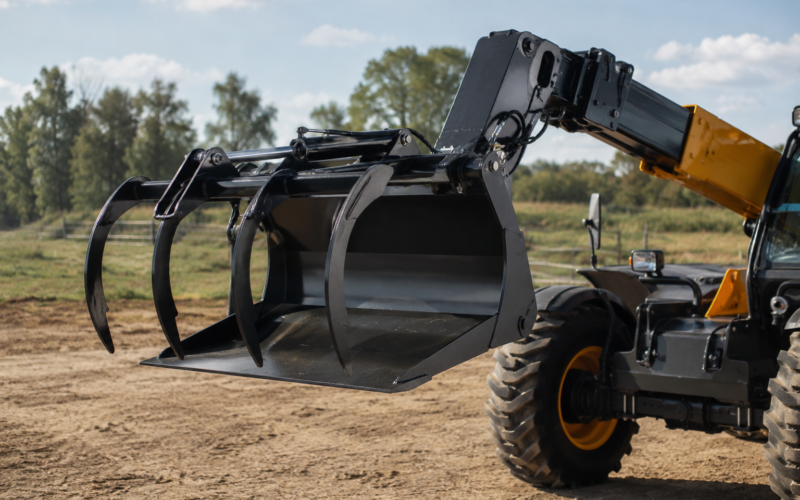
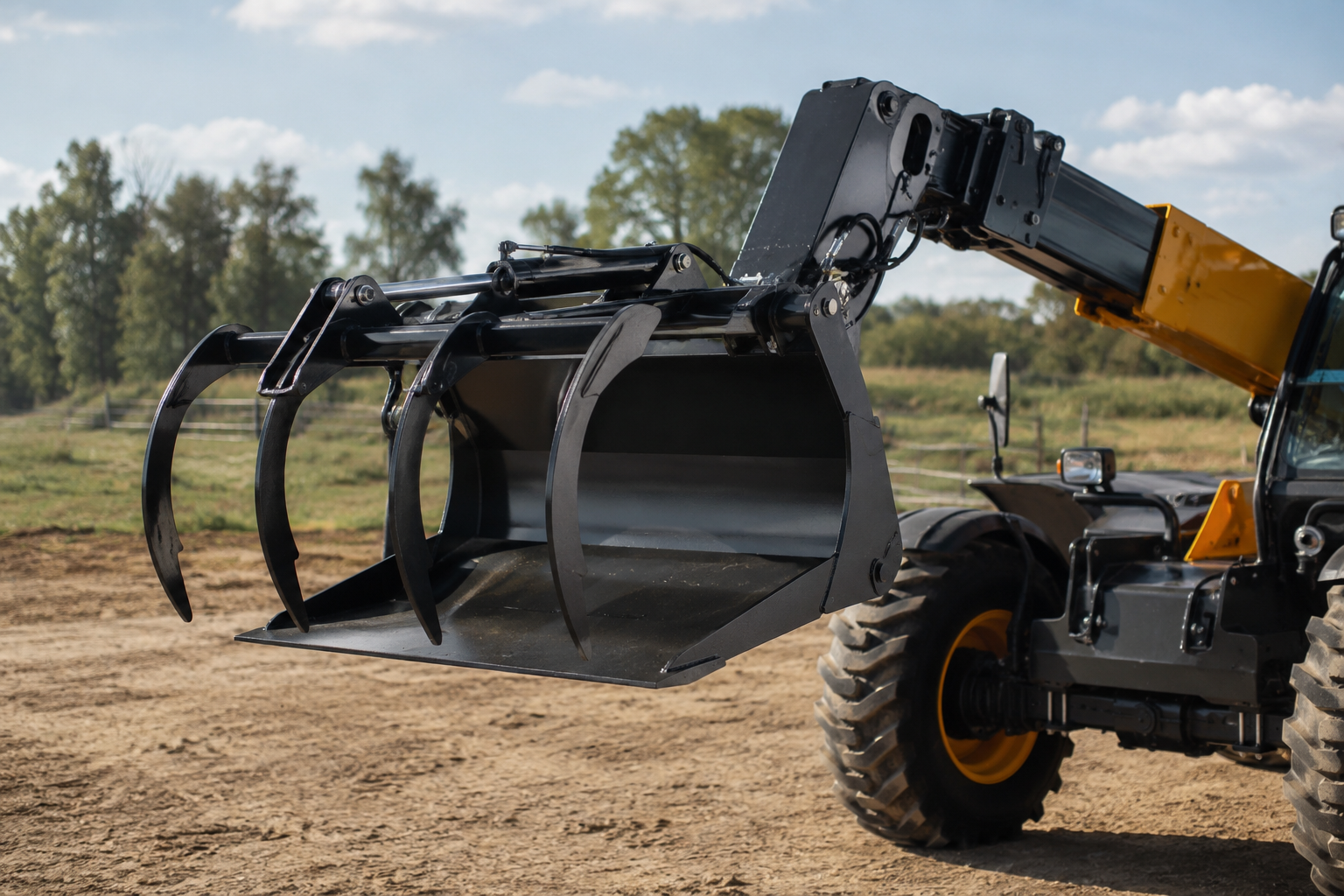
When evaluating telehandler attachments, a grapple saves you from buying a log loader or scrap handler. It grabs and moves irregular loads.
Jobs You Can Do & Savings
Land clearing uses grapples to pick up trees and brush. Scrap yards use them to grab metal. A log loader costs $35,000. A grapple costs $5,000. You save $30,000. Keep loads secure, as grabbed objects can slip.
Attachment 7: Auger
An auger rounds out our list of telehandler attachments. It saves you from buying a skid steer with an auger attachment or a dedicated post hole digger. If you are taking on major excavation, you could look at a Typhon Terror XVII Pro Mini Excavator instead, but an auger handles standard holes perfectly.
Jobs You Can Do & Savings
Fencing uses augers to drill holes for posts. Construction uses them for foundations. A skid steer with an auger costs $35,000. An auger attachment costs $4,000. You save $31,000. Always check for underground utilities before drilling.
Cost Comparison Summary for Telehandler Attachments
See exactly how much you save by outfitting your existing machine instead of buying specialized heavy equipment.
| Attachment | Cost | Machine It Replaces | Machine Cost | Savings |
|---|---|---|---|---|
| Bucket | $2,000 | Skid steer | $30,000 | $28,000 |
| Winch | $4,000 | Recovery truck | $40,000 | $36,000 |
| Crane jib | $3,000 | Mobile crane | $50,000 | $47,000 |
| Work platform | $3,000 | Boom lift | $20,000 | $17,000 |
| Sweeper | $4,000 | Street sweeper | $30,000 | $26,000 |
| Grapple | $5,000 | Log loader | $35,000 | $30,000 |
| Auger | $4,000 | Skid steer with auger | $35,000 | $31,000 |
| Total | $25,000 | $240,000 | $215,000 |
Your machine with seven telehandler attachments costs $25,000 in attachments. Separate machines cost $240,000. You save an incredible $215,000.
How to Choose Your First Telehandler Attachments
You cannot buy every tool at once. Start with the ones you need most. Add others as your work requires. Evaluate your jobs and note which tools you rent or borrow. If you rent a skid steer once a month, buy a bucket first. Add a winch for tough jobs, a jib for reach, a platform for height work, and a grapple for irregular loads.
Telehandler Attachments Maintenance
Your telehandler attachments need care too. Maintain them properly for long life. Inspect them before each use for cracks and wear. Along with attachment care, do not forget your machine itself; refer to our guide on telehandler boom maintenance to keep everything safe.
Grease moving parts like winch spools and grapple pivot points. Clean dirt off buckets and forks after use, as buildup adds weight and causes corrosion. Store them indoors if possible.
Our Business Partner
Bottom Line
These tools save you from buying extra machines. A bucket replaces a skid steer. A winch replaces a recovery truck. A jib replaces a crane. A platform replaces a boom lift. A sweeper replaces a street sweeper. A grapple replaces a log loader. An auger replaces a post hole digger.
Seven tools cost $25,000. Seven separate machines cost $240,000. You save $215,000. Start with the tools you need most, evaluate your jobs, and let the numbers guide your purchase. Maintain your equipment properly and store them indoors.
Invest in telehandler attachments. Your telehandler becomes more productive. You save money. You do not buy extra machines. Your business grows.

[…] system gives you versatility. To see exactly which tools to buy for these jobs, check our guide on telehandler attachments that save you money. These features make these telehandler applications useful in unexpected […]