
Table of Contents
- Why Boom Maintenance Matters
- Check 1: Visual Inspection
- Check 2: Pins and Bushings
- Check 3: Hydraulic Cylinders
- Check 4: Hydraulic Hoses
- Check 5: Extension and Retraction
- Check 6: Wear Pads and Slides
- Check 7: Attachment Locks
- Maintenance Schedule Summary
- Signs You Need Immediate Service
- Cost of Boom Repairs
- Our Business Partner (Video)
- Bottom Line
The boom is the most important part of your telehandler. It does all the lifting. It takes all the stress. It wears out faster than any other component.
Boom failure stops your work. It also costs a lot to fix. A new boom costs $15,000 to $30,000. Labor adds another $5,000. Downtime costs even more. Preventive telehandler boom maintenance saves you money. It keeps your machine working. It keeps your workers safe. This guide covers 7 checks you must perform regularly.
Why Telehandler Boom Maintenance Matters
The boom extends and retracts hundreds of times per shift. It carries heavy loads. It operates at different angles. All of this causes wear. Hydraulic cylinders push the boom, hoses carry pressurized fluid, and pins and bushings hold everything together. Any of these parts can fail.
A boom failure is dangerous. The boom drops suddenly. Loads fall. Workers get injured. Regular telehandler boom maintenance catches problems early. Small repairs cost less. Small problems do not become big failures.
Check 1: Visual Inspection for Telehandler Boom Maintenance
Start with your eyes. Look at the boom every day. As a core part of telehandler boom maintenance, look for damage. Look for wear. Look for anything unusual.
What to Look For & What to Do
Look for cracks in the steel, dents, and bends. Dents weaken the structure and reduce capacity. Look for rust and weld damage. Each section should move smoothly. Do a detailed inspection weekly with a flashlight. Mark any damage with chalk. If you find a crack, stop using the machine and call a qualified technician.
Check 2: Pins and Bushings in Telehandler Boom Maintenance
Pins and bushings hold the boom sections together. They allow the boom to move, but they wear out over time. A key step in telehandler boom maintenance is looking for wear on these pins.
What to Look For & What to Do
Look for wear on the pins and bushings. Bushings should fit tightly. Check for clean grease around the pins. Push on the boom at each pin joint to check for excessive movement. Grease all boom pins daily and replace worn pins immediately.
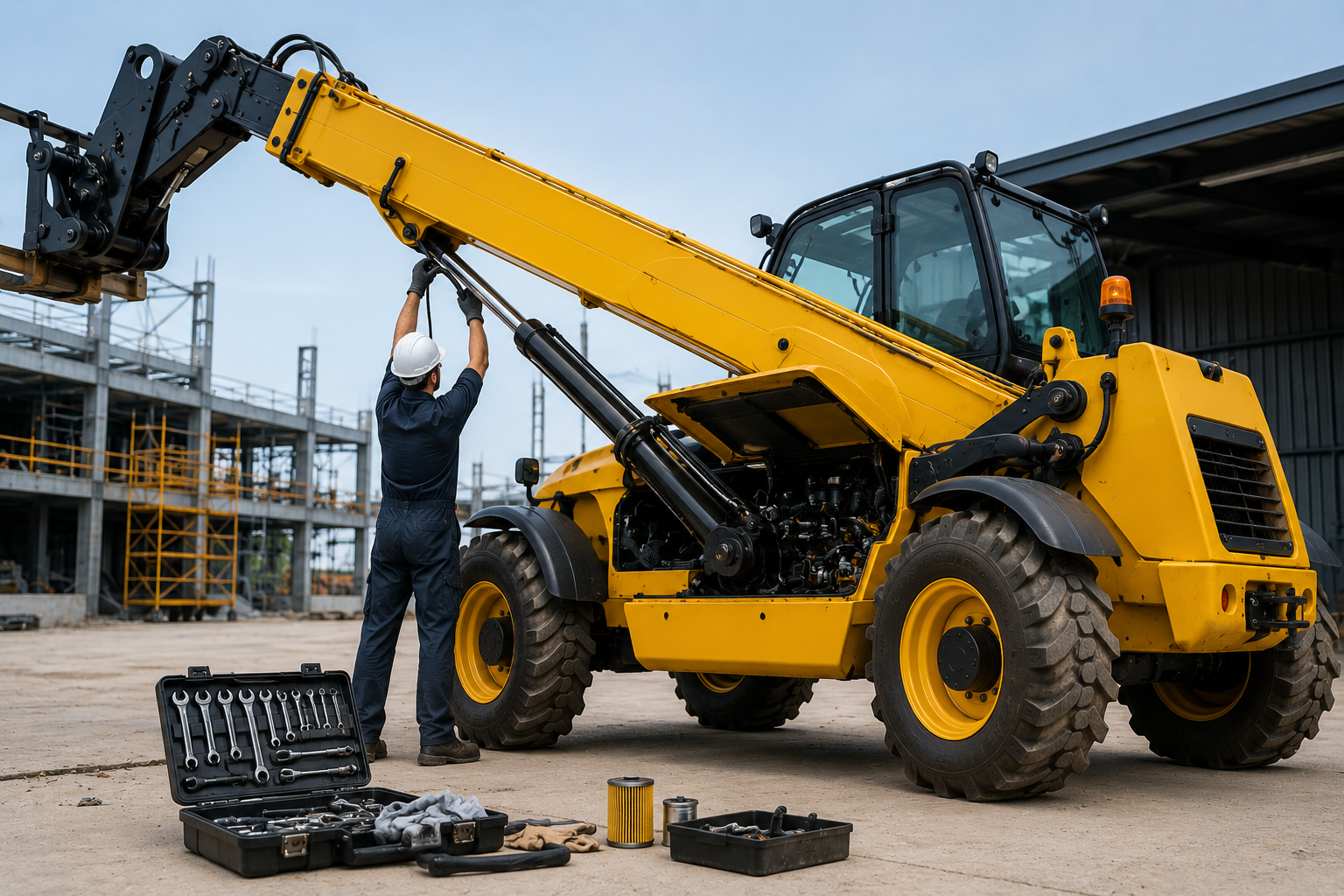
Check 3: Hydraulic Cylinders and Telehandler Boom Maintenance
Hydraulic cylinders move the boom up and down. They are critical components. For proper telehandler boom maintenance, look for hydraulic fluid leaks which indicate seal failure.
What to Look For & What to Do
Look for cylinder rod damage. Scratches and pitting cause seal damage. Listen for cylinder noise—whining or grinding indicates problems. Check cylinder mounting weekly. Tighten cylinder bolts to the correct torque and replace leaking seals immediately.
Check 4: Hydraulic Hoses for Telehandler Boom Maintenance
Hydraulic hoses carry pressurized fluid to the cylinders. Checking them is a crucial aspect of telehandler boom maintenance. They flex with boom movement and wear out over time.
What to Look For & What to Do
Look for cracked hose covers, bulges, and chafing. Look for loose fittings and leaks at connection points. Inspect hoses weekly, especially in cold weather. Replace damaged hoses immediately, route them away from sharp edges, and keep spare hoses on hand.
Check 5: Extension and Retraction in Telehandler Boom Maintenance
The boom must extend and retract smoothly. If you need a broader overview of full machine care, refer to our telehandler maintenance checklist. Any binding indicates a problem in your telehandler boom maintenance routine.
What to Look For & What to Do
Extend and retract the boom slowly. Watch for jerky movement or sticking. Listen for unusual sounds like grinding or squealing. Test boom operation daily. If the boom jerks, check the fluid level. If it sticks, check for debris on the sections.
Check 6: Wear Pads in Telehandler Boom Maintenance
Wear pads and slides keep the boom sections aligned. Replacing worn pads is a cheap but effective part of telehandler boom maintenance. They reduce friction but wear out over time.
What to Look For & What to Do
Look for worn or missing wear pads and damaged slides. Check pad clearance. Check wear pads monthly. Replace worn pads immediately to avoid damaging a boom section that costs thousands of dollars.
Check 7: Attachment Locks for Telehandler Boom Maintenance
Attachment locks secure your forks and tools. If your site uses other heavy machines like the brand new Typhon Stomp Mini Skid Steer Loader, you know attachment locks matter everywhere. Checking them completes your telehandler boom maintenance checks.
What to Look For & What to Do
Check the locking mechanism. Look for wear on the lock pins and damage to the attachment plate. Test the lock function before every shift. Replace worn lock pins immediately and lubricate the mechanism.
Telehandler Boom Maintenance Schedule Summary
| Check | Frequency | Time Required |
|---|---|---|
| Visual Boom Inspection | Daily | 5 minutes |
| Pins and Bushings | Weekly | 10 minutes |
| Hydraulic Cylinders | Daily | 5 minutes |
| Hydraulic Hoses | Weekly | 10 minutes |
| Boom Extension | Daily | 5 minutes |
| Wear Pads and Slides | Monthly | 20 minutes |
| Attachment Locks | Daily | 2 minutes |
Signs You Need Immediate Boom Service
Some problems cannot wait. Act immediately when you see these signs:
- Sudden Boom Drop: Indicates hydraulic failure. Stop using the machine.
- Visible Crack: Stop using the machine. Do not lift any load.
- Hydraulic Fluid Leak: Fluid sprays from a hose. Fix the leak before restarting.
- Unusual Noise: Grinding or popping sounds indicate serious damage.
- Boom Will Not Move: Indicates a control or hydraulic problem.
Cost of Boom Repairs
Boom repairs are expensive. Preventive maintenance costs less. Compare these repair costs to a daily 10-minute check.
| Repair | Estimated Cost |
|---|---|
| Pin replacement | $500 – $1,000 |
| Bushing replacement | $500 – $1,500 |
| Cylinder rebuild | $1,000 – $2,500 |
| Hose replacement | $200 – $500 |
| Wear pad replacement | $300 – $800 |
| Boom section replacement | $15,000 – $30,000 |
| Complete boom assembly | $25,000 – $50,000 |
Our Business Partner
Bottom Line
Proper telehandler boom maintenance saves you money. Daily visual inspections catch problems early. Weekly greasing prevents wear. Monthly checks find hidden issues.
Follow these 7 checks every week. Grease all pins daily. Check cylinders and hoses weekly. Test boom operation daily. Inspect wear pads monthly. Keep a maintenance log to record every check and note any problems.
Train your operators on these checks. They are on the machine every day and see problems first. Your boom keeps your telehandler working. Take care of it, and it will take care of your business.