
Table of Contents
- Problem 1: Engine Cranks But Will Not Start
- Problem 2: Boom Will Not Lift or Extend
- Problem 3: Brakes Are Spongy or Not Holding
- Problem 4: Hydraulic Oil Overheating
- Problem 5: Electrical Issues and Warning Lights
- Tools You Should Keep on Your Machine
- When to Call a Professional
- Preventive Maintenance Stops Problems
- Our Business Partner (Video)
- Final Thoughts
You rely on your machine every day. It lifts. It moves. It places materials. Then one morning it does not start. Or the boom stops moving. Or you hear a noise that was not there yesterday. Panic sets in. You think about service calls and downtime.
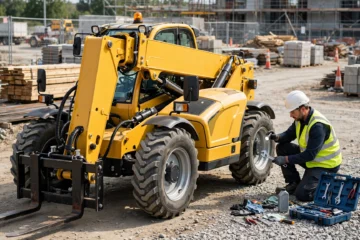
Dealing with telehandler common problems doesn’t have to ruin your day. But here is the thing: many telehandler common problems are simple fixes. You do not need a specialist for everything. A basic tool set and some know-how can get you running again.
Operators panic. They call for help. They wait hours for a mechanic when the fix was something they could have done themselves in fifteen minutes. So let me walk you through five telehandler common problems. I will tell you what causes them, how to fix them yourself, and when to call a pro.
Problem 1: Engine Cranks But Will Not Start
This is the most frustrating of all telehandler common problems. You turn the key. The engine cranks, but it does not fire up.
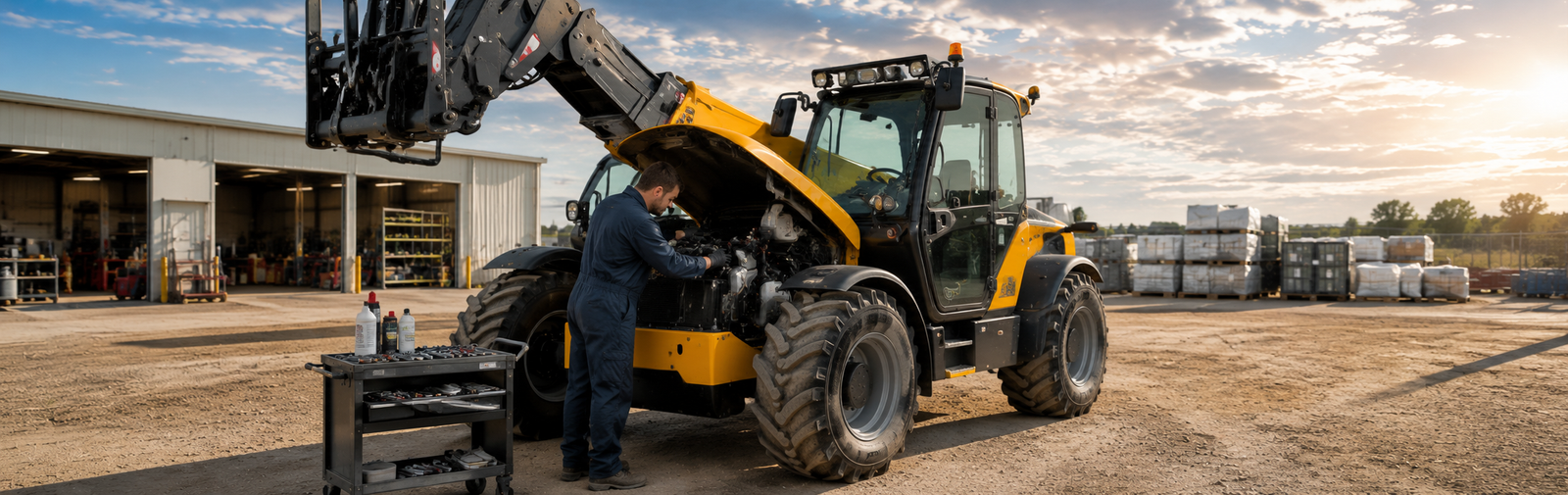
First thing: Check the fuel level. Fuel issues represent the majority of telehandler common problems. The gauge might be broken. Next is the fuel filter. Diesel fuel gets dirty. Turn off the engine, remove the old filter, clean the housing, and prime the system.
If that does not work, check the air filter. A clogged air filter is another cause of telehandler common problems. The engine needs air to run. If none of these work, check the glow plugs with a multimeter or the fuel shutoff solenoid.
Problem 2: Boom Will Not Lift or Extend
You try to lift the boom. Nothing happens. The engine runs fine. This is a serious issue among telehandler common problems. But the fix might be simple.
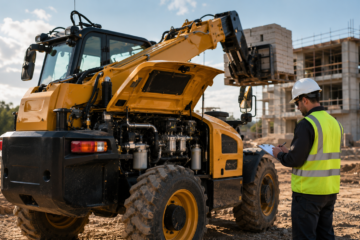
First, check the hydraulic fluid level. Low fluid means the pump cannot build pressure. Add fluid if needed. If fluid is good, check the hydraulic filter. Checking filters prevents major telehandler common problems.
Next, check the hydraulic pump for whining noises. Check the hydraulic relief valve to see if it is stuck open, and finally inspect the control valve for dirt.
Problem 3: Brakes Are Spongy or Not Holding
You press the brake pedal and it goes too far down. This is one of the more dangerous telehandler common problems. Fix it before you operate.
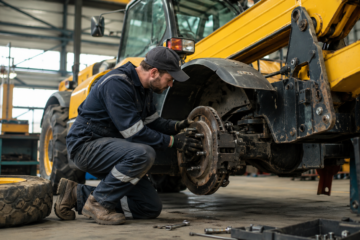
First check brake fluid. Low fluid means air in the system. Bleed the brakes to remove air. Next check brake pads. Brake wear leads to severe telehandler common problems. If pads are thinner than 5mm, replace both sides at the same time.
If the parking brake is not holding, check the cable tension and adjust it. Also, check if the parking brake pads are contaminated with oil or grease.
Problem 4: Hydraulic Oil Overheating
The hydraulic system runs hot. The oil smells burnt. The boom moves slowly. This is a frequent entry in the list of telehandler common problems under heavy use or in hot weather.
First check the radiator and cooler. Use compressed air to blow out the fins. Check the hydraulic oil level. Resolving this fixes many heat-related telehandler common problems.
Look for oil contamination. If the oil is dark and smells burnt, change it. Check the hydraulic pump and the relief valve. Slow down your operation to give the system time to cool.
Problem 5: Electrical Issues and Warning Lights
The dash lights up like a Christmas tree. The machine goes into limp mode. This is the trickiest of all telehandler common problems.
Start with the battery. Clean the terminals and check voltage (a fully charged battery reads 12.6 volts). Check the alternator while running (it should read 13.5 to 14.5 volts). Check all fuses. Blown fuses create confusing telehandler common problems. Finally, check the wiring harness for chafed or broken wires.
Tools You Should Keep on Your Machine
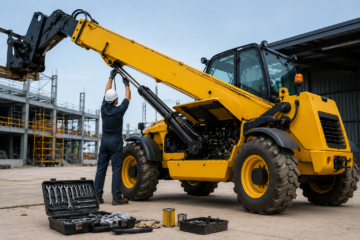
These tools will help you solve many telehandler common problems without waiting for a mechanic. Whether you are fixing a heavy lift machine or a Typhon Terror XVII Pro Prestige Mini Excavator, having the right gear is critical.
| Tool Name | Primary Use |
|---|---|
| Wrench & Socket Set | Basic repairs, tightening loose bolts (Metric & Standard) |
| Multimeter | Essential for electrical problems (checking voltage & continuity) |
| Screwdrivers | Flat head and Phillips in different sizes |
| Pliers & Wire Cutters | For cutting wires, bending, and securing connections |
| Fuel Filter Wrench | Makes removing hard-to-reach filters much easier |
| Spare Fuses & Belts | Quick replacement for blown fuses or snapped hydraulic belts |
| Grease Gun | Daily greasing prevents major mechanical wear and noise |
When to Call a Professional
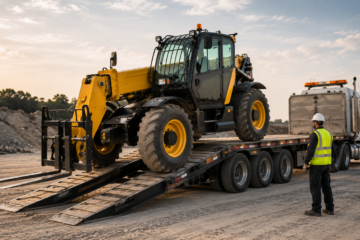
Some telehandler common problems are not DIY jobs. Know your limits. Do not attempt major engine work, transmission work, or complex hydraulic pump replacements. Releasing high pressure incorrectly is dangerous. Modern machines have computers that need dealer programming. Call a pro if you are uncertain.
Preventive Maintenance Stops Problems
Most telehandler common problems are preventable. Grease your machine daily. Check fluids daily. Clean your machine weekly. If you are tired of constant repairs, you might want to review the top telehandlers 2026 to upgrade your fleet.
Our Business Partner
Final Thoughts
Telehandler common problems happen to everyone. They are not a sign of a bad machine. They are part of using heavy equipment. Many problems are simple—a clogged filter, low fluid, or a loose wire.
Keep basic tools on your machine. Know your limits and call a professional for complex repairs. Preventive maintenance is the best fix.
Your machine is valuable. Treat it well. It will serve you for years. By understanding these issues, you will save time, save money, and always know what to do.

[…] not be that person. The daily inspection takes ten minutes. It prevents breakdowns. It prevents accidents. It saves […]