
Table of Contents
Your telehandler works on different surfaces. One day you drive on concrete. The next day you work in mud. Then you move to gravel. The same telehandler tires do not work well on all surfaces. If you are still deciding on the machine itself, read our guide on telehandler vs forklift: which machine is right before worrying about the wheels.
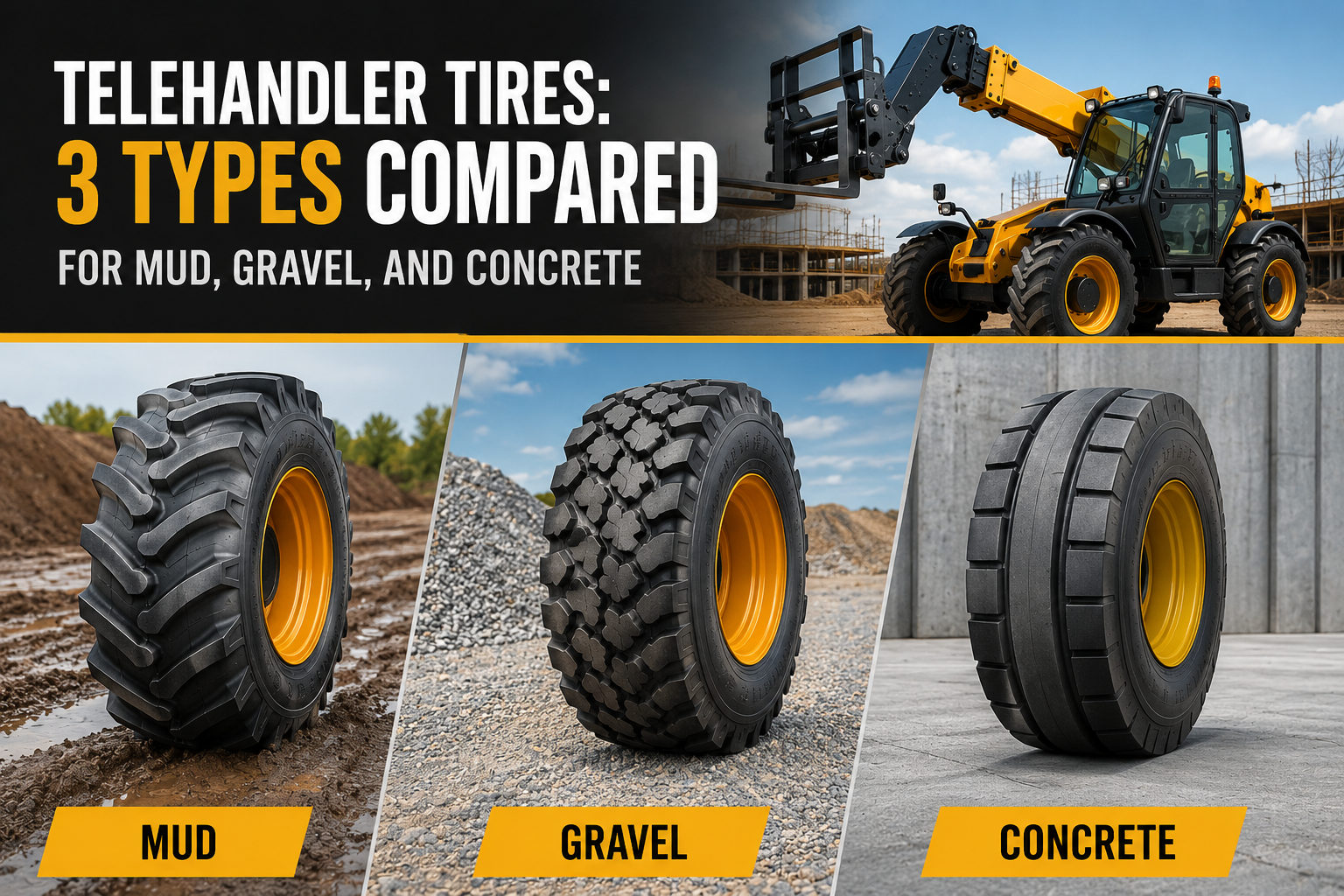
Choosing the right telehandler tires affects your productivity. It affects your safety. It affects your operating costs. This guide compares 3 tire types. You will learn which one works best on mud, gravel, and concrete.
The 3 Types of Telehandler Tires
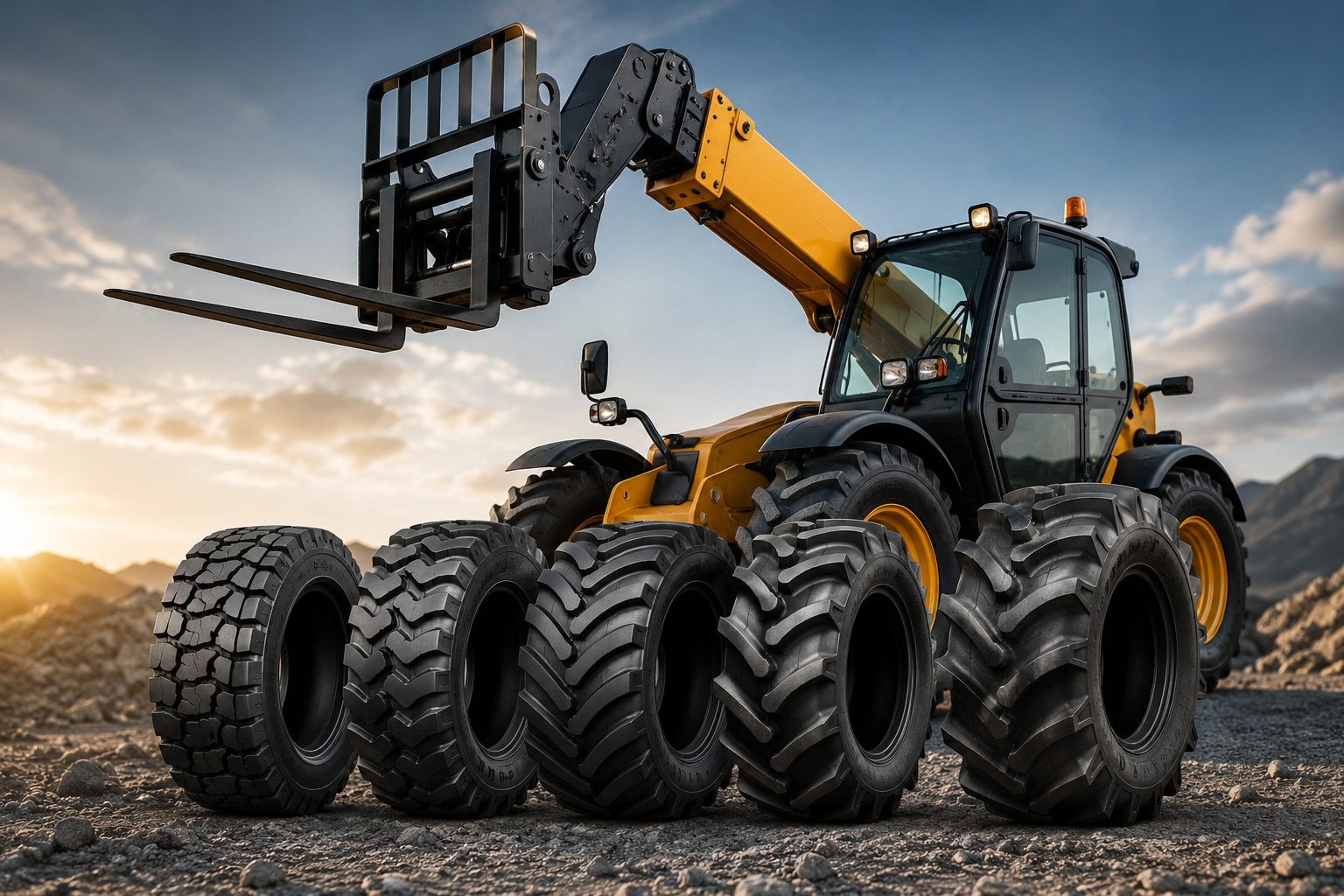
Telehandler tires fall into 3 main categories. Each type has specific strengths and weaknesses. Each type works better on certain surfaces.
Pneumatic Tires
Pneumatic telehandler tires are air-filled. They are the most common type. They look like large truck tires. They provide a smooth ride. These tires absorb bumps. They handle rough ground well. They offer good traction on most surfaces. The downside is puncture risk. Sharp objects cause flats. Construction sites have nails and debris. Flats stop your work.
Foam-Filled Tires
Foam-filled telehandler tires have no air. Polyurethane foam fills the cavity. The tire cannot go flat. This is the main advantage. These tires resist punctures. You work around sharp debris without worry. Nails and metal do not stop you. These tires cost more than pneumatic. The filling process adds expense. You cannot repair them like air tires.
Solid Tires
Solid telehandler tires are completely rubber. No air cavity exists. No foam filling exists. Just solid rubber from tread to rim. These tires handle extreme conditions. They work in scrap yards. They work in demolition. They never go flat. Solid tires give the hardest ride. You feel every bump.
Performance on Mud
Mud is the most challenging surface for telehandler tires. You need traction. You need flotation. You need to keep moving.
Pneumatic Tires on Mud
Pneumatic telehandler tires work well on mud. Deep tread patterns provide grip. The air pressure allows the tire to flex. This flex creates a larger footprint. The larger footprint prevents sinking. Lower tire pressure improves mud performance. Reduce pressure for soft conditions.
Foam-Filled Tires on Mud
Foam-filled telehandler tires do not work well on mud. The tire does not flex. The footprint stays small. This causes sinking. The tread pattern provides some grip. But the tire cannot conform to the surface. You lose traction on soft ground.
Solid Tires on Mud
Solid telehandler tires perform poorly in mud. They do not flex at all. The footprint is very small. The machine sinks quickly. Tread patterns on solid tires are shallow. They do not dig into mud. They spin and dig deeper holes.
Performance on Gravel
Gravel is a common surface on construction sites. It provides drainage. It stabilizes the ground. But it is hard on telehandler tires.
Pneumatic Tires on Gravel
Pneumatic telehandler tires handle gravel well. The air absorbs the bumps. The ride is comfortable. You work longer without fatigue. Tread patterns grip the gravel. You get good traction. You can climb slopes without spinning. The risk is puncture.
Foam-Filled Tires on Gravel
Foam-filled telehandler tires work on gravel. You eliminate the puncture risk. Sharp gravel does not cause flats. The ride is harder than pneumatic. You feel every stone.
Solid Tires on Gravel
Solid telehandler tires handle gravel well. They resist all punctures. Sharp stones do not damage them. The ride is very hard. Traction is lower than other types.
Performance on Concrete
Concrete is the smoothest surface. Warehouses and loading docks have concrete floors. You need telehandler tires that work well here.
Pneumatic Tires: They work well on concrete. The ride is smooth. Traction is good on dry concrete. The risk is wear. Concrete is abrasive. Pneumatic tires leave marks on some concrete.
Foam-Filled Tires: Perform well on concrete. The ride is harder but manageable. Wear is slower than pneumatic.
Solid Tires: Work very well on concrete. The smooth surface makes the hard ride acceptable. Wear is very slow. They last for many years.
Cost Comparison
The cost of your telehandler tires affects your budget. The purchase price varies between types. The long-term cost also varies.
Pneumatic tires cost the least. A set costs $1,000 to $2,500. Replacement costs are lower. Foam-filled tires cost more ($2,500 to $4,000), but long-term cost is lower because no flats mean no repair costs. Solid tires cost the most ($4,000 to $6,000). The long-term cost is the lowest. Solid tires last years.
Tire Maintenance Tips
Proper maintenance extends the life of your telehandler tires. It also improves performance. Check tire pressure daily. Underinflation causes overheating. Inspect for damage and rotate tires according to manufacturer schedule. Replace tires when the tread wears down to the wear bars.
Making Your Choice
Choose your telehandler tires based on your typical surfaces. Here is a simple decision guide for telehandler tires.
Choose Pneumatic If: You work mostly on concrete, want the lowest upfront cost, and need a comfortable ride.
Choose Foam-Filled If: You work on gravel and debris, need puncture resistance, and want no flats.
Choose Solid If: You work in extreme conditions, cannot risk flats, and want the longest tire life.
| Surface | Best Tire | Second Best | Avoid |
|---|---|---|---|
| Mud | Pneumatic | None | Foam-Filled, Solid |
| Gravel | Foam-Filled | Pneumatic | Solid |
| Concrete | Solid | Foam-Filled | Pneumatic |
| Mixed Surfaces | Pneumatic | Foam-Filled | Solid |
Real Examples
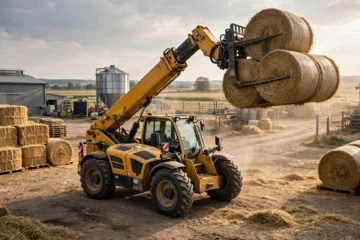
Example One (Farm Operation): A farmer works in muddy fields. Pneumatic tires are the best choice. They provide traction in mud.
Example Two (Construction Site): A contractor works on gravel and dirt with sharp debris. Foam-filled tires are the best choice to resist punctures.
Example Three (Warehouse): A warehouse operates on smooth concrete. Solid tires are the best choice. They last the longest.
Example Four (Mixed Use): A rental company rents telehandlers to different sites. Pneumatic tires work on most surfaces. For heavy-duty mixed use, sometimes companies also look at versatile equipment like a brand new Typhon Terror 4WD Backhoe Loader to complement their fleet.
Our Business Partner
Bottom Line
Your telehandler tires affect everything. Traction depends on them. Ride comfort depends on them. Operating costs depend on them. Understand your primary work surface and choose the tire type that matches.
Invest in the right tires. Your productivity improves. Your costs decrease. Your operators stay comfortable. Good care keeps your telehandler tires working safely and efficiently. Choose wisely, as they are the only contact between your machine and the ground.