
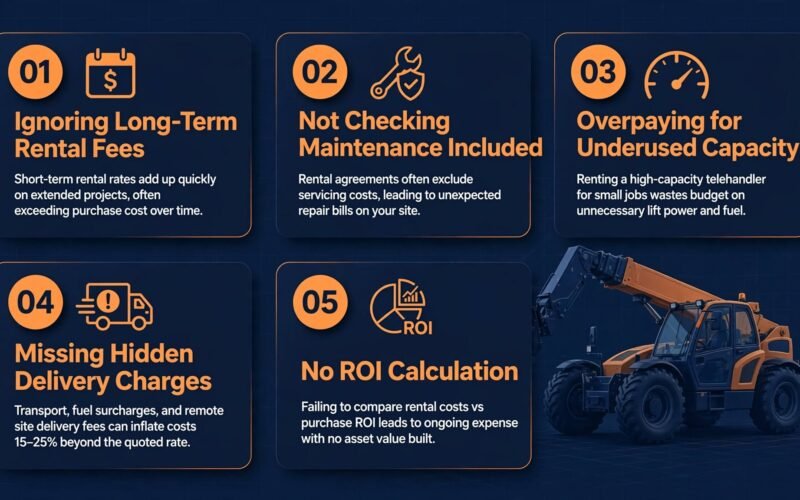
If you are considering a telehandler rental for your next big job, you need to read this first. Renting seems like an easy fix, but the hidden expenses can quickly ruin your budget. Read on to discover the costly mistakes you must avoid.
Table of Contents
- 1. Renting Without Comparing Ownership Costs
- 2. Ignoring the Break-Even Point
- 3. Keeping the Machine Too Long
- 4. Paying for Damage Waivers Every Time
- 5. Renting Attachments Separately
- Additional Mistakes to Avoid
- Rental vs Buying Comparison
- How to Calculate the Break-Even Point
- Our Business Partner (Video)
- Final Thoughts
Telehandler rental looks cheap on paper. Daily rates seem low. Weekly deals look fair. But hidden costs pile up fast.
Many contractors pay more in telehandler rental fees than a machine would cost to own.
This guide covers 5 mistakes that turn telehandler rental into a money pit. Avoid them. Save thousands. The math is simple once the full picture is clear.
1. Renting Without Comparing Ownership Costs
The daily rate is not the full cost. That is the first trap. Rental companies advertise low daily rates. The final bill looks nothing like the advertised price.
Delivery charges add up. Pickup charges add up. Fuel charges add up. Damage waivers add up. Cleaning fees add up. Environmental fees add up. These extras often double the advertised rate.
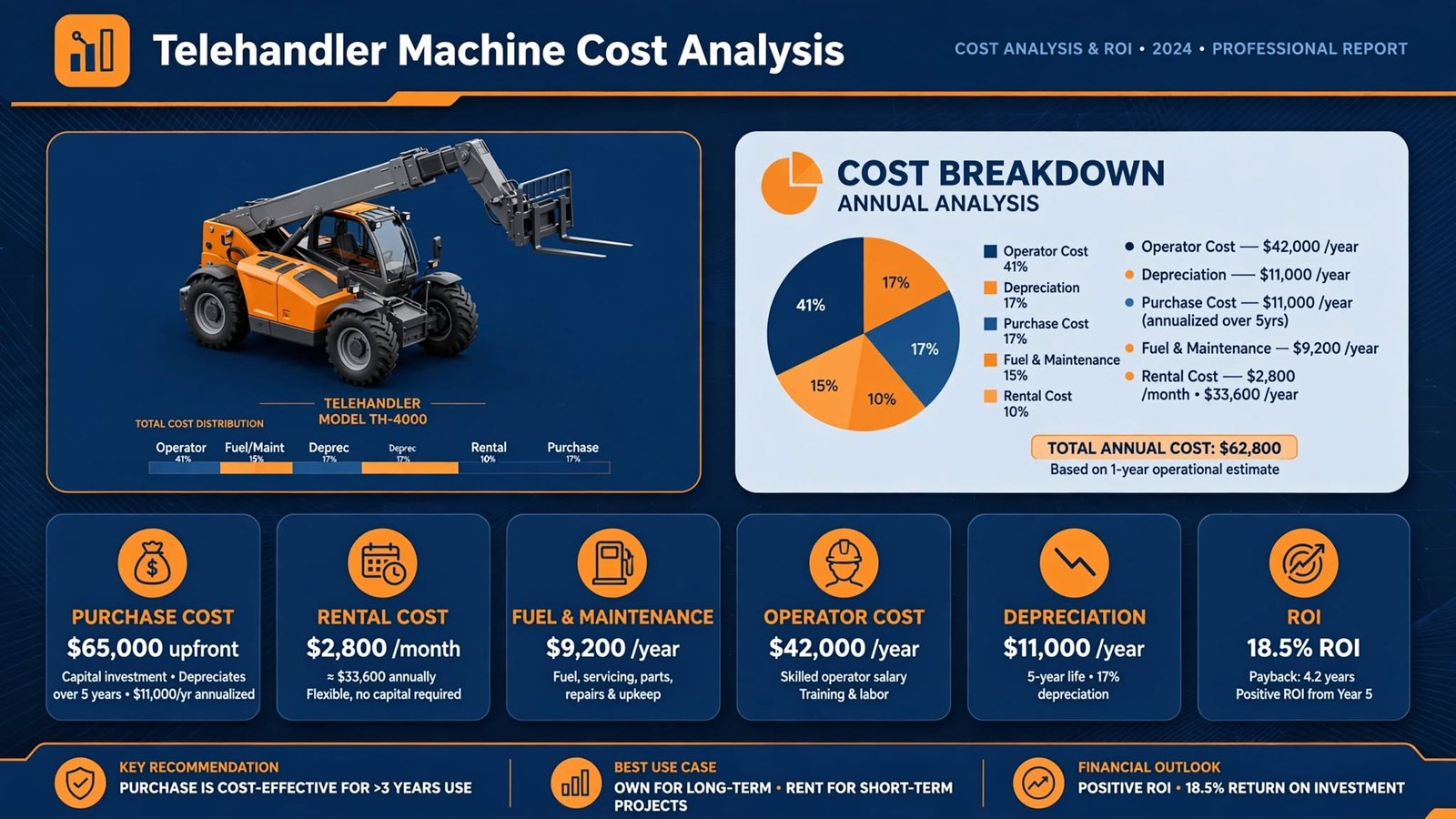
Add these together. Compare to a loan payment. A used machine costs $30,000 to $60,000. A five year loan runs $500 to $1,000 per month. A monthly telehandler rental often costs $3,000 to $6,000.
That is a massive gap. Renting for one month costs as much as five to six months of ownership. Renting for a full year costs more than buying the machine outright. If the machine is needed every month, buying wins. Every single time. Renting only makes sense for short projects. One week. Two weeks. A single short job.
Some contractors use telehandler rental for years without running the numbers. They assume renting is cheaper. They never check. This mistake drains profits quietly.
Sit down with a calculator. Add up twelve months of rental fees. Compare to a loan plus insurance plus maintenance. The answer is usually obvious. Ownership also builds equity. The machine has value after the loan is paid. Rental payments build nothing. The money disappears.
Maintenance costs money. Insurance costs money. Storage costs money. But these costs are predictable. Rental costs are not. Rates rise. Availability drops. Contracts change.
2. Ignoring the Break-Even Point
Every telehandler rental has a break-even point. That is the number of rental days that equals the purchase price. Cross that line and renting becomes waste.
Example. A machine rents for $400 per day. The machine costs $40,000. Break-even is 100 rental days. That is roughly five months of daily use. If the machine is needed 150 days, renting costs $60,000. Buying costs $40,000. Renting costs $20,000 more. That is real money lost.
Calculate the break-even point before signing a telehandler rental contract. Know the number. Write it down. Track rental days against it.
Most contractors overestimate their rental needs. They think a job will take two weeks. It takes four. The break-even point passes without notice. Keep a running total. Every rental invoice adds to the count. When the count approaches break-even, stop renting. Buy instead.
The break-even point changes with machine size. A small unit costs less to buy. Break-even comes faster. A large machine costs more. Break-even takes longer. Rental rates also vary by region. A machine that rents for $300 per day in one city rents for $500 in another. Calculate the number for the specific market.
Do not guess. Do not assume. Calculate. The break-even point is the single most important number in the rent versus buy decision.
3. Keeping the Machine Too Long
Rental clocks do not stop. Weekends count. Holidays count. Rain days count. A two week job that stretches to four weeks doubles the cost.
Many rental contracts charge by the calendar day. Not the working day. A machine sitting idle still costs money. A machine waiting for materials still costs money. A machine parked because of weather still costs money.
This is where rental costs explode. The project falls behind. The machine stays on site. The meter keeps running. The invoice keeps growing. Return the machine on time. Do not extend the rental without checking the math. A one day extension often costs more than a week of ownership.
Set a return date. Stick to it. If the job runs long, return the machine and rent again later. Do not let it sit. Some rental companies offer weekly or monthly rates. These reduce the daily cost. But they still charge for the full period. A monthly rate does not help if the machine is needed for three days.
Track the actual usage hours. Many machines have hour meters. Compare hours used to days rented. If the machine sits idle half the time, the telehandler rental is waste.
Idle time is the silent killer. The machine looks busy. It sits on site. But it does nothing. The invoice still arrives.
Plan the work around the telehandler rental period. Schedule lifts tightly. Group tasks. Finish early. Return the machine ahead of schedule if possible.
4. Paying for Damage Waivers Every Time
Rental companies push damage waivers. They cost 10 to 15 percent of the rental fee. Over a year, that adds up to thousands.
A damage waiver is insurance. It covers accidental damage. But it does not cover everything. Negligence is excluded. Overloading is excluded. Theft is often excluded. Tire damage is often excluded. Read the fine print. The waiver covers less than most people think. It creates a false sense of security.
Check the existing insurance policy. Many business policies already cover rented equipment. The coverage may be identical to the waiver. Paying twice for the same protection is waste.
Call the insurance agent. Ask one question. Does the current policy cover telehandler rental machines. If the answer is yes, decline the waiver. Save the money.
If the policy does not cover rentals, add coverage. A rider on the existing policy costs less than repeated waivers. One payment covers all rentals for the year. Some rental companies require the waiver. They will not rent without it. In that case, compare companies. Find one that allows existing insurance. The savings are worth the search.
Damage waivers are not always bad. For a one time telehandler rental with no insurance, the waiver makes sense. For regular renters, it is a recurring cost that adds nothing.
5. Renting Attachments Separately
The machine comes with forks. Everything else costs extra. Buckets. Jibs. Platforms. Grapples. Each attachment adds to the daily rate.
Renting three attachments for a week costs $1,500 or more. That is on top of the base telehandler rental. The total bill climbs fast.
Buying those attachments costs $6,000 to $10,000. But owned attachments last for years. They work with any machine. They do not add to the daily rate. If attachments are needed regularly, buy them. Renting them every time is waste. The math is identical to the machine itself.
Attachments also have resale value. A used bucket sells for half its original price. A rented bucket returns nothing.
Some telehandler rental companies bundle attachments with the machine. The bundle rate is lower than separate rentals. Ask about bundles. Compare the bundle price to buying.
Storage is the only downside. Owned attachments need space. A small shed or corner of the yard works. The space costs less than repeated rental fees. Start with the most used attachment. Buy a bucket first. It handles the most jobs. Add others over time. Build the attachment collection gradually.
Additional Mistakes to Avoid
Renting from the Wrong Company
Not all telehandler rental companies are equal. Some maintain machines better. Some have newer fleets. Some charge hidden fees. Research before renting.
Skipping the Inspection
Inspect the machine before accepting it. Check for damage. Check the hour meter. Check the tires. Document everything. Photos protect against false damage claims.
Ignoring the Contract Terms
Read the contract. Understand the terms. Late fees. Damage fees. Fuel charges. Cleaning charges. Know what triggers extra costs.
Not Asking About Discounts
Rental companies offer discounts. Weekly rates. Monthly rates. Repeat customer rates. Ask. Do not pay full price without checking.
Renting Without a Plan
Know the job before renting. Know the lift heights. Know the load weights. Know the terrain. Renting the wrong machine wastes your telehandler rental budget.
Rental vs Buying Comparison Table
| Factor | Rental | Buying |
|---|---|---|
| Upfront cost | Low | High |
| Monthly cost | $3,000 – $6,000 | $500 – $1,000 |
| Maintenance | Included | Owner pays |
| Insurance | Waiver or policy | Owner pays |
| Equity | None | Builds over time |
| Availability | Depends on fleet | Always available |
| Best for | Short jobs | Long term use |
The table shows the trade-off. Telehandler rental wins for short jobs. Buying wins for long term use. The break-even point decides.
How to Calculate the Break-Even Point
Follow these steps.
- Step 1: Find the Daily Rate. Ask the telehandler rental company. Get the daily rate. Include all fees. Delivery. Pickup. Fuel. Waiver.
- Step 2: Find the Purchase Price. Get quotes from dealers. New and used. Include tax and delivery.
- Step 3: Divide Purchase Price by Daily Rate. The result is the break-even point in days. Example: $40,000 divided by $400 equals 100 days.
- Step 4: Estimate Annual Rental Days. Count the days the machine is needed per year. Be honest. Most contractors overestimate.
- Step 5: Compare. If annual rental days exceed the break-even point, buy. If not, rent.
Our Business Partner
Final Thoughts
Telehandler rental works for short jobs. One week. Two weeks. A single project. Beyond that, the math changes.
Five mistakes cost more than buying. Skipping ownership comparison. Ignoring the break-even point. Keeping the machine too long. Paying for damage waivers every time. Renting attachments separately.
Calculate the numbers. Compare telehandler rental fees to loan payments. Find the break-even point. Make the decision based on math, not convenience.
Renting is a tool. Use it correctly. Do not let it drain the budget. The right decision saves thousands. The wrong decision costs thousands.
Run the numbers. Know the break-even point. Buy when it makes sense. Rent when it makes sense. The math never lies.



[…] costs money. Rental machines cost money while sitting idle. Owned machines cost money in lost productivity. Repair bills add to the pain. Emergency service […]