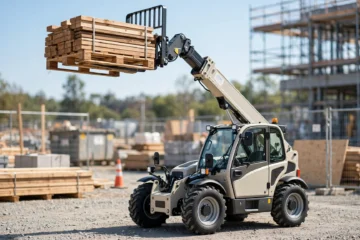

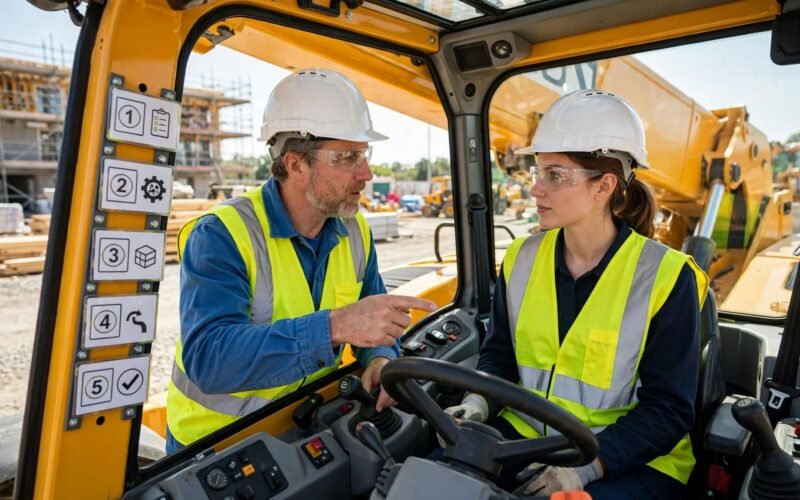
This guide covers 5 steps for effective telehandler training. Follow these steps. The operator becomes confident. The job site becomes safer. The machine lasts longer.
Table of Contents
Telehandlers are not simple machines. They lift heavy loads. They reach high places. They operate on rough ground. A mistake causes injury. A mistake causes damage. A mistake causes downtime.
Confidence comes from training. Not from watching videos. Not from reading manuals. From hands-on practice with proper guidance.
1. Learn the Machine Before Touching the Controls
Training starts before the engine turns on. The operator must understand the machine first. What it does. How it works. Where the limits are.
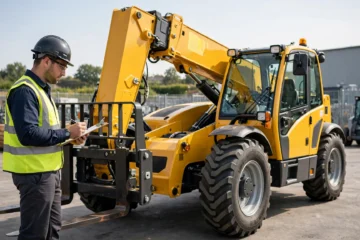
Walk around the machine. Identify every component. The boom. The carriage. The outriggers. The hydraulic cylinders. The tires. The cab.
Read the operator manual. Cover to cover. The manual explains controls. It explains capacity. It explains safety features. It explains maintenance.
Study the load chart. Understand how capacity changes with boom angle. Understand how capacity changes with extension. This knowledge prevents accidents.
Learn the attachments. Forks. Buckets. Jibs. Platforms. Each attachment has a purpose. Each attachment has limits.
A new operator who skips this step struggles later. A new operator who masters this step performs better. Telehandler training begins with knowledge.
2. Master the Controls in a Safe Area
The engine starts. The controls come alive. But the job site is not the place to learn. Find a safe area. An empty yard. A flat field. Somewhere without obstacles.
Start with the basics. Learn the steering. Learn the throttle. Learn the brakes. Drive forward. Drive backward. Turn left. Turn right.
Move to the boom controls. Raise the boom. Lower the boom. Extend the boom. Retract the boom. Tilt the carriage. Practice each movement.
Do this without a load. Feel how the machine responds. Learn the timing. Learn the sensitivity. Smooth movements come from practice.
Set up cones. Practice maneuvering. Practice tight turns. Practice reversing. Practice parking.
This step builds muscle memory. The operator learns without pressure. Telehandler training requires this foundation.
3. Practice Lifting Loads Gradually
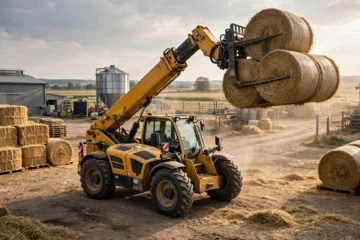
Now add loads. Start light. Very light. A small pallet. A few blocks. Something easy to handle.
Approach the load. Center the forks. Slide them under. Lift slowly. Check the balance. Lower the load. Repeat.
Increase the weight. Add more blocks. Add heavier pallets. Feel how the machine responds. A heavier load changes the balance. The boom flexes. The tires compress.
Practice placing loads. On the ground. On a low shelf. On a truck bed. Practice precision. Place the load exactly where needed.
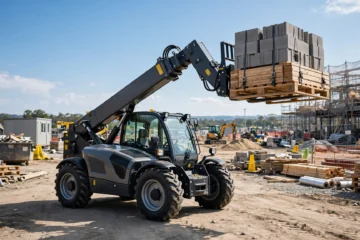
Practice at different boom angles. Low angles. High angles. Extended reach. Retracted reach. Each angle changes the capacity. Each angle changes the feel.
Do not rush. Do not skip weights. Gradual progression builds skill. Telehandler training works best when it is gradual.
4. Train for Real Job Site Conditions
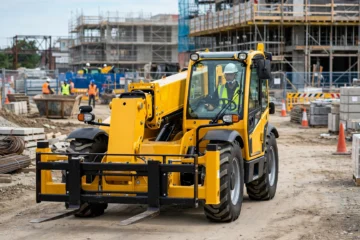
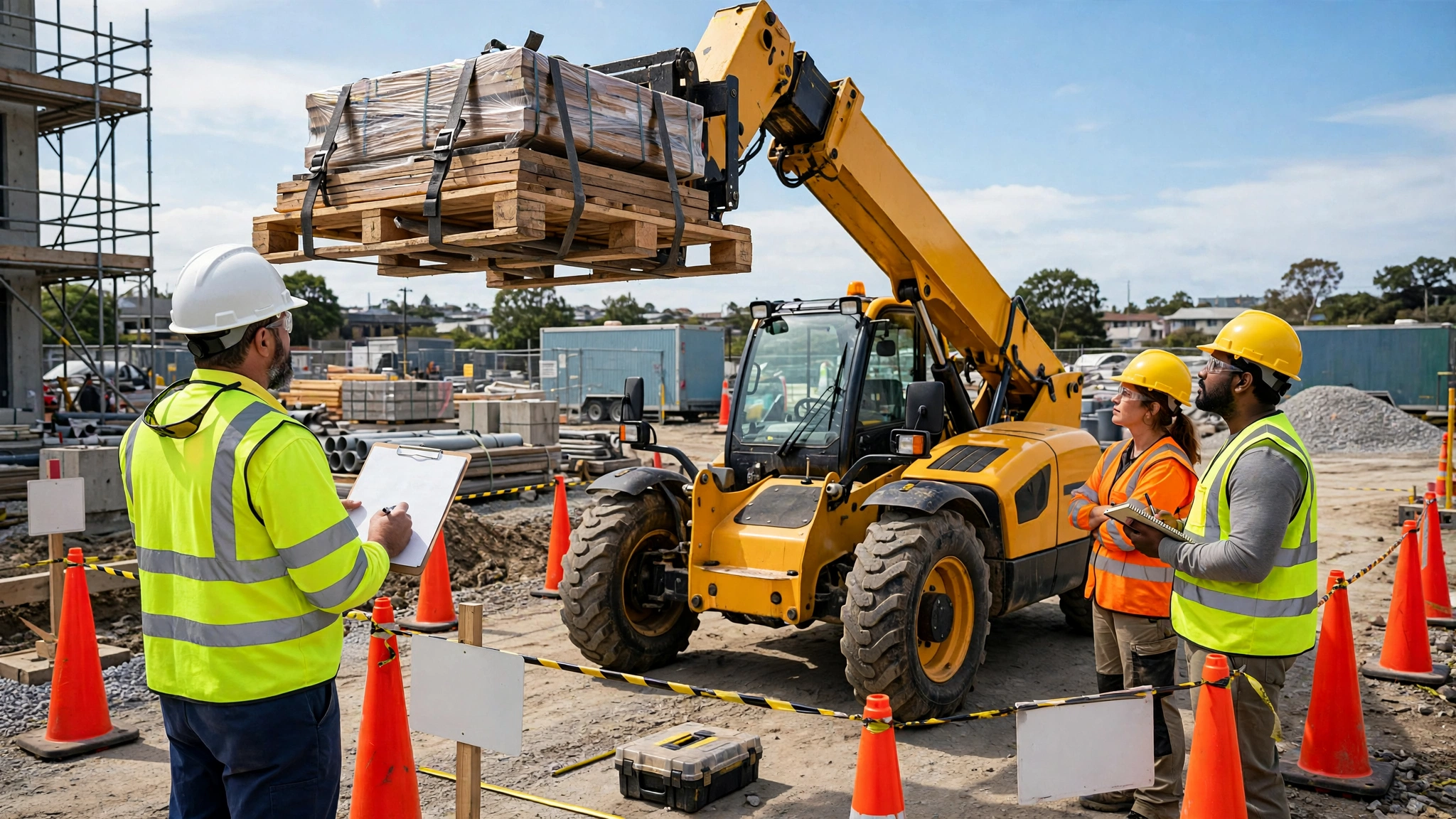
The training area is safe. The job site is not. Real conditions include mud. Dust. Slopes. Tight spaces. Overhead hazards. Other workers.
Move training to a real site. But choose a quiet time. No active work. No other machines. No workers nearby.
Practice on rough ground. Feel how the machine handles mud. Feel how it handles gravel. Learn to adjust speed. Learn to adjust boom position.
Practice on slopes. Small slopes first. Then larger slopes. Learn to keep the boom low. Learn to drive straight up and down. Learn to avoid turning on slopes.
Practice in tight spaces. Between walls. Between racks. Between other machines. Learn to use a spotter. Learn to trust the spotter.
Practice with overhead hazards. Mark power lines. Mark low beams. Learn to check before lifting. Learn to maintain safe distances.
Real conditions build real confidence. Telehandler training must include this step.
5. Review, Test, and Certify
Training does not end with practice. It ends with evaluation. The operator must prove competence. The trainer must confirm readiness.
Review the basics. Ask questions. What is the load capacity at full extension. What is the safe distance from power lines. What is the procedure for a tip-over. The operator must know the answers.
Test the skills. Set up a course. Include lifting. Include placing. Include maneuvering. Include emergency stops. Score the performance.
Identify weak areas. Does the operator rush. Does the operator forget the load chart. Does the operator skip the walkaround. Address these weaknesses. More practice fixes them.
Provide certification. Written confirmation of training. Many countries require certification. Many job sites require it. Certification proves competence.
Review training regularly. Skills fade. New hazards appear. Refresher training keeps skills sharp. Telehandler training is ongoing.
Why Telehandler Training Matters
Training protects the operator. A trained operator avoids accidents. A trained operator knows the limits. A trained operator reacts correctly in emergencies.
Training protects the machine. A trained operator does not overload. A trained operator does not abuse. A trained operator maintains properly.
Training protects the job site. A trained operator does not drop loads. A trained operator does not hit structures. A trained operator does not injure coworkers.
Training protects the business. Accidents cost money. Downtime costs money. Insurance claims cost money. Training reduces these costs.
Telehandler training is an investment. It pays for itself. In safety. In productivity. In machine life.
Common Telehandler Training Mistakes
Skipping the Manual
The manual contains critical information. Skipping it leaves gaps in telehandler training. The operator misses important details.
Rushing the Process
Training takes time. Rushing produces weak operators and ruins telehandler training. Weak operators cause accidents.
Training Only in Good Conditions
Real job sites are not perfect. Training in ideal conditions does not prepare for reality. Proper telehandler training must prepare for reality. Include rough ground. Include slopes. Include tight spaces.
Ignoring Attachments
Attachments change machine behavior. Effective telehandler training must cover each attachment. The operator must practice with each one.
No Evaluation
Without evaluation, telehandler training is incomplete. The trainer must confirm competence. Certification requires proof.
Who Should Conduct Telehandler Training
Training must come from qualified instructors. Options include dealer training programs. Manufacturer training programs. Independent training companies. In-house trainers with certification.
The instructor must know the machine. The instructor must know safety standards. The instructor must know how to teach. Not every good operator is a good trainer.
Check credentials. Ask about experience. Ask about certification. A qualified trainer produces qualified operators.
Telehandler Training Checklist
| Step | Activity | Complete |
|---|---|---|
| 1 | Learn the machine | Yes / No |
| 2 | Master controls | Yes / No |
| 3 | Practice lifting loads | Yes / No |
| 4 | Train in real conditions | Yes / No |
| 5 | Review, test, certify | Yes / No |
Use this checklist. Track progress. Do not skip steps. Telehandler training follows this path.
Our Business Partner
Final Thoughts
Telehandler training is not optional. It is essential. The machine is dangerous without proper training. The operator is at risk. The job site is at risk.
Five steps cover the basics. Learn the machine. Master the controls. Practice lifting loads. Train in real conditions. Review, test, and certify. Each step builds on the previous one. Each step adds confidence. Each step improves safety.
Telehandler training is an investment. It pays off in safety. It pays off in productivity. It pays off in machine life.
Start training today. Do not wait for an accident. Do not wait for a near miss. Do not wait for a repair bill. Training prevents these problems. Telehandler training builds confident operators. Training keeps the job site safe.