
Routine telehandler maintenance prevents most problems. Simple checks take minutes. They save thousands in repairs.
Table of Contents
- 1. Perform a Daily Walkaround Inspection
- 2. Check All Fluid Levels
- 3. Grease All Pins and Pivot Points
- 4. Inspect the Hydraulic Hoses
- 5. Test All Controls
- 6. Check the Air Filter
- 7. Keep a Maintenance Log
- Maintenance Schedule Summary
- Signs That Maintenance Is Overdue
- Benefits of Regular Upkeep
- Our Business Partner (Video)
- Final Thoughts
A telehandler is a big investment. It works hard every day. It lifts heavy loads. It moves through mud and dust. It operates in all weather conditions. Without proper care, breakdowns happen. Repairs cost money. Downtime costs even more. A machine that sits in the shop does not earn anything.
They keep the machine working when it is needed most. Many operators ignore these steps. They think the machine will keep running. Then something breaks. The machine stops. The job stops.
This guide covers 7 simple steps for routine telehandler maintenance. Follow them every day. The machine will last longer. It will work better. It will cost less to own. These steps come from years of experience. They work on every machine. They work in every condition.
1. Perform a Daily Walkaround Inspection
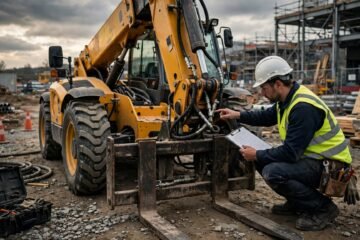
Start every day with a walkaround. Look at the machine from all angles. Check for problems before they become serious. This is the first and most important step in routine telehandler maintenance.
Look for leaks under the machine. Oil spots mean a hydraulic leak. Coolant spots mean a cooling system problem. Fuel spots mean a fuel system issue. Any leak needs attention. A small leak becomes a big leak. Fix it early.
Check the tires. Look for cuts, bulges, or embedded objects. Check the tire pressure with a gauge. Underinflated tires wear faster. Overinflated tires ride rough. Proper pressure extends tire life. It also improves fuel efficiency.
Inspect the boom. Look for cracks in the steel. Look for bent sections. Look for rust or corrosion. Boom failure is dangerous. A cracked boom drops loads. It injures workers. It damages materials.
Check the attachment locking mechanism. Make sure it engages fully. A loose attachment falls off. This causes injury and damage. Check it every time you change attachments.
A thorough walkaround takes five minutes. Routine telehandler maintenance starts here. Do not skip it. Those five minutes save hours of downtime.
2. Check All Fluid Levels
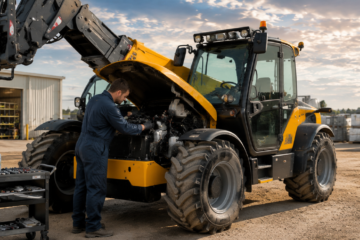
Fluids keep the machine running. Low fluid levels cause damage. Damage leads to expensive repairs. This step is critical for routine telehandler maintenance.
Check the engine oil. Use the dipstick. Oil should be between the marks. Low oil ruins the engine. Overfilled oil causes foaming. Foaming reduces lubrication. Check it when the engine is cold.
Check the hydraulic fluid. Look at the sight glass. Fluid should be at the correct level. Hydraulic fluid powers the boom. Low fluid means slow operation. It also damages pumps. Pumps are expensive to replace.
Check the coolant level. Look at the overflow tank. Coolant should be between the marks. Low coolant overheats the engine. Overheating causes head gasket failure. That repair costs thousands.
Check the transmission fluid. Follow the manufacturer procedure. Some transmissions need the engine running. Low fluid causes shifting problems. Shifting problems damage the transmission. Check the brake fluid. Low fluid means air in the system. Air makes the brakes spongy. Spongy brakes are dangerous. The machine does not stop properly.
Topping up fluids takes a few minutes. Routine telehandler maintenance requires this step every day. Do not wait for warning lights. By then, damage is already done.
3. Grease All Pins and Pivot Points
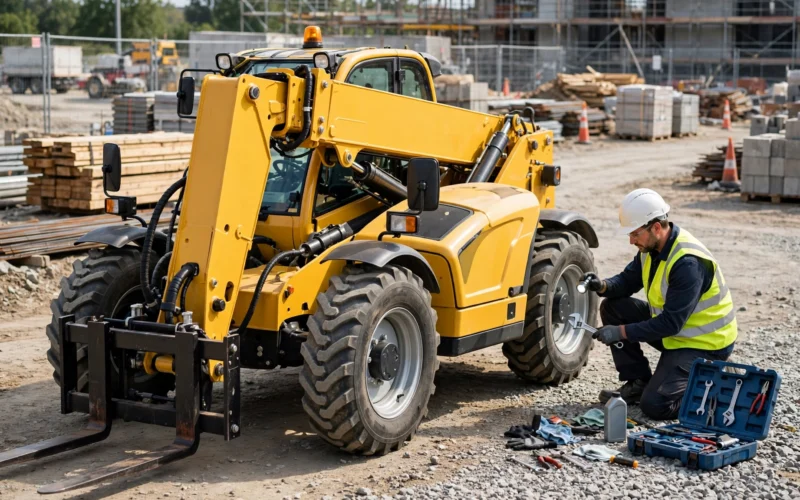
Grease reduces wear. It keeps moving parts working smoothly. Without grease, pins wear out. Bushings wear out. Parts fail. This is one of the most overlooked aspects of routine telehandler maintenance.
Find all grease fittings on the machine. Boom pins. Carriage pivots. Steering joints. Each needs grease. There are usually 10 to 15 fittings on a telehandler. Locate them all.
Use the correct grease type. Follow the manufacturer recommendation. Different machines use different greases. Some need high-temperature grease. Others need extreme-pressure grease. Using the wrong type damages components. Pump grease until fresh grease appears. Wipe away the old grease. Dirt and debris come out with it. Do not overgrease. Too much grease attracts dirt. Dirt causes wear.
Grease daily. This is the single most important step in routine telehandler maintenance. It prevents wear. It extends machine life. A greased machine lasts twice as long as one that is ignored.
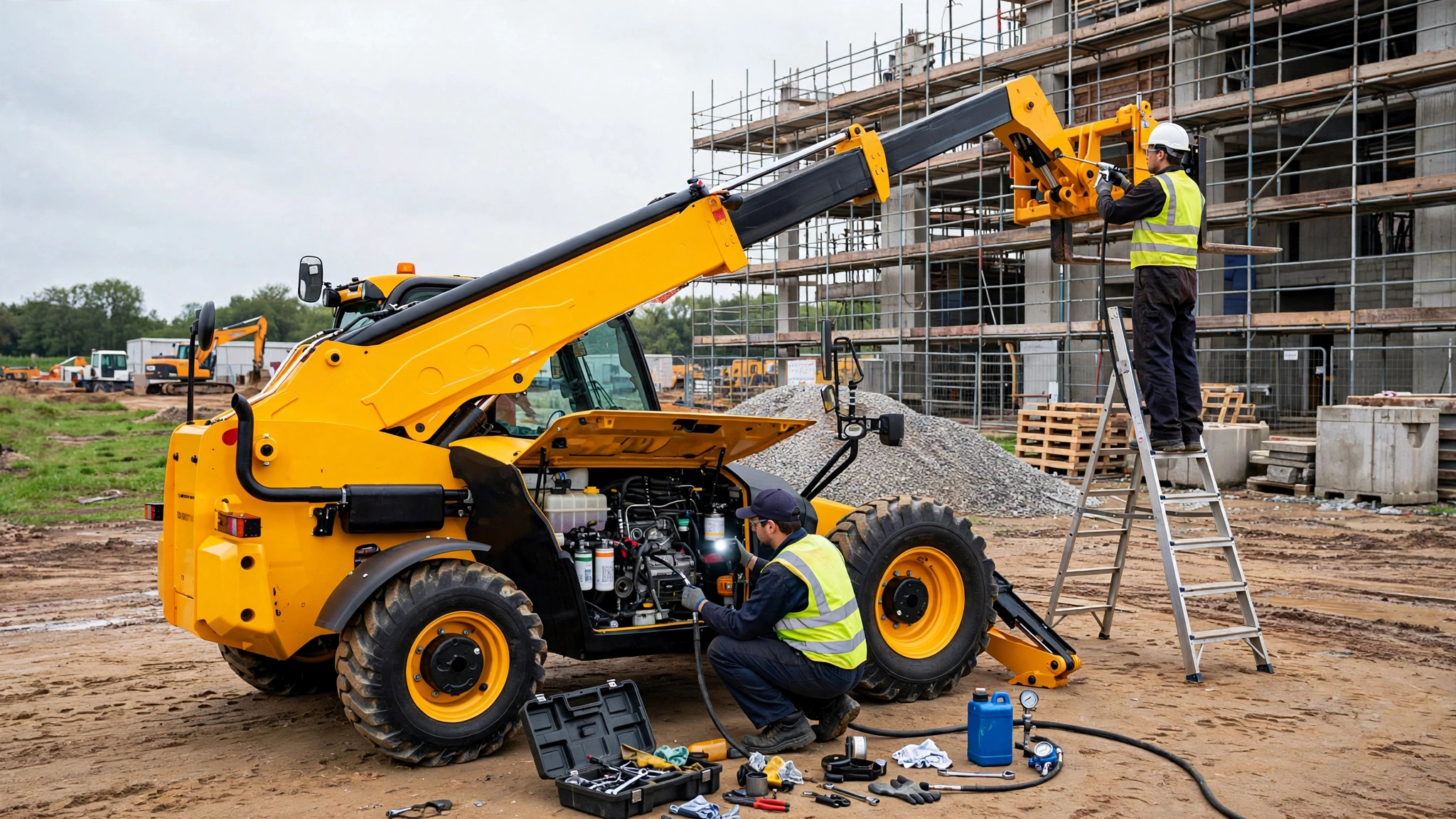
4. Inspect the Hydraulic Hoses
Hydraulic hoses carry pressurized fluid. They flex with boom movement. They rub against metal surfaces. They wear out over time. Routine telehandler maintenance includes regular hose inspections.
Check every hose. Look for cracks in the rubber. Look for bulges. Look for chafing marks. A damaged hose bursts. A burst hose drops the boom. That is dangerous and expensive.
Check fittings and connections. Look for leaks at each connection. Tighten loose fittings. Replace damaged fittings. A small drip becomes a spray under pressure. Fix it early. Check hose routing. Make sure hoses do not rub against sharp edges. Add protective sleeves where needed. Rubbing causes wear. Wear causes failure.
Inspect hoses weekly. Routine telehandler maintenance includes this step. It prevents sudden failures. A burst hose on a job site is a disaster. Avoid it with regular checks.
5. Test All Controls
Controls must work properly. The machine responds to your inputs. If something feels wrong, it is wrong. Testing controls is part of routine telehandler maintenance.
Test the boom lift. Raise and lower the boom. Movement should be smooth. Jerky movement means a problem. It could be low fluid. It could be air in the system.
Test the boom extension. Extend and retract the boom. It should move smoothly. Sticking means wear or debris. Clean the boom sections. Check for damage.
Test the tilt function. Tilt the carriage forward and back. It should respond immediately. Slow response means low pressure. Check the hydraulic fluid. Test the steering. Turn the wheel from lock to lock. Listen for unusual noises. Feel for excessive play. Steering problems are dangerous. Fix them immediately.
Test the brakes. Move forward and stop. Apply the parking brake. The machine should hold. If it rolls, adjust the parking brake.
Testing controls takes a minute. Routine telehandler maintenance ensures everything works before the work begins. Do not assume everything is fine. Test it.
6. Check the Air Filter
The air filter protects the engine. It keeps dirt out. Dirt damages pistons and cylinders. A clogged filter reduces power. It increases fuel consumption. Routine telehandler maintenance includes air filter checks.
Remove the air filter. Hold it up to light. If light does not pass through, the filter is clogged. Replace it. Do not try to clean it. Replace it.
Check the filter housing. Look for dirt and debris. Clean the housing before installing a new filter. Dirt in the housing damages the new filter. Replace the air filter on schedule. Dusty conditions require more frequent changes. Do not wait for the scheduled interval. Check it monthly.
A clean air filter saves fuel. It protects the engine. Routine telehandler maintenance includes regular air filter checks. A dirty filter costs money. Replace it.
7. Keep a Maintenance Log
A log tracks everything. Hours, service, repairs. It helps plan maintenance. It helps identify problems early. This is the final step in routine telehandler maintenance.
Record the hour meter reading each day. Track fuel usage. Note any problems found. A simple notebook works. Keep it in the cab.
Record all service work. Oil changes. Filter changes. Grease intervals. Repairs. This record helps with warranty claims. It also helps with resale.
Review the log monthly. Look for patterns. Frequent problems indicate a bigger issue. Address it early. Do not ignore the signs.
A maintenance log is essential for routine telehandler maintenance. It keeps everything organized. It saves money. It extends machine life.
Maintenance Schedule Summary
| Task | Frequency | Time Required |
|---|---|---|
| Walkaround inspection | Daily | 5 min |
| Fluid checks | Daily | 5 min |
| Grease pins | Daily | 5 min |
| Hose inspection | Weekly | 10 min |
| Control test | Daily | 2 min |
| Air filter check | Monthly | 5 min |
| Maintenance log | Daily | 2 min |
These tasks take 15 to 30 minutes per day. Routine telehandler maintenance fits into any schedule. The time invested saves hours of downtime later. A machine that runs every day earns money every day.
Signs That Maintenance Is Overdue
The machine tells you when it needs service. Look for these signs. They indicate that routine telehandler maintenance has been neglected.
Hard starting means fuel or air problems. Check filters first. Replace clogged filters. Unusual noises mean wear or damage. A squeal means a belt. A grind means a bearing. Investigate every noise.
Slow operation means low hydraulic pressure. Check fluid and filters. Low pressure damages the pump. Leaks mean seal or hose failure. Fix them immediately. Do not wait. Leaks get worse. Warning lights on the dash mean a problem. Do not ignore them. Find the cause. Fix it.
Address these signs quickly. Routine telehandler maintenance prevents them from becoming major issues. A small problem becomes a big problem if ignored.
Benefits of Routine Care
Following these steps pays off. The machine runs better. It lasts longer. It costs less to own. Routine telehandler maintenance is an investment, not an expense.
Fewer breakdowns mean less downtime. The machine works when needed. Jobs get done on time. Clients stay happy. Fewer repairs mean lower costs. Small fixes are cheap. Major overhauls are expensive. Prevent problems before they start.
Better performance means more productivity. The machine lifts faster. It moves smoothly. Work gets done quicker. Higher resale value means a better return. A well-maintained machine sells for more. Buyers pay for service records. They know the machine was cared for.
Regular maintenance protects the investment. It keeps the machine earning money. It extends its working life. It saves thousands in repair costs.
Our Business Partner
Final Thoughts
Proper maintenance is simple. Seven steps cover the basics. Walkaround inspection. Fluid checks. Grease pins. Hose inspection. Control test. Air filter check. Maintenance log.
Each step takes minutes. Each step prevents problems. Each step saves money. A machine that works every day earns every day. A machine that breaks costs money.
Do not skip these steps. They are not optional. They are essential. A telehandler is too expensive to neglect. Treat it well. It will serve for years.
Start today. Walk around the machine. Check the fluids. Grease the pins. Keep a log. These habits make a difference. The machine will run better. It will last longer. The job will get done.