
Table of Contents
- Step 1: Know Your Machine
- Step 2: Get in the Cab and Set Up
- Step 3: Understand the Controls
- Step 4: Drive the Telehandler
- Step 5: Lift a Load
- Step 6: Use Attachments
- Step 7: Shut Down and Clean Up
- Safety Rules to Always Follow
- Common Mistakes New Operators Make
- Practice Makes Perfect
- Our Business Partner (Video)
- Bottom Line
You just got assigned to run a machine. You have never learned how to operate a telehandler before. You feel nervous. That is normal. This guide walks you through every step to operate a telehandler safely.
Learning to operate a telehandler is not difficult. It takes practice. It takes attention to safety. It takes understanding the machine. Follow these 7 steps and you will operate a telehandler with confidence.
Step 1: Know Your Machine
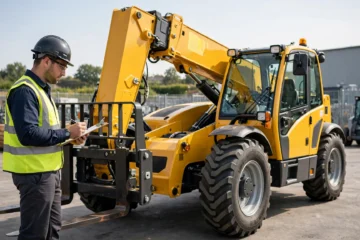
Before you operate a telehandler, walk around it. Look at everything. Know where each part is located. This helps you understand what you control.
Find the boom. This is the long arm that extends forward and upward. The boom is what makes a telehandler different from a forklift. Find the carriage. Forks and buckets attach to it. Find the tires. Check the tire pressure and look for cuts.
Find the cab. This is where you sit. Find the engine and know where the fluid dipsticks are. Finally, find the load chart. Read it. Understand it. You will use it every shift.
Step 2: Get in the Cab and Set Up
When you get ready to operate a telehandler, step up into the cab and close the door. Adjust the seat so you can reach all controls easily. Adjust both side mirrors. You need clear rear visibility.
Fasten your seat belt. This is not optional. Check the controls, including boom lift, extension, tilt, and pedals. Check the dash gauges for fuel and temperature. Start the engine and let it idle for one minute before moving.
Step 3: Understand the Controls
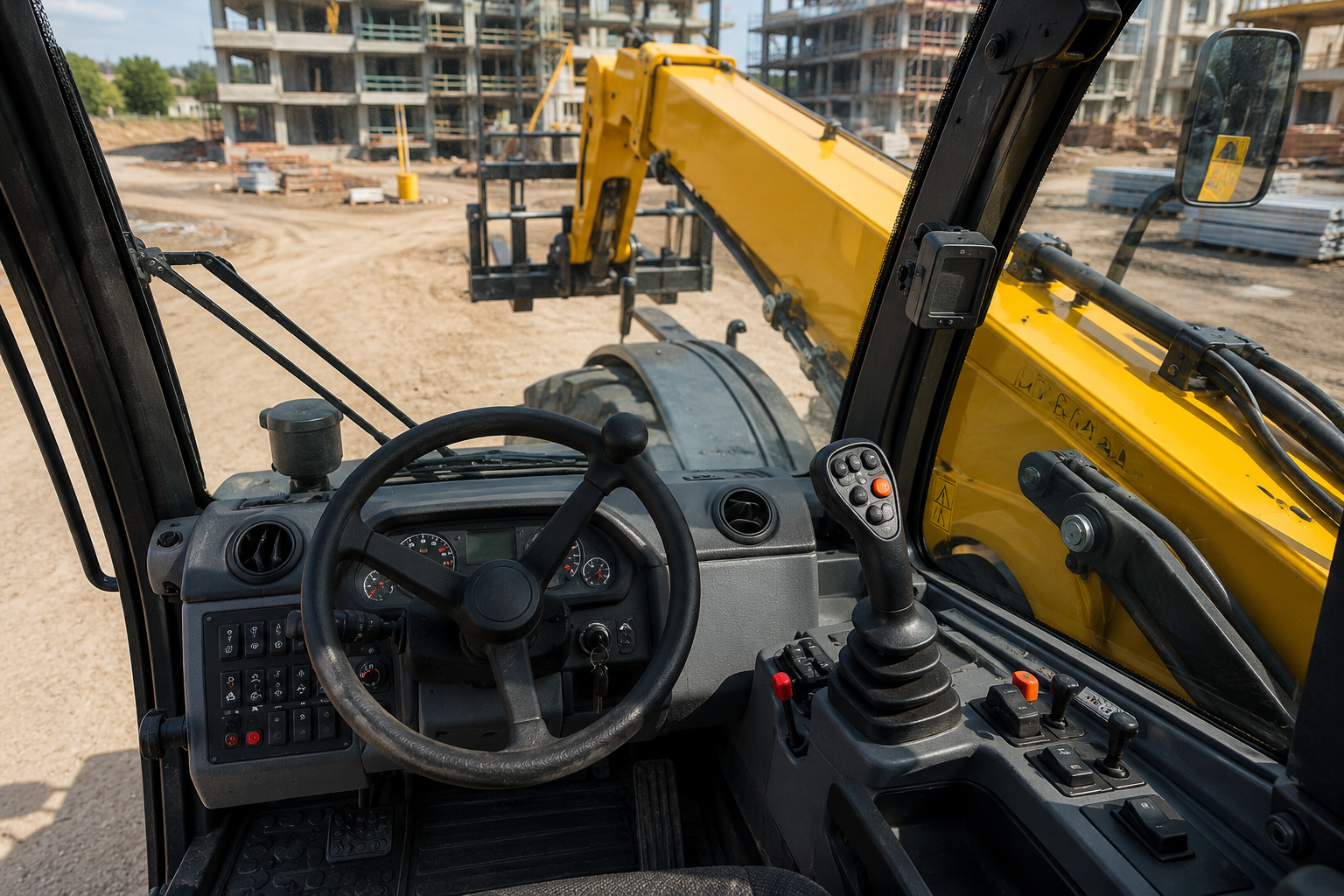
To successfully operate a telehandler, you must learn the controls. The steering wheel works like a car. The boom lift control moves the boom up and down. Smooth movements are safer.
The boom extension control extends and retracts the boom. Fast movements make the load swing. The tilt control tilts the carriage forward and backward to match the angle of your load.
The throttle pedal increases engine speed. The brake pedal stops the machine. Most telehandlers use a lever to select forward or reverse direction. The parking brake holds the machine still.
Step 4: Drive the Telehandler
Driving is a big part of how you operate a telehandler. It is similar to driving a car, but there are differences. Start with the boom low. High boom positions make the machine unstable.
Look where you are going. Turn wide, as telehandlers need more space to turn. When you operate a telehandler on slopes, slow down. Drive straight up or down. Do not turn on steep slopes.
Use four-wheel drive on rough ground. Stop gently to keep loads stable. Park on level ground and engage the parking brake.
Step 5: Lift a Load
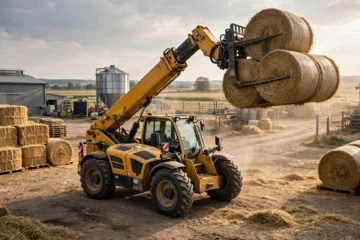
Lifting is the primary job when you operate a telehandler. Do it correctly every time. To operate a telehandler safely, find your boom angle and extension distance on the load chart. Read the maximum weight allowed.
Position the machine facing the load on level ground. Slide the forks under the load. Raise the boom slightly, then tilt the carriage back slightly to secure the load.
Extend and raise the boom to your desired height. Position it exactly where you want, lower it gently, and tilt the forks forward slightly to release.
Step 6: Use Attachments
Telehandlers accept many attachments. As you operate a telehandler, you will use other tools too. Buckets handle loose materials. Winches pull heavy objects. Work platforms lift workers safely.
If you are interested in versatile machines for site work, you might also want to check out the Typhon Telescopic Wheel Loader which offers great flexibility with attachments. Always account for attachment weight in your calculations.
Step 7: Shut Down and Clean Up
When your shift ends and you finish to operate a telehandler, you must shut down properly. Park on level ground and lower the boom completely. Retract the boom fully and tilt the carriage forward.
This shut down routine pairs perfectly with our telehandler maintenance checklist to prepare for the next shift. Engage the parking brake, run the engine at idle, turn it off, and lock the cab.
Safety Rules to Always Follow
These rules are not optional. Follow them every time you operate a telehandler. Always use your seat belt.
Never exceed load capacity. Exceeding capacity when you operate a telehandler causes tipping. Keep the boom low when driving. Watch for overhead hazards like power lines, use a spotter in tight spaces, and do not carry riders.
Common Mistakes New Operators Make
Learn from others. Avoid these common errors when you first operate a telehandler. Raising the boom too high makes the machine unstable.
When you operate a telehandler, you are not in a race car. Drive slowly. Do not ignore the load chart. Do not overextend the boom, and always check ground conditions before lifting.
Practice Makes Perfect
You will not master how to operate a telehandler in one day. That is fine. Practice every day. Start with light loads on level ground.
Ask experienced operators for tips. Take formal training if available. The more you practice, the more your skill will grow. Soon you will operate a telehandler like a pro.
Our Business Partner
Bottom Line
Knowing how to operate a telehandler is a skill. You learn it step by step. You master it with practice.
Safety comes first. Every time you operate a telehandler, check the load chart and use your seat belt. Follow the 7 steps every shift.
Your telehandler is a powerful machine. Treat it with respect. If you operate a telehandler correctly, it will serve you well. Now go out and operate a telehandler with complete confidence!