
Evaluating proper Telehandler Specifications is the ultimate key to making your machine profitable rather than sitting idle on a job site. Most people will look for the lifting capacity and forget to look at any other details. The number on the front is irrelevant as it only indicates the maximum load that can be lifted when the boom is fully retracted and the load is right up against the machine. As soon as you extend the boom it will decrease significantly.
Table of Contents
The load chart found in the cab is the real deal. This will tell you exactly what you can lift based on every boom angle and extension. Find out what the heaviest thing you will be lifting is on site. Based on the height and reach required, use the chart to pin-point the exact location. If you have plenty of capacity on the chart, great! Pick the machine. If you are very close to the maximum, look for a larger model.
Without the load chart, the Telehandler Specifications won’t mean anything [1]. Even though the number on the front might not be very high, if it has a good chart within the working range, it will be much better than a larger model that can’t reach. Many customers ignore the chart completely and are left with issues.
3. Height & Reach
Whilst telehandlers lift high, they usually can’t do both at the same time. They will either have a maximum height, or maximum reach. The chart will show you what you can lift at both maximums.
Consider what you’ll be lifting most of the time, maybe over a wall into a trailer or across a trench. Based on the height and reach required, you can quickly get your shortlist down. If you can lift the height but not reach, you’re paying extra for a tall forklift. If you can reach but the height is low, you’ll struggle to put materials where they need to go.
In most situations you’ll find that the reach will be the most important factor when analyzing Telehandler Specifications. You might need to put blocks over formwork, side-load a trailer or put materials past a barrier. Always consider both elements carefully.
4. Attachment Weight
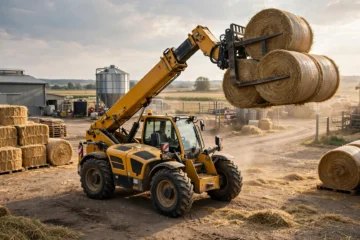
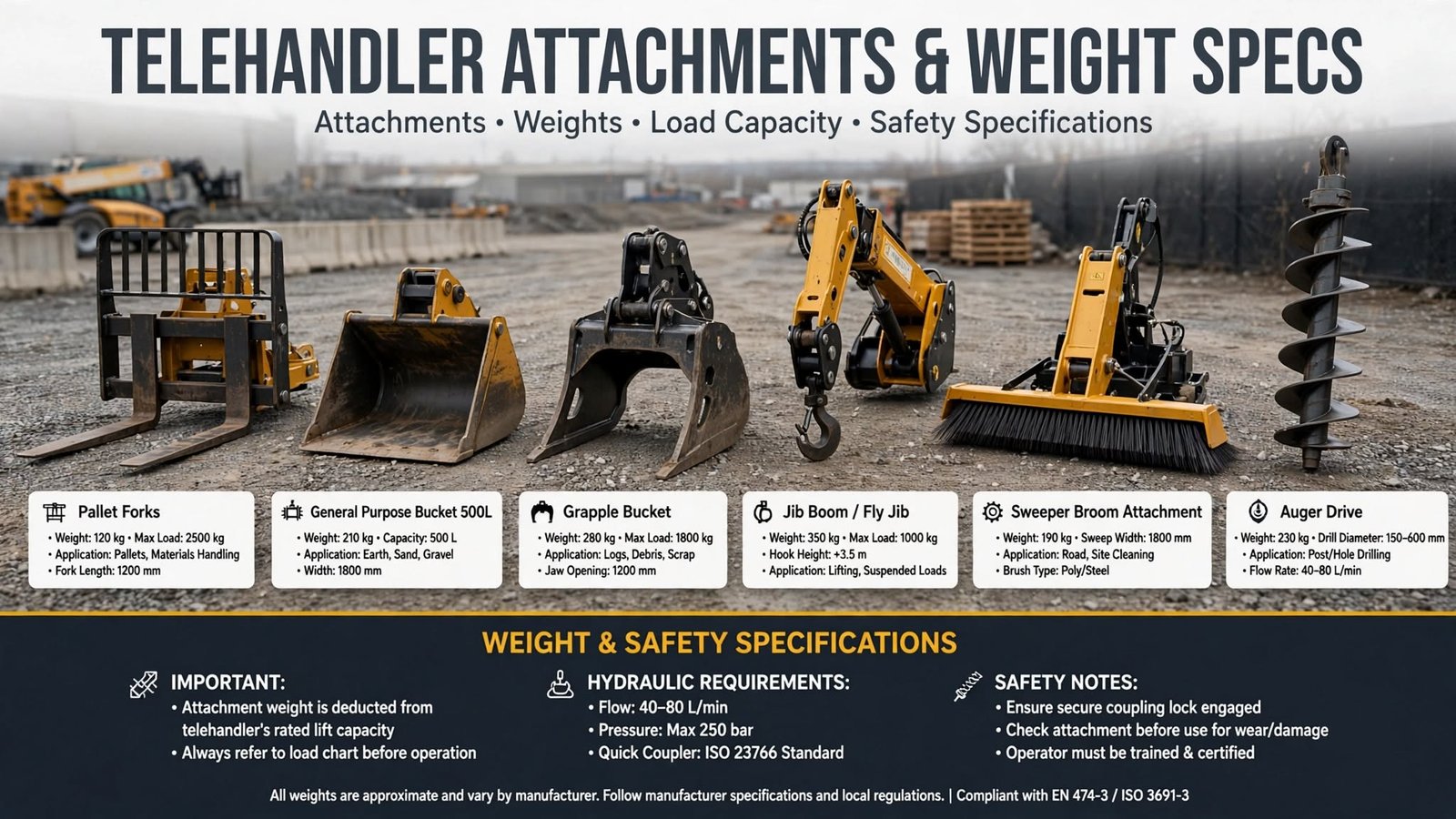
All of your attachments, forks, buckets, grapples, jibs, bale spikes and sweepers all have a weight that impacts overall Telehandler Specifications. This means that when you attach them, you are losing that much capacity. For example, a 600kg bucket will reduce the capacity by 600kg.
This is a common issue. People will work out the capacity required and pick a machine that doesn’t have a heavy attachment. Once they attach it they feel like it doesn’t have much power. This is because they didn’t factor in the weight of the attachment. Take the weight of the attachment away from the capacity required at the height and reach. Compare this to the load needed.
The correct Telehandler Specifications should include the weight of the attachment and hydraulic requirement. If you have a high flow attachment on a standard flow machine it will run slowly, hot and cause wear. Ensure the tool matches the auxiliary hydraulic output. Don’t pay for something you won’t use.
5. Size & Access
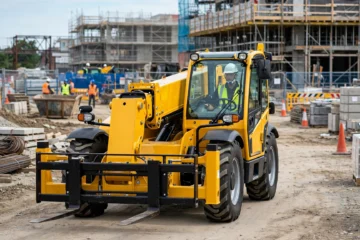
If your machine can’t get through the gate, review your Telehandler Specifications width metrics immediately. Measure up your tight areas. This could be doorways, aisles, overhead beams, turning circles or ramp widths. This will help reduce your options quicker.
If you need to transport your machine around sites, make sure it will fit onto your trailer. If you have a model that requires a permit each time you can expect to pay extra and lose time. Always check the height and width.
Soil conditions can affect you too. If the ground is soft, heavy machines will sink. Light machines can feel wobbly on slopes. Check the ground bearing and gradient ratings listed in the Telehandler Specifications document.
6. Hydraulic System & Controls
The hydraulic system powers your attachments. Reviewing the Telehandler Specifications helps verify oil flow. If you don’t have the correct flow, your attachments won’t work properly. Grapples will open slowly, sweepers will struggle and jibs will drift. This is all due to incorrect hydraulics.
Standard flow is fine if you are using forks or simple buckets. However if you use powered attachments regularly, high flow will help. Make sure you know what you will be using on your machine before paying for extra flow.
Controls will affect how tired you get and cause errors. Most machines will have joystick controls. Proportional controls allow you to control how much force you put into the attachment. This will help keep your hands steady and the load smooth throughout a long shift. Detailed Telehandler Specifications should clearly state what controls you have as it will affect how the machine feels after 8 hours.
7. Second Hand Machines
Second hand machines can have great Telehandler Specifications, however they will have some wear. The boom pads will be worn, pins will be loose and cylinders could leak. The chart will only be accurate if the machine has been well maintained.
Make sure that when you fully extend the boom there isn’t any misalignment. Listen for any rubbing or clanking. Check the wear pads between the sections. If these aren’t tight the boom will be loose which will effect the capacity and safety.
Check the load chart in the cab. If there isn’t one or it is illegible, don’t bother. Check the overload protection. If the machine can be set to lift above what it should be able to, this is a risk. Matching Telehandler Specifications for second hand machines won’t matter unless you check they match physical wear.
8. Servicing & Spares
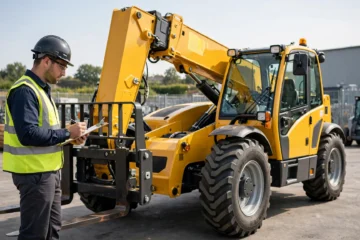
If your machine requires a visit from the dealer for small issues, it will cost more than expected. Check the location of the filters and how easy it is to get into the engine bay. Can you carry out daily checks from the ground? Evaluating Telehandler Specifications often overlooks everyday access.
How easy is it to get spares? If you don’t have any local support for your model, you may have to wait weeks for a hose or seal. Check who provides the spares locally and how quick they are. Sometimes it is cheaper to have a slightly less powerful machine but good local support.
The Telehandler Specifications brochure rarely mentions servicing details. However it really does affect how much downtime you have. If you are without a machine for a week, it will cost more.
9. Specification to Suit Your Requirements
The best machine for you won’t be the largest or cheapest, it will be the one that suits your exact Telehandler Specifications needs. Write down the heaviest thing you will be lifting, highest thing you will be putting, furthest reach, smallest gap and most used attachment. This will help you reduce your options quickly.
Ensure that each machine matches your list. If you can get a machine that has plenty of margin on each requirement, this is the one for you. If you have one that only just matches one requirement, you’ll have issues.
The Telehandler Specifications data should be used as a checklist. Either the numbers match or they don’t. It is all a matter of personal preference.
Taking the time to look at the Telehandler Specifications will take an hour. However getting the wrong machine will take months to fix. Always check the load chart first, reach and height, subtract the attachment weight, measure your tight areas, hydraulics to match your tools, thoroughly check second hand machines, ensure spares are available and compare all your options to the real requirements.
By doing this your machine will earn its keep from the first week. If you don’t, you’ll have issues when you try to lift something heavy for the first time and won’t have time to fix it. Reviewing Telehandler Specifications correctly is the foundation of safe work.
Whether you choose to buy brand new or look at alternatives like a new 2025 Typhon Vigor 3.0 Electric Forklift for indoor needs, understanding Telehandler Specifications is vital.
For more insights into fleet management and industry trends, feel free to read our detailed guide on why Dennis Tan CEO values the ProPACT series, which also ties back to evaluating strict Telehandler Specifications.
Our Business Partner
Final Notes
Carefully cross-referencing your site requirements with official Telehandler Specifications prevents costly mistakes. Take your time during the research phase.
Ultimately, a deep understanding of accurate Telehandler Specifications ensures your investment pays off from day one on the job site.