
Table of Contents
You have a job site. You need to move materials. You look at two machines. A forklift. A telehandler. Which one do you choose when facing the telehandler vs forklift dilemma?
This question comes up on every construction site. Both machines lift loads. Both move products around. But they work differently. They serve different purposes. The right choice in the telehandler vs forklift decision depends on your specific work.
This guide compares telehandler vs forklift capabilities. You will see the differences. You will learn which machine fits your needs. You will make a confident decision.
The Basic Difference
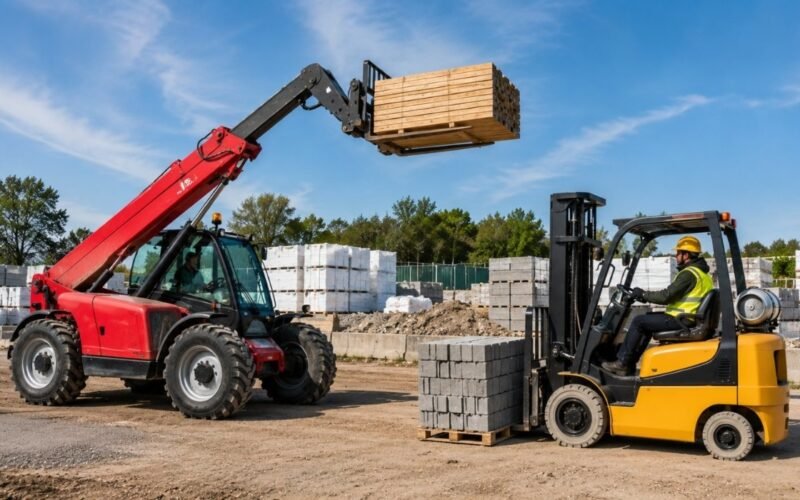
When analyzing telehandler vs forklift mechanics, a forklift lifts loads straight up. It uses vertical masts. The load moves only upward and downward. You drive forward to pick up a load. You drive backward to place it.
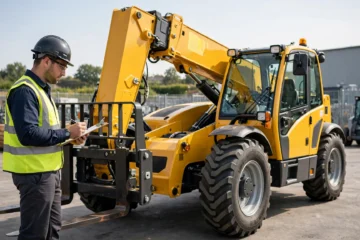
A telehandler lifts loads up and forward. It has a telescopic boom. The boom extends outward. You reach over obstacles. You place loads at a distance from the machine.
Another key point in the telehandler vs forklift debate is that forklifts work on flat surfaces. Telehandlers work on rough terrain. Forklifts are smaller. Telehandlers are larger. Forklifts cost less. Telehandlers cost more.
These differences matter. They affect every job you do. You need to match the machine to your conditions based on this telehandler vs forklift breakdown.
What a Forklift Does Well
In any telehandler vs forklift comparison, forklifts have been around for decades. They are reliable. They are simple. They do one job and do it well.
Indoor Work
Forklifts are the best choice for indoor work. They run on electricity or propane. No fumes with electric models. They work cleanly in warehouses and factories. Warehouses rely on forklifts. Distribution centers use them. Manufacturing plants need them.
Tight Spaces
Forklifts are smaller than telehandlers. They fit in narrow aisles. They turn in tight corners. They work in low ceilings. Warehouse aisles are often narrow. Forklifts navigate these spaces easily.
Lower Cost
Evaluating telehandler vs forklift prices, forklifts cost less to buy. A new forklift ranges from $20,000 to $50,000. They cost less to operate, use less fuel, and need less maintenance.
Familiar Operation & Attachments
Most operators know how to drive a forklift. Training takes one to two days. Forklifts use many attachments. Clamps handle barrels. Rotators turn loads. Side shifters move loads sideways.
What a Telehandler Does Well
Continuing our telehandler vs forklift analysis, telehandlers are newer to the market. They offer capabilities forklifts do not have. They handle outdoor and rough terrain work.
Rough Terrain
Telehandlers work on mud, gravel, and dirt. Large tires provide traction. High ground clearance prevents bottoming out. Four-wheel drive keeps you moving. Construction sites have uneven ground. Forklifts get stuck, but telehandlers keep working.
Reach and Height
When weighing telehandler vs forklift reach, telehandlers reach far. A telehandler reaches 30 to 55 feet high. You lift materials to the top of buildings. Forklifts only reach 10 to 20 feet.
Versatility & Load Placement
Telehandlers accept many attachments. In the telehandler vs forklift load placement contest, telehandlers place loads precisely. The boom moves smoothly. You position loads exactly where you want them from a distance.
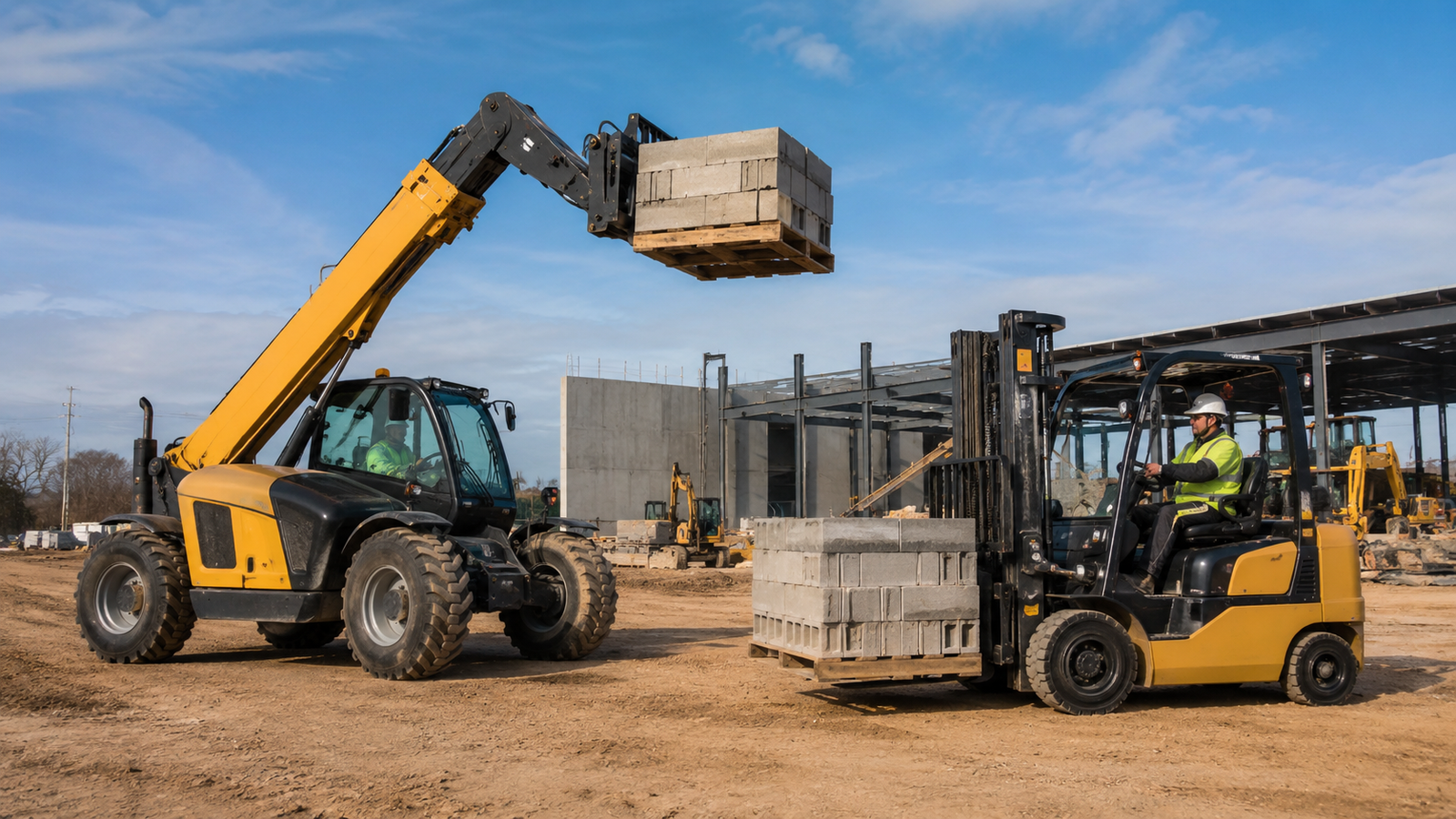
Direct Comparison of Key Factors
Let’s do a direct telehandler vs forklift comparison of the most important specs.
Lifting Capacity: Forklifts lift 3,000 to 12,000 pounds. Telehandlers lift 5,000 to 12,000 pounds. Capacity matters less than reach. Telehandlers lose capacity as the boom extends.
Cost Comparison: When checking telehandler vs forklift costs, forklifts cost $20,000 to $50,000 new. Telehandlers cost $50,000 to $150,000 new. Operating costs differ too.
Floor Surface: The choice between telehandler vs forklift often comes down to environment. Forklifts require smooth floors. Telehandlers work on any surface. Pneumatic tires absorb bumps.
When to Choose a Forklift
You should pick a forklift in the telehandler vs forklift decision if:
You Work in a Warehouse: Warehouses are forklift territory. They are faster and maneuver in aisles.
You Have a Limited Budget: Forklifts cost less. You buy more machines for the same money.
Your Workers Have Forklift Training: Training costs time and money. Do not retrain everyone for a new machine.
When to Choose a Telehandler
You should lean towards a telehandler in the telehandler vs forklift choice if:
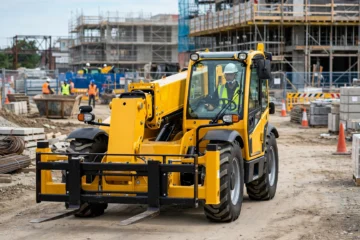
You Work on Construction Sites: Construction sites have rough ground. You need reach and height.
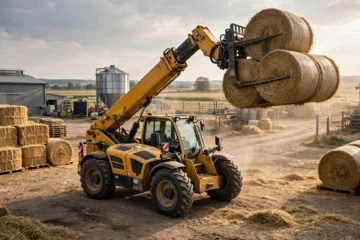
You Work in Agriculture: Farm fields are rough. You lift hay and feed.
You Need One Versatile Machine: You do many different jobs. One telehandler replaces multiple machines.
Common Misconceptions
There are myths in the telehandler vs forklift industry. People think telehandlers replace forklifts. This is false. Each has its place. They complement each other. Another myth is that telehandlers are hard to operate. Most operators learn quickly. For those needing a specialized but smaller machine, check out the Typhon Telescopic Wheel Loader which offers amazing utility for tough jobs.
Making Your Decision
Making your final telehandler vs forklift choice requires steps. List your jobs, count how many are indoor vs outdoor, and check your budget. If you are leaning towards a telehandler, you should definitely read our ultimate telehandler buying guide for in-depth details.
Evaluate your space and rent both for a week to see the telehandler vs forklift difference firsthand. Ask your operators which machine they prefer.
Real Examples
Here are real telehandler vs forklift scenarios:
Example One (Warehouse): A distribution center moves pallets on smooth concrete. A forklift is the right choice. It fits the aisles.
Example Two (Home Construction): A builder works on single-family homes on muddy ground. A telehandler is the right choice. It reaches the roof.
Example Three (Mixed Use): A contractor does both warehouse and construction work. Rent a forklift for indoor days, rent a telehandler for outdoor days.
Our Business Partner
Bottom Line
Summing up the telehandler vs forklift debate, they are different tools. They solve different problems. Forklifts are for smooth floors, indoor work, and tight spaces. Telehandlers are for rough terrain, outdoor work, and high reach.
If you still struggle with the telehandler vs forklift decision, think about your typical day. Think about your typical site conditions. The answer becomes clear.
Your decision impacts your productivity. It impacts your costs. Take time to choose correctly in this telehandler vs forklift choice. Your business depends on it.